Yael Hersonski's powerful documentary achieves a remarkable feat through its penetrating look at another film-the now-infamous Nazi-produced film about the Warsaw Ghetto. Discovered after the war, the unfinished work, with no soundtrack, quickly became a resource for historians seeking an authentic record, despite its elaborate propagandistic construction. The later discovery of a long-missing reel complicated earlier readings, showing the manipulations of camera crews in these "everyday" scenes. Well-heeled Jews attending elegant dinners and theatricals (while callously stepping over the dead bodies of compatriots) now appeared as unwilling, but complicit, actors, alternately fearful and in denial of their looming fate.
Related Movies
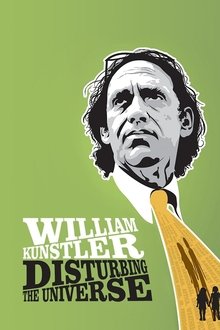
William Kunstler: Disturbing the Universe (2009)
William Kunstler was one of the most famous lawyers of the 20th century. His clients included Martin Luther King Jr., Malcolm X, Phillip and Daniel Berrigan, Abbie Hoffman, H. Rap Brown, Stokely Carmichael, Adam Clayton Powell, Jr., and Leonard Peltier. Filmmakers Emily Kunstler and Sarah Kunstler explore their father’s life, from middle-class family man, to movement lawyer, to “the most hated lawyer in America.”
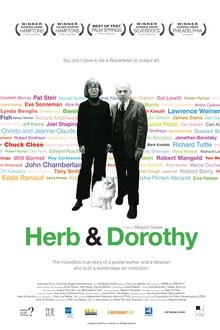
Herb & Dorothy (2009)
He was a postal clerk. She was a librarian. With their modest means, the couple managed to build one of the most important contemporary art collections in history. Meet Herb and Dorothy Vogel, whose shared passion and disciplines and defied stereotypes and redefined what it means to be an art collector.
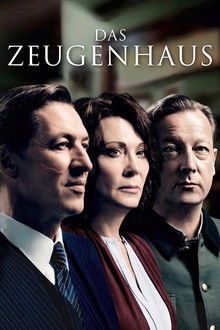
Das Zeugenhaus (2014)
Witnesses about to testify at the Nuremberg War Trials needed a safe place to wait. All under one roof, each with their own secrets. And the countess assigned to take care of them. What was her secret?

Kings of the Sky (2004)
Adil Hoxur, descended from a line of Dawaz tightrope artists, performs nightly with his troupe in China’s Taklamakan desert, among the Uyghurs, a Turkic Muslim people seeking religious and political autonomy. Shot over four months, this experimental documentary takes shape as a travelogue, ethnographic visual poem, and advocacy video for the preservation of a traditional art form. - MoMA

Molly: An American Girl on the Home Front (2006)
Molly is a girl living in the year 1944 and WWII has brought many changes to Molly's life. An English girl comes to live with Molly's family to escape the bombings. They slowly become good friends.
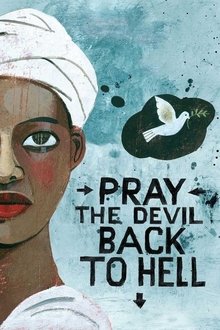
Pray the Devil Back to Hell (2008)
Pray the Devil Back to Hell chronicles the remarkable story of the Liberian women who came together to end a bloody civil war and bring peace to their shattered country.

War Is Sell (2004)
"War is Sell" dissects the strategies of war propagandists -- soldiers armed not with guns, but with words, pictures and commercial advertising techniques in their battle to win hearts and minds. How do you sell a war?
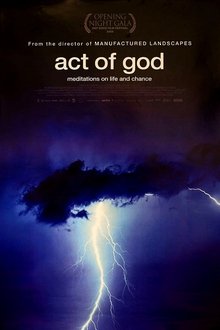
Act of God (2009)
A Canadian documentary feature film that investigates the effects of being struck by lightning.
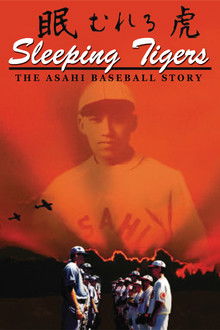
Sleeping Tigers: The Asahi Baseball Story (2003)
After the Japanese attack on Pearl Harbor, all persons of Japanese descent in Canada were sent to internment camps. The former Asahi members survived by playing ball. Their passion was contagious and soon other players joined in, among them RCMP officials and local townspeople. As a result, the games helped break down racial and cultural barriers.
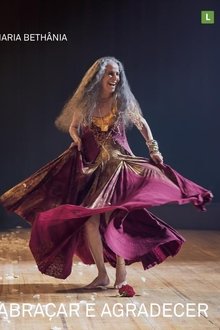
Abraçar e Agradecer (2016)
Celebrating 50 years of her career, Maria Bethânia filmed in Brazil in 2105 the show Abraçar e Agradecer, which now comes out on CD and DVD.
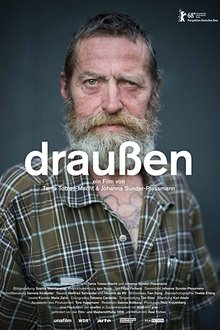
Outside (2018)
The film explores the turbulent lives of homeless persons in Cologne, Germany. Through their personal belongings the homeless share with the viewer their memories and emotions, and provide insight into the secrets of survival on the street.
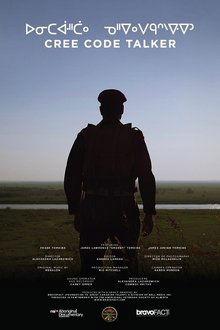
Cree Code Talker (2016)
CREE CODE TALKER reveals the role of Canadian Cree code talker Charles 'Checker' Tomkins during the Second World War. Digging deep into the US archives it depicts the true story of Charles' involvement with the US Air Force and the development of the code talkers communication system, which was used to transmit crucial military communications, using the Cree language as a vital secret weapon in combat.
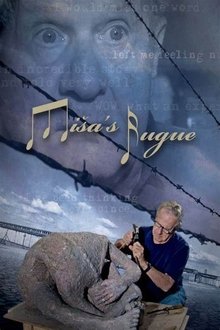
Misa's Fugue (2012)
The true story of one boy's journey as a victim of Nazi oppression. While exposed to some of the most horrific events of the Holocaust, Misa was able to endure the atrocities of genocide through his love of art and music.
Pie Lady of Pie Town (2014)
In the New Mexico desert, pie equals love. Kathy Knapp left her privileged life to bake pie in dusty Pie Town, a once forgotten corner of the world with few amenities. Why? To find her center and give the world pie. This is her story.
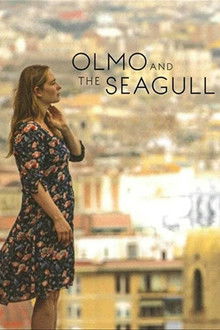
Olmo and the Seagull (2015)
'Olmo and the Seagull' is a poetic and existential dive into an actress's mind during the nine months of her pregnancy as she must confront her most fiery inner demons while trying to rewrite a new philosophy of life, identity and love. Underlying this hybrid film is mounting tension over what is real and what is enacted when one is performing one's own life.
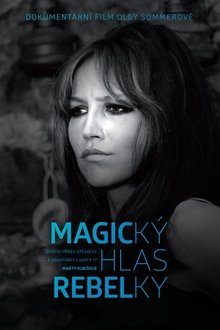
The Magic Voice of a Rebel (2014)
'The Magic Voice of a Rebel' portrays the story of the Czech singer Marta Kubisová, who without never intending it, became a symbol of freedom for all generations in the newly free Czhecoslovakia in 1989. It is Marta herself who tells us her life story and how the Soviet invasion in Czechoslvakia in 1968 changed her life. Because of her deep involvement in the Prague Spring movement, she went from being the most popular singer in the country to being banned and suffering a sudden removal from the public scene by the new authorities imposed from Moscow. She refused to escape to exile and together with other banned intelectuals and artists became a disident instead. Blacklisted and persecuted by the secret police, she also suffered the betrayal of beloved people who were collaborating with the regime.

Joan Mitchell: Portrait of an Abstract Painter (1993)
A powerful and intimate portrait, Joan Mitchell: Portrait of an Abstract Painter captures Mitchell's independent spirit and testifies eloquently to Mitchell's art. Joan Mitchell was born in Chicago in 1926 and died in Paris in 1992. After graduating from the School of the Art Institute of Chicago, Joan settled in New York City in 1950. She was an active participant of New York's dynamic Abstract Expressionist scene and hung out with fellow painters Franz Kline, Willem de Kooning and Philip Guston and, soon, poets Frank O'Hara, James Schuyler and John Ashbery. In the mid-fifties, she moved to Paris, France. There she was part of a circle of friends that included Pierre Matisse, Samuel Beckett and Alberto Giacometti. Mitchell is one of the great abstract painters of the 20th century. This elegantly edited documentary weaves interviews with the acerbic Mitchell and other leading painters and critics while letting her stunning pictures dominate the film.