Madiha Aijaz’s observational documentary on public libraries in Karachi, Pakistan, provides an entry point into present-day Karachi, where irredeemable changes feel imminent. While the libraries become a bastion for the literary tradition of Urdu, their frequent visitors lament the increasing dominance of English – a residual reminder of colonialism, partition and the ‘globalising’ present. Wrapped in quiet solitude, seated readers are shown hiding away from the hustle and bustle of urban life that can be seen outside.
Related Movies

The Feminist Library (2016)
The Feminist Library: A Short Film was made in support of the Save the Feminist Library Campaign, documenting a crucial moment in the library's herstory as it fights for its very survival. Shortlisted for the Women's History Network Community Prize, the film revisits the story of the library's inception and emphasises why feminism remains essential today.
Displaced Perssons (2013)
Per Persson left Sweden 40 years ago. In Pakistan he fell in love and became the father of two daughters. Trouble starts when the girls grow up and the family decides to emigrate to Sweden. When they end up living in a caravan outside Hässleholm, all their expectations are dashed.
Embassy of the Free Mind (2024)
UNESCO Memory of the World: Explore the Bibliotheca Philosophica Hermetica’s new home with 25,000+ rare books on alchemy, hermetica & mysticism at the Embassy of the Free Mind museum, set in Amsterdam’s historic canal mansion, the House with the Heads.
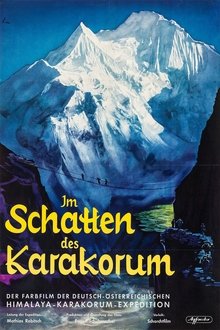
In the Shadow of Karakorum (1955)
In 1954, a German-Austrian expedition led by Mathias Rebitsch set off for the difficult-to-access Karakoram Mountains, geographically north of the Himalayas. They come across the Hunza, a people who live in the valley of the same name and believe they are descended from the soldiers of Alexander the Great. The documentary conveys impressions of the poor life of the Hunza people, the harvest, a court hearing, festivals and the children's everyday school life. Finally, the expedition sets off again and sets up its main camp on the moraine ridge of a glacier, where they measure the glacier and the earth's magnetic field. Finally, some men from the research community set off for a sub-peak of Batura.
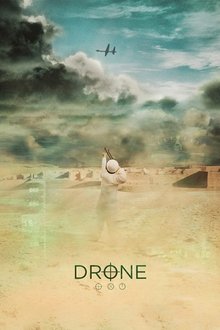
Drone (2014)
DRONE is a documentary about the covert CIA drone war. Through voices on both sides of this new technology, DRONE reveals crucial information about the drone war in Pakistan and offers unique insights into the nature of drone warfare.

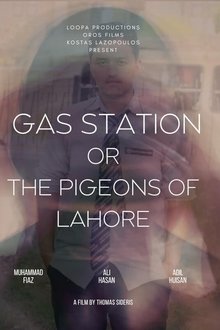
The Pigeons of Lahore (2024)
The parallel stories of four Pakistani immigrants in Greece become the trigger for the director to explore the story of his father, a worker in the Perama Shipyard. The background unfolds a most deadly shipwreck, Libyan immigrants found in limbo, as well as a (possibly racist) crime, which was committed during the shooting of this film.

How Gay Is Pakistan? (2015)
A documentary which explores the lives of gay people and the challenges they face in Pakistan, a country whose laws explicitly outlaw homosexuality.
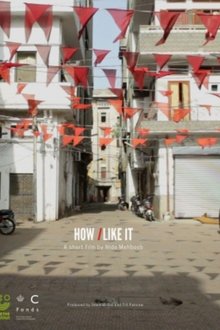
How I Like It (2021)
In Pakistan, the public space is dominated by men. The confidence with which they walk the streets or weight train quickly disappears once they are confronted with female sexuality. Off-screen, several anonymous women talk about their sexuality. The images of the conventional partiarchal society are in sharp contrast to the liberating explicitness of the accounts of clit stimulation, sex with multiple partners, pissing, abortions, and rape.
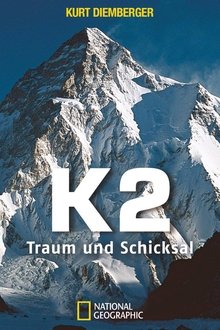
K2, Traum und Schicksal (2013)
Documentary about K2 tragedy of 1986. On August 4, 1986, Diemberger and Julie Tullis reached the summit of K2 very late in the day. Shortly after starting their descent, Tullis fell and dragged Diemberger down with her. Fortunately, they somehow stopped from going over the edge and spent the night above 8,000 metres. They managed to reach Camp IV the next day, where they were forced to share a tent with six other climbers after their tent had collapsed from hurricane force winds. Tullis died later that night, possibly from high altitude cerebral edema (HACE), and only one other climber, Austrian Willi Bauer, survived the descent with Diemberger. Both climbers suffered severe frostbite during the descent and had to have amputations.

The People's Palace: A Portrait of the New York Public Library (1991)
With a mission of collecting, preserving and making accessible the materials of human culture, the New York Public Library plays a vital role in the cultural life of the Big Apple. This film provides a multifaceted portrait of the institution. Viewers will learn about the library's history, collections and research centers as well as the individuals charged with upholding its mission while always keeping an eye to the future.

In Zainab's Heaven (2023)
A Hazara film director follows a gravestone maker, a water girl and a man who buried his limb, as their daily lives unfold in a graveyard.
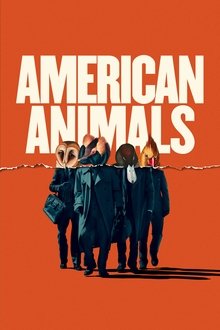
American Animals (2018)
Lexington, Kentucky, 2004. Four young men attempt to execute one of the most audacious art heists in the history of the United States.
A Walk Through Prospero's Library (1992)
A short made for TV with director Peter Greenaway discussing the dazzling 3.5 minute opening sequence from his film, 'Prospero's Books'. As Prospero (John Gielgud) walks through his library, Greenaway comments on the historical, mythological, biblical & fictional characters occupying the library.
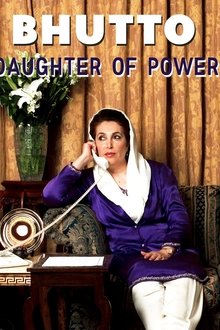
Bhutto: Daughter of Power (2005)
Touted as a symbol of modernity and democracy, Benazir Bhutto became synonymous with corruption and bad governance. In this unique film, Bhutto speaks frankly about the paradoxes of her life. Mixing private archive with insights from friends and family, this is the definitive documentary on the Bhutto dynasty.
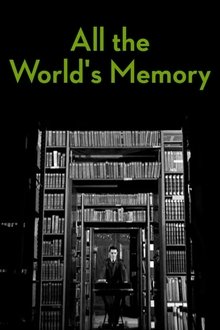
All the World's Memory (1956)
A documentary about the Bibliothèque Nationale in Paris. It presents the building, with its processes of cataloguing and preserving all sorts of printed material, as both a monument of cultural memory and as a monstrous, alien being.
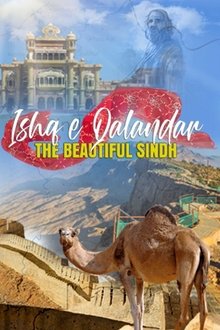
Ishq e Qalandar - The Beautiful Sindh (2020)
Ishq e Qalandar - The Beautiful Sindh is a travel film that takes viewers through one of the most ancient civilizations on Earth called Sindh. Shezan Saleem Jo-G takes a journey of self-realization, the discovery of his roots, and building a connection with people and spirituality in Sindh.