"Hello. I'm Itami Jun. I apologize for my poor Korean." Itami Jun (Yoo Dongryong), a Korean architect who was born in Japan. This film follows his life through heartwarming architectures for people that he had tried for all his life. The architecture of time that exists for the people, space and the story of an architect who walked his own way between Korea and Japan, Shimizu and Jeju.
Related Movies
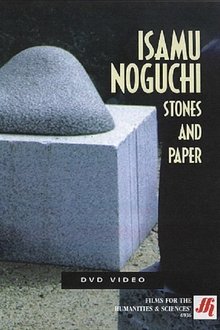
Isamu Noguchi: Stones and Paper (1997)
Isamu Noguchi was a sculptor, designer, architect, and craftsman. Throughout his life he struggled to see, alter, and recreate his natural surroundings. His gardens and fountains were transformations meant to bring out the beauty their locations had always possessed.

Ralph Erskine (1986)
The British architect based in Stockholm looks back on major projects of a long career inspired by European Modernism combined with his personal sensitivity to nature and community. Erskine is especially valued for his vital understanding of social interaction, exemplified in commissions for universities and housing complexes built from Scandinavia to Italy. The architect takes the camera on a tour of his buildings while offering revealing comments and interpretations.
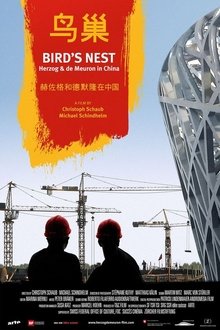
Bird's Nest - Herzog & de Meuron in China (2008)
Schaub and Schindelm’s documentary follows two Swiss star architects, Jacques Herzog and Pierre de Meuron, on two very different projects: the national stadium for the Olympic summer games in Peking 2008 and a city area in the provincial town of Jinhua, China.
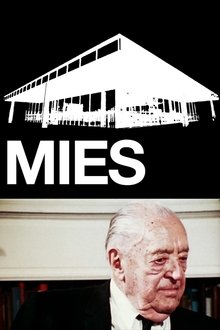
Mies (1986)
No understanding of the modern movement in architecture is possible without knowledge of its master builder, Mies van der Rohe. Together with documentation of his life, this film shows all his major buildings, as well as rare film footage of Mies explaining his philosophy. Phyllis Lambert relates her choice of Mies as the architect for the Seagram building. Mies's achievements and continuing influence are debated by architects Robert A.M. Stern, Robert Venturi, and Philip Johnson, by former students and by architectural historians. Mies is seen in rare documentary footage.


Edwin Lutyens Master Architect (1981)
Architecture critic Patrick Nuttgens narrates a documentary on the 20th century architect Edwin Lutyns, exploring the plans and buildings of the man who designed Liverpool Metropolitan Cathederal and the city of New Delhi.
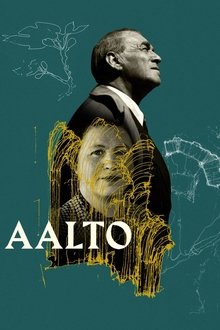
Aalto (2020)
Aalto is one of the greatest names in modern architecture and design, Aino and Alvar Aalto gave their signature to iconic Scandic design. The first cinematic portrait of their life love story is an enchanting journey of their creations and influence around the world.
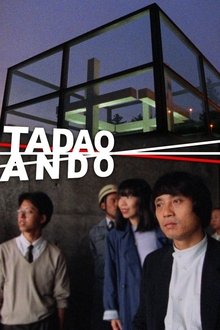
Tadao Ando (1988)
Tadao Ando, a self-taught architect, proposes an international architecture that he believes can only be conceived by someone Japanese. His architecture mixes Piranesian drama with contemplative spaces in urban complexes, residences and chapels. This film presents the formative years of his impressive career before he embarked on projects in Europe and the United States.
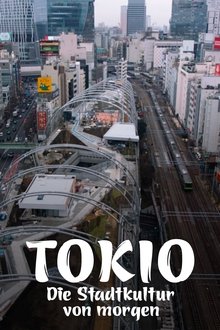
Tokio - Die Stadtkultur von morgen (2021)
Tokyo, the largest city in the world, wants to create a new urban culture. It is returning to the urban traditions and building techniques of the small town. The aim is to create a new balance between megacity and small-scale garden city. Tokyo's architects are the driving force. They want to create a new urban culture with revolutionary ideas.

Arata Isozaki: Early work in Japan (1985)
Arata Isozaki: Early Work in Japan takes a detailed look at the architect's pieces, exploring applauded projects such as the EXPO '70 Osaka Festival Plaza, Gunma Prefectural Museum of Modern Art and Kitakyushu Municipal Library. The extraordinary series of architectural breakthroughs made during this time contributed significantly to the evolution of contemporary architecture worldwide, and eventually gained him his first foreign commission
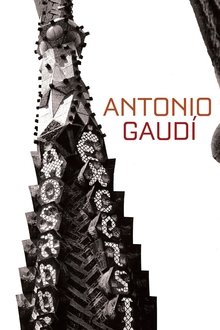
Antonio Gaudí (1984)
Catalan architect Antonio Gaudí (1852-1926) designed some of the world's most astonishing buildings, interiors, and parks; Japanese director Hiroshi Teshigahara constructed some of the most aesthetically audacious films ever made. With camera work as bold and sensual as the curves of his subject's organic structures, Teshigahara immortalizes Gaudí on film.
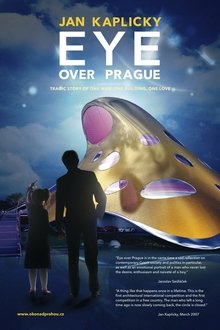
Eye Over Prague (2010)
A personal and political biography of the Octopus, or the Prague National Library project, but also a biography of the last years of the life of the author of this design, Jan Kaplický, who wrote in his diary in 1998: to win the competition and have one love. With this entry, read by Eliška Kaplicky at the beginning of the film, it is as if the world-class Czech architect wrote not only the "script" for the final decade of his life, but also for a film that follows the dramatic social story of creative imagination and the intimate relationship between a man and a woman.
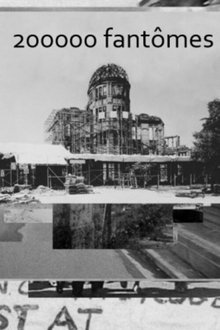
200,000 Phantoms (2007)
In 1914, the Czech architect Jan Letzel designed in the Japanese city of Hiroshima Center for the World Expo, which has turned into ruins after the atomic bombing in August 1945. “Atomic Dome” – all that remains of the destroyed palace of the exhibition – has become part of the Hiroshima memorial. In 2007, French sculptor, painter and film director Jean-Gabriel Périot assembled this cinematic collage from hundreds of multi-format, color and black and white photographs of different years’ of “Genbaku Dome”.
A Very English Genius (2002)
The work and unexplained death of Michael Ventris, the English architect, classicist, and philologist who deciphered the ancient Mycenaean Greek script Linear B, are portrayed.
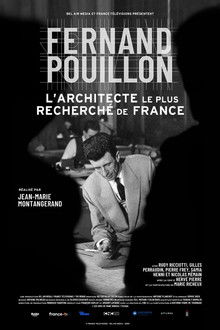
Fernand Pouillon: France's Most Wanted Architect (2023)
The work of Fernand Pouillon, "France's most wanted" architect after being imprisoned and mysteriously escaping in the 1960s, now seems to have faded into the background. However, in 50 years he has built more than 5 million square meters, mainly between France and Algeria, at a frantic pace, traveling tens of thousands of kilometers per week, by propeller plane, to go to construction sites. at night or at dawn between Marseille, Paris, Algiers or in the middle of the desert, until you burn your wings. Among others, Fernand Pouillon decided to build houses for the most modest.
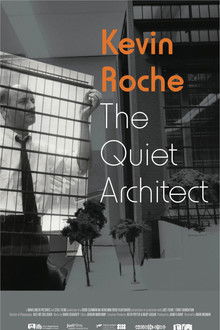
Kevin Roche – The Quiet Architect (2017)
Kevin Roche: The Quiet Architect is a feature documentary film that considers many of the key architectural questions through the 70 year career of Pritzker Prize winning Irish-American architect Kevin Roche, including the relationship between architects and the public they serve. Still working at age 94, Kevin Roche is an enigma, a man with no interest in fame who refuses retirement and continually looks to the future regardless of age. Roche's architectural philosophy is that 'the responsibility of the modern architect is to create a community for a modern society' and has emphasised the importance for peoples well-being to bring nature into the buildings they inhabit. We consider the application of this philosophy in acclaimed buildings such as the Ford Foundation, Oakland Museum and at New York's Metropolitan Museum of Art for whom Kevin Roche was their principal architect for over 40 years.
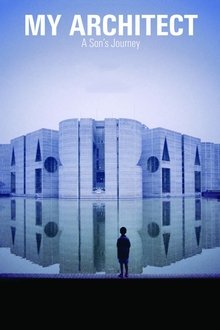
My Architect: A Son's Journey (2003)
World-famous architect Louis Kahn (Exeter Library, Salk Institute, Bangladeshi Capitol Building) had two illegitimate children with two different women outside of his marriage. Son Nathaniel always hoped that someday his father would come and live with him and his mother, but Kahn never left his wife. Instead, Kahn was found dead in a men's room in Penn Station when Nathaniel was only 11.