On Easter 2018, a man put on a backpack and began to walk across Armenia. His mission: to inspire a velvet revolution and topple the corrupt regime that enjoys absolute power in his former Soviet nation. With total access to all key players, this documentary tells the story of what happened in the next 40 days.
Related Movies
From Atatürk to Erdoğan: Building a Nation (2019)
Turkey's history has been shaped by two major political figures: Mustafa Kemal (1881-1934), known as Atatürk, the Father of the Turks, founder of the modern state, and the current president Recep Tayyıp Erdoğan, who apparently wants Turkey to regain the political and military pre-eminence it had as an empire under the Ottoman dynasty.
Village of Women (2019)
Only women, children and old people live in this Armenian village, while the men work in Russia. A life with a rhythm of its own, an independent daily life marked nonetheless by exile.

A Story of Home (2022)
As a result of the second Karabakh war, a village should be ceded to Azerbaijan since a new highway is built through the Lachin corridor. The family of Narine, like many other Armenian families, needs to find a new place.
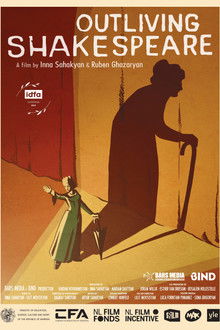
Outliving Shakespeare (2025)
In a decaying Soviet-era retirement home, a vibrant group of elders cling to life by staging Shakespeare. Yet loneliness lingers beyond the theater’s doors, until drama begins to blur with reality.
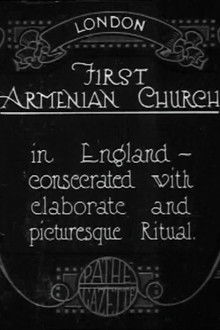
First Armenian Church (1923)
An elaborate ceremony marks the opening of the first Armenian church in England.
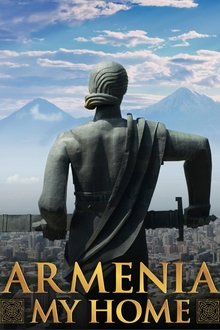
Armenia, My Home (2024)
Experience spectacular aerial and ground views and cultural revelations of a country like no other in a virtual tour of Mount Ararat, Khor Virap, Yerevan, the Genocide memorial, and more. Narrated by Andrea Martin, the documentary features prominent voices from the Armenian diaspora including Eric Bogosian, Chris Bohjalian, Peter Balakian, Michael Aram, and others.
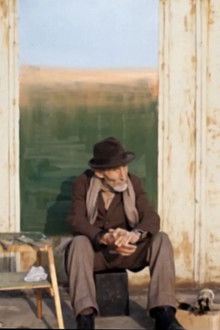
A Kind Trace (1980)
The documentary is about an old man from Yerevan who paints on garages, transforming rusty metal walls into vivid landscapes and leaving a subtle yet unforgettable mark on the city.
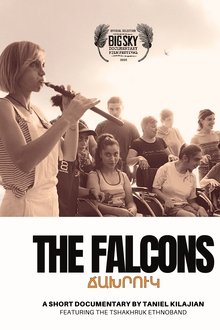
The Falcons (2025)
The Falcons is an intimate, observational documentary that delves into the world of the Tshakhruk Ethnoband, a remarkable musical ensemble in the Armenian highlands. Comprised of special-needs children that reside at the state orphanage, these young musicians find solace, strength, and self-expression through the transformative power of music.
The Armenian Genocide (2005)
More than one million Armenians perished between 1915 and 1916 in massacres or brutal deportation programs. Turkey still denies it ever happened. Laurence Jourdan examines massacres of Armenians in the decades leading up to the mass murder, and the geopolitical situation both before and after the genocide. Contemporaneous reports and documents written by Western diplomats stationed in the Ottoman Empire describe the methods used and the deportation routes. These accounts are mixed with personal stories from the living survivors and archive footage from Ottoman authorities.
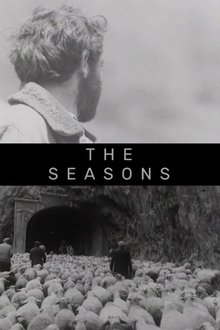
The Seasons (1975)
The last collaboration of Artavazd Peleshian and cinematographer Mikhail Vartanov is a film-essay about Armenia's shepherds, about the contradiction and the harmony between man and nature, scored to Vivaldi's Four Seasons.
Kajaran: Metamorphosis of Stone (2001)
Humans transform the world. In a stone mine, huge majestic rocks are blasted into pieces and after passing through the stone processing line, they gradually transform into pebbles.
Live by my house (2024)
In 2023, as a result of enemy aggression, Artsakh was finally depopulated after 9 months of blockade.
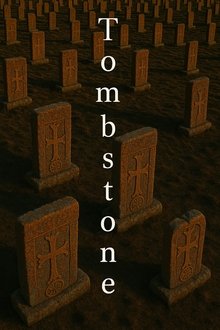
Tombstone (2025)
This movie tells the story of the centuries of cross-stones and how firmly they stand on the face of the earth, but at the same time, people forget about them.
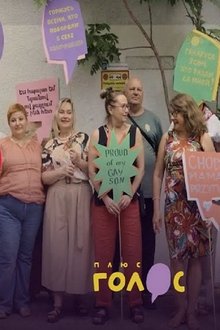
Not alone (2025)
Mothers and fathers of gay, lesbian and trans people from Armenia, Belarus, Georgia, Moldova, Poland, Russia and Ukraine have come to Berlin pride 2024. This documentary shows them as they are living together preparing for pride, the first pride for many in this group. The parents make placards, prepare borsch and talk about their relationships with their queer children.

Armenia: A Love Story (2023)
Two American teenagers become intrigued by Armenia's history and culture after learning about the 2020 aggression by Azerbaijan that devastated the Armenian-populated Nagorno-Karabach district from a friend's war correspondent father. Mark Tomlet and his friend Amy Holton embark on a life-changing journey to Armenia, visiting the war zone only months after an uneasy ceasefire was declared, and interview people affected by the war. In the process, the two learn a lot about themselves and how much they take for granted. That first trip leads to more engagement with Armenia, leading tours to the country, and eventually, something amazing happens that brings joy out of the tragedy of war. It's a serendipitous story of hope from tragedy, a chance adventure, and love blossoming even in the worst of circumstances.
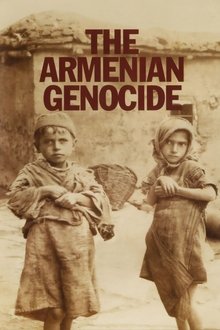
The Armenian Genocide (2006)
Explores the Ottoman Empire killings of more than one million Armenians during World War I. The film describes not only what happened before, during and since World War I, but also takes a direct look at the genocide denial maintained by Turkey to the present day.
Mountain Vigil (1964)
Poetic film about the struggle of man's will and muscles against nature, about the rock-climbers who prevent landslides and eliminate their consequences.
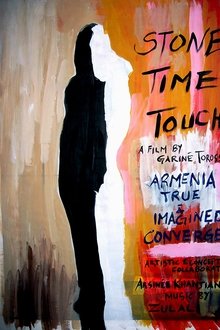
Stone Time Touch (2007)
Stone, Time, Touch is a documentary made by Gariné Torossian about the relationship of three Armenian women from the diaspora with the land of Armenia. The young woman (played by Kamee Abrahamian) is visiting Armenia for the first time. The older woman, Arsinée Khanjian has a more conflicted and analytical perspective of her identity and her relationship with the fledgling democracy, one of the former Soviet Union republics. She has been to landlocked Armenia many times and comments on photos taken by French photographer Marc Baguelin. The third trajectory is more subtle and is represented by Gariné Torossian herself whose face is super imposed from time to time in this stylistically-layered documentary.