When two of artist Barbora Kysilkova’s most valuable paintings are stolen from a gallery at Frogner in Oslo, the police are able to find the thief after a few days, but the paintings are nowhere to be found. Barbora goes to the trial in hopes of finding clues, but instead she ends up asking the thief if she can paint a portrait of him. This will be the start of a very unusual friendship. Over three years, the cinematic documentary follows the incredible story of the artist looking for her stolen paintings, while at the same time turning the thief into art.
Related Movies

Heild (2014)
Iceland's first non-narrative full-feature film's focus is set on presenting Iceland in a way it has never been presented before, using various elements of high-end cinematography. There are places everyone knows, but there are also thousands of well hidden places. To find these locations one has to be adventurous or a local, and to capture them right, one has to be creative and extremely patient.
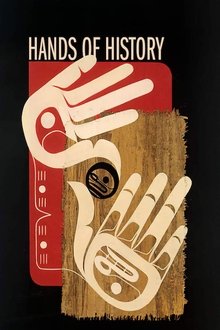
Hands of History (1994)
This documentary follows four female First Nations artists—Doreen Jensen, Rena Point Bolton, Jane Ash Poitras and Joane Cardinal-Schubert are First Nations artists who seek to find a continuum from traditional to contemporary forms of expression. These exceptional artists reveal their philosophies as artists, their techniques and creative styles, and the exaltation they feel when they create. A moving testimony to the role that Indigenous women artists have played in maintaining the voice of their culture.
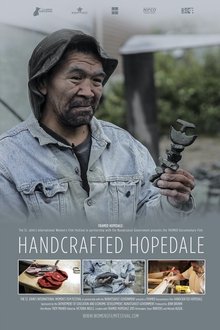
Handcrafted Hopedale (2015)
If you want to find world-class artisans, the small northern Labrador community of Hopedale offers you some of the best. Created through the St. John's International Women's Film Festival's FRAMED film education series, in partnership with the Nunatsiavut government, this film focuses on three prominent local craftspeople- two carvers and one traditional sewist.
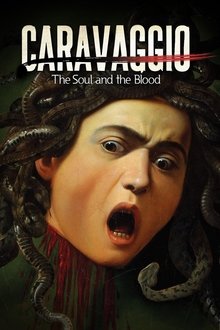
Caravaggio: The Soul and the Blood (2018)
An exciting and unsettling cinematic journey through the life, work and torments of Caravaggio.
Rubens (1948)
This surreal abstract film falls into three sections, or movements, the first taking place on the ground, the second in the air and the third again on the ground. In the first movement various motifs or themes are introduced, which are again picked up and developed in the third movement. Six spheres, evolved in the first movement, become the sole subject matter–or “dancers”–of the second movement, which consists of a simple type of ballet using the floor-plan choreography or traditional ballet as a basis of interest.
Tak trochu poučnej barák (2022)
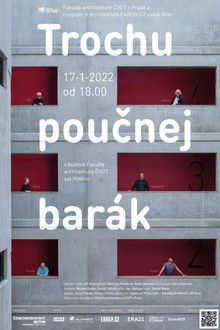
Colleagues, professional journalists and users comment on the masterpiece of the first lady of Czech architecture, Alena Šrámková... It is devoted to the building of the Faculty of Architecture of Czech Technical University, the work of the first lady of Czech architecture, Alena Šrámková, and from a distance brings users' perspective on how the building has succeeded over 10 years. Journalists who have been dedicated to architecture for many years, such as Karolína Vránková or Matěj Beránek, also collaborated on the film, and Bára Kopecká was in charge of the dramaturgical supervision.
Cartoneras (2018)
Cartoneras is a documentary that grapples with Latin America’s urban realities, and the cardboard publishing movement that has emerged from these in the 21st century. Reflecting on the different contexts that propelled this form of community publishing, like Argentina’s 2001 economic crisis, the independent art scene, and the movements which formed around waste-pickers, the film’s narrative is developed through conversations with important actors from the cartonera world.
Not Withholding Anything from You (2024)
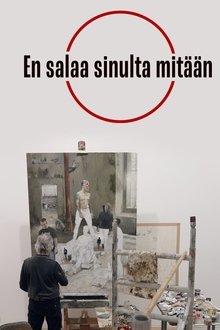
How do artists view their own work? How does actor Esko Salminen immerse himself in his roles, how does the writer/director Saara Turunen create a whole new world for the stage, and why does musician PK Keränen pick up his guitar time and time again? Is creativity a conscious or subconscious process, a pleasure or a compulsion? Veikko Aaltonen’s documentary takes us straight into the heart of creativity with artists from different fields and generations. Celebrating the various forms of passion and creative work, the film presents a compelling case for the significance of art.
I Needed Color (2017)
Jim Carrey exhibits his talent as a painter and reflects on the value and power of art.
I Will Dance (2015)
Follows the young people of Selma, Alabama's RATCo (Random Acts of Theatre Company) as they journey to New York City to share their story of hope, resilience, and overcoming.
Exergo (2024)
Departing from peripheral details of some paintings of the Bilbao Fine Arts Museum, a female narrator unravels several stories related to the economic, social and psychological conditions of past and current artists.
David Hockney at the Royal Academy of Arts (2017)
Widely considered Britain’s most popular artist, David Hockney is a global sensation with exhibitions in London, New York, Paris and beyond, attracting millions of visitors worldwide. Now entering his 9th decade, Hockney shows absolutely no evidence of slowing down or losing his trademark boldness. Featuring intimate and in-depth interviews with Hockney, this revealing film focuses on two blockbuster exhibitions held in 2012 and 2016 at the Royal Academy of Art in London. Director Phil Grabsky secured privileged access to craft this cinematic celebration of a 21st century master of creativity.

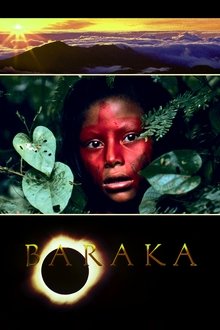
Baraka (1992)
A paralysingly beautiful documentary with a global vision—an odyssey through landscape and time—that attempts to capture the essence of life.
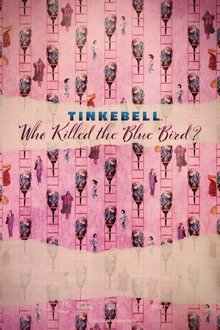
Tinkebell - Who Killed the Blue Bird? (2024)
Artist Katinka Simonse, alias Tinkebell, is a controversial, very mediagenic phenomenon. In her universe there is no distinction between life, art and activism; Tinkebell is her own work of art. Everything she encounters on her life path can become part of her story. Filmmaker Judith de Leeuw was given access to all images about Tinkebell, including her entire private archive. She thus constructed an archive film about how as a human being, living on the ruins of the past, you can be a character in your own story. What is the price you can afford if you continue to believe at any cost?