Surely Bach’s French Suites, which he composed during his years at Cöthen (1717–1723), are among the finest inducements to practise that any teacher has ever made to a pupil. In this case Bach wrote them for his young wife, Anna Magdalena. The over-riding impression left by these suites is one of endearing tunefulness. Clavier-Übung II is a later collection of didactic keyboard pieces. It comprises two greatly contrasted works: the Italian Concerto and the Overture in the French Style. These performances admirably demonstrate the thoughtful and persuasive approach that András Schiff adopts when performing Bach. Recorded live at the Bachfest 2010, Protestant Reformed Church of Leipzig, 11 June 2010 Repertoire J.S. Bach: French Suites Nos. 1–6, Overture in the French Style in B minor, Italian Concerto in F major, BWV 971
Related Movies
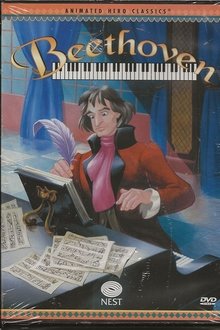
Animated Hero Classics: Beethoven (2005)
Even as a young boy, Beethoven marched to the beat of a different drummer. Trained in the traditional music methods by his father, Beethoven was an accomplished pianist by the age of 12. But he yearned to try new sounds and persevered until audiences heard his music. By his early twenties, this persistent young man performed for Joseph Haydn, who compared him to the great Mozart. Sadly, Beethoven began to lose his hearing, but he threw himself even more deeply into his music, composing "Fur Elise," "Sonata Pathetique" and the dramatic "Fifth Symphony" years later, audience members heard what he could not and leapt to their feet in ecstatic appreciation for such passionate music. His creativity gave the world then, as it does today, music that stirs the soul. The video begins in 1827 with 30,000 people paying tribute to the great Beethoven in Vienna, Austria. Then the video switches to his life as a child...

Beethoven: Symphonies Nos. 1-9 / The Beethoven Project (2010)
This is a 4-DVD set, featuring the Estonian conductor Paavo Järvi and the chamber orchestra (around 40 members) Die Deutsche Kammerphilharmonie Bremen. The first 3 DVDs feature live performances of all 9 of Beethoven's symphonies, and the 4th DVD is a documentary produced for DW (Deutsche Welle) on this Beethoven project.
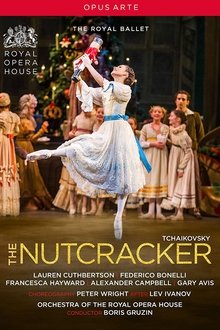
The Nutcracker (2016)
The young Clara creeps downstairs on Christmas Eve to play with her favourite present – a Nutcracker. But the mysterious magician Drosselmeyer is waiting to sweep her off on a magical adventure. After defeating the Mouse King, the Nutcracker and Clara travel through the Land of Snow to the Kingdom of Sweets, where the Sugar Plum Fairy treats them to a wonderful display of dances. Back home, Clara thinks she must have been dreaming – but doesn’t she recognize Drosselmeyer’s nephew?
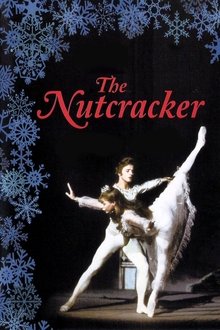
The Nutcracker (1977)
The Nutcracker is Mikhail Baryshnikov's breathtaking and critically acclaimed Emmy-nominated production. This spectacular performance is danced by the magnificent team of Baryshnikov, one of the greatest classical dancers of the century, and Gelsey Kirkland, both showcased at the peak of their careers, with members of the American Ballet Theatre.
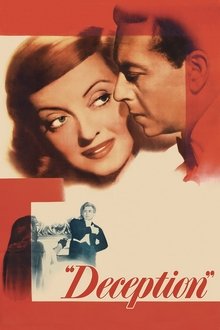
Deception (1946)
After marrying her long lost love, a pianist finds the relationship threatened by a wealthy composer who is besotted with her.
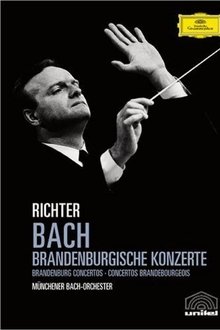
Bach: Brandenburg Concertos (1970)
From the euphoric first to the solemn sixth, the Brandenburg Concertos features some of Bach's finest and most popular orchestral music. Münchener Bach-Orchester ; Karl Richter, conductor and harpsichord. Recorded Apr. 1-10, 1970, Schloss Schleissheim No. 1 in F major, BWV 1046 -- No. 2 in F major, BWV 1047 -- No. 3 in G major, BWV 1048 -- No. 4 in G major, BWV 1049 -- No. 5 in D major, BWV 1050 -- No. 6 in B flat major, BWV 1051. Apr. 1-10, 1970. Orchestra: Münchener Bach-Orchester - Conductor: Karl Richter - Violin: Otto Büchner - Trumpet: Pierre Thibaud - Recorder: Hans-Martin Linde - Recorder: Günter Höller - Oboe: Manfred Clement - Flute: Paul Meisen - Viola: Herbert Blendinger - Viola: Ingo Sinnhoffer - Viola Da Gamba: Hans Dieter Kruse - Viola Da Gamba: Oswald Uhl - Cello: Peter Steiner - Double Bass: Franz Ortner

Beethoven's Nine: Ode to Humanity (2024)
Can a work of art remain relevant 200 years after its creation? Ludwig van Beethoven’s last completed symphony proves it’s possible.
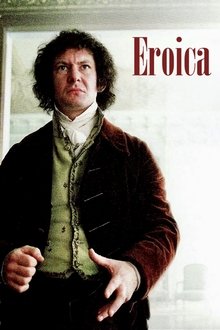
Eroica (2003)
British filmmaker Simon Cellan Jones directs the BBC drama Eroica, starring Ian Hart as Ludwig van Beethoven. Shot on digital video, this TV film depicts the first performance of Beethoven's Third Symphony, June 9th, 1804, in Vienna, Austria. Prince Lobkowitz (Jack Davenport) has invited friends to listen to Beethoven conduct his new symphony for the first time. Among the aristocratic attendees are Count Dietrichstein (Tim Pigott-Smith), Countess Brunsvik (Claire Skinner), and composer Josef Haydn (Frank Finlay). The actual musical score is performed by the Orchestre Revolutionaire et Romantique, under the direction of John Eliot Gardiner.
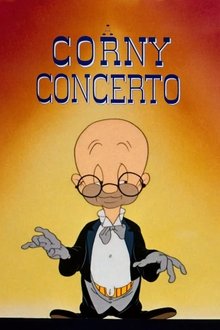
A Corny Concerto (1943)
Elmer Fudd introduces two pieces of classical music: "Tales of the Vienna Woods" and "The Blue Danube", and acted out by Bugs Bunny, Porky Pig, Laramore the Hound Dog, a family of swans, and a juvenile Daffy Duck.
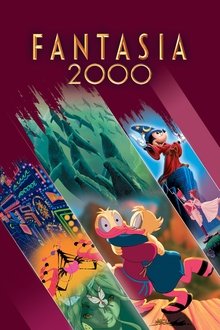
Fantasia 2000 (2000)
Blending lively music and brilliant animation, this sequel to the original 'Fantasia' restores 'The Sorcerer's Apprentice' and adds seven new shorts.
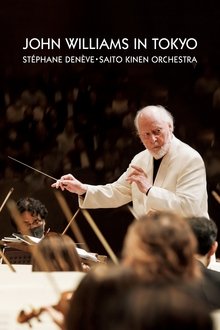
John Williams in Tokyo (2024)
30 years after his last visit to Japan, John Williams has returned for a special concert – making his debut with the world-famous Saito Kinen Orchestra in renditions of his beloved film scores and reuniting with his longtime friend, world-renowned conductor Seiji Ozawa (1935-2024). Captured live on record at Suntory Hall last year, John Williams In Tokyo is now being be released by Deutsche Grammophon and follows his acclaimed concert albums, The Berlin Concert and John Williams in Vienna, which topped charts around the globe.
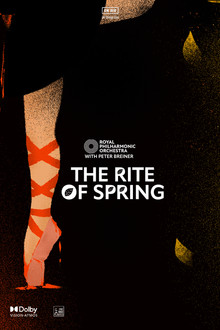
Igor Stravinsky's The Rite of Spring performed by The Royal Philharmonic Orchestra (2022)
On Air presents Igor Stravinsky's The Rite of Spring, performed by the world-renowned Royal Philharmonic Orchestra, conducted by Peter Breiner, and recorded at BBC Television Centre. Expertly brought to life by some of the world's most sought-after classical musicians, the ensemble comprises 93 instruments: 51 string, 16 woodwind, 20 brass and 6 percussion. The full performance is available to watch on demand in cinematic quality.

Inside Karajan (2008)
Very few people really knew Herbert von Karajan. The conductor gave access to his private life only a little circle of strictly loyal people who kept their secrets even long after the maestro’s death. This documentary for the first time shows in the whole dimension the real man Karajan: not only the image of a dandy that he himself had shown to the public, but the unfiltered image of his personality. Newly discovered original film footage from the inner circle shows Karajan’s private life like it really was.
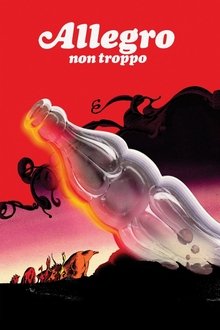
Allegro non troppo (1976)
The film is a parody of Disney's Fantasia, though possibly more of a challenge to Fantasia than parody status would imply. In the context of this film, "Allegro non Troppo" means Not So Fast!, an interjection meaning "slow down" or "think before you act" and refers to the film's pessimistic view of Western progress (as opposed to the optimism of Disney's original).
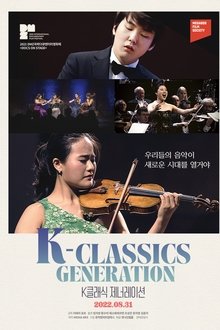
K-Classics Generation (2020)
The film traces the career of some of the winners of this new generation nicknamed the "K-Classics Generation", including the 2 recent winners of the Queen Elisabeth Competition, the soprano Hwang Sumi and the violinist Lim Jiyoung. In Korea, where it all began, and in Germany where most of them have settled.
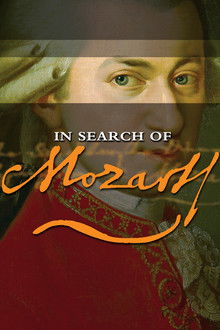
In Search of Mozart (2006)
Made to celebrate the 250th anniversary of Mozart's birth, IN SEARCH OF MOZART is the first feature-length documentary on Mozart's life. Produced with the world's leading orchestras and musicians, told through a 25,000 mile journey along every route Mozart followed, this detective story takes us to the heart of genius. Throughout, it is the music that takes center stage, with the jigsaw of Mozart's life fitting around it.
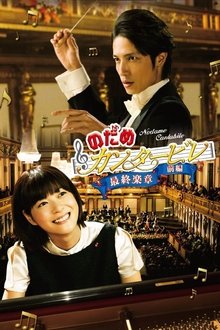
Nodame Cantabile: The Movie I (2009)
Chiaki is an aspiring conductor who faces the challenge of leading an orchestra which is made up of substitutes. Nodame gives her support to her beloved as she works hard towards achieving her dream to pass a promotion exam at their music conservatory. Will Chiaki be able to revive a broken down orchestra and launch his musical career? What will become of Nodame and Chiaki's relationship?