‘Spitfire— Birth of a Legend‘ tells the story of the Spitfire from a radical design on the drawing board to the fighter aircraft that became the symbol of Britain’s determination to fight on to victory. It celebrates the history of this acclaimed aircraft, the men who designed and built it, and those who flew and fought in it. The story, along with dramatic archive and colour film of aerial combat, graphically illustrates the appeal and fascination the Spitfire has maintained since it faced and fought the fighter and bomber formations of the Luftwaffe.
Related Movies
Nazis: The Occult Conspiracy (1998)
This documentary examines how Adolf Hitler and the Nazi regime made use of ancient mysticism, occultism, and mind-control techniques in their efforts to win the war.
Matria (2014)
My grandfather fought alongside Pancho Villa, became Master Mason, was an elected official who represented Oaxaca three times, and president of the national Association of Cattle Hands. In 1942, he formed the Legion of Mexican Fighters, a group of 100,000 cattle hands training to repel a possible Nazi invasion in Mexico. His story of success, however, held a secret that affected my family, and that I discovered while making this documentary.

Another Country (2000)
The Portuguese Revolution (1974-75) seen through the eyes of some of the most important photographers and filmmakers that witnessed the event. Their dreams and expectations and what came out of the revolution. With outstanding historical footage.

Album(s) d'Auschwitz (2012)
Recently, two photo albums with photos from Auschwitz were found in 1944. One belongs to Officer Karl Höcker and the other prisoner Lili Jacob, who survived the concentration camp. The pictures taken during the same months show completely different worlds. A documentary that once again tells this important and awful part of Europe's history.
Hitler & Stalin: Portrait of Hostility (2009)
A double portrait of two dictators who were thousands of miles apart but were constantly fixated on each other.
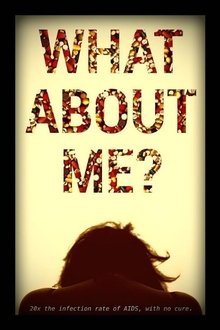
What About ME? (2016)
Inside the dramatic search for a cure to ME/CFS (Myalgic Encephalomyelitis/Chronic Fatigue Syndrome). 17 million people around the world suffer from what ME/CFS has been known as a mystery illness, delegated to the psychological realm, until now. A scientist in the only neuro immune institute in the world may have come up with the answer. An important human drama, plays out on the quest for the truth.
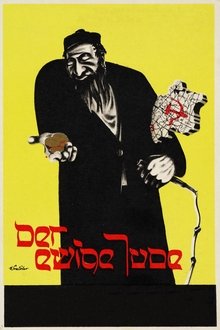
The Eternal Jew (1940)
A Nazi propaganda film made to promote anti-Semitism among the German people. Newly-shot footage of Jewish neighborhoods in recently-conquered Poland is combined with preexisting film clips and stills to defame the religion and advance Hitler's slurs that its adherents were plotting to undermine European civilization.
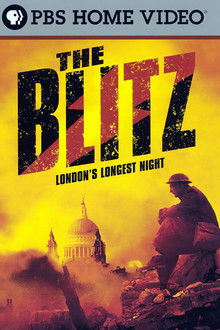
The Blitz: London's Longest Night (2007)
Details the German bombing of London the night of the 29th of December, in 1940.
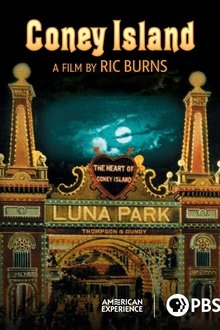
Coney Island (1991)
Before there was Disneyland, there was Coney Island. By the turn of the century, this tiny piece of New York real estate was internationally famous. On summer Sundays, three great pleasure domes--Steeplechase, Luna Park and Dreamland--competed for the patronage of a half-million people. By day it was the world's most amazing amusement park, by night, an electric "Eden".
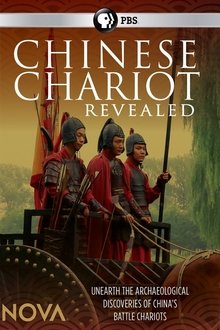
Chinese Chariots Revealed (2017)
For over 1,000 years, chariots were indispensable weapons in ancient China. The art of chariot driving and special warfare were used there for longer than anywhere else. Their contribution to the unification of the Chinese empire is undisputed. New archaeological discoveries reveal how the Chinese developed and perfected this sophisticated weapon. In the Bronze Age, over 3,000 years ago, chariots and other war equipment arrived in China from Central Asia via the Hexi Corridor. In addition to trade and new alliances, their spread was mainly due to the Zhou dynasty's incessant military campaigns against rebellious vassal states and the constant attacks by the mobile cavalries of its northern neighbors. Manned with spearmen or archers, the chariots were a decisive weapon in battle.

Trapped Time (2017)
Petar Peca Popović is one of the greatest, most famous, most authoritative and for sure, the best, connoisseur of Rock and Roll in the former Yugoslavia. He promoted Rock and Roll in those heroic times. We are going on a peculiar kind of trip with him, along an "emotional homeland", of ex-Yu, "searching for the lost times" and dear friends, the most significant representatives of this culture - rock'n'roll legends.
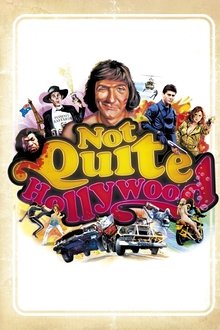
Not Quite Hollywood (2008)
As Australian cinema broke through to international audiences in the 1970s through respected art house films like Peter Weir's "Picnic At Hanging Rock," a new underground of low-budget exploitation filmmakers were turning out considerably less highbrow fare. Documentary filmmaker Mark Hartley explores this unbridled era of sex and violence, complete with clips from some of the scene's most outrageous flicks and interviews with the renegade filmmakers themselves.

Geoff McFetridge: Drawing a Life (2023)
Deeply thoughtful and illuminating, DRAWING A LIFE reveals the details of artist Geoff McFetridge’s life and work while delving further into the universal questions of what makes a fulfilling life and how to live with intention in the limited time we all have.
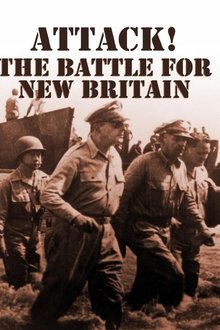
Attack! The Battle for New Britain (1944)
Actual footage by the United States Signal Corps of the landing and attack on Arawe Beach, Cape Glouster, New Britain island in 1943 in the South Pacific theatre of World War Two, and the handicaps of the wild jungle in addition to the Japanese snipers and pill-box emplacements.
The Russia We Lost (1992)
The sequel of feature-publicistic film «You Can’t Live Like That». Showing the countrymen charmless and sometimes scaring life picture of once great power with pain and anger, the author tries to uncover the reason of the country’s and nation’s tragedy.
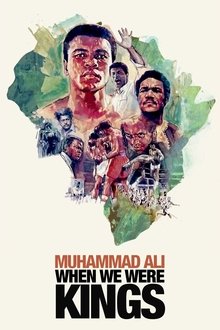
When We Were Kings (1996)
It's 1974. Muhammad Ali is 32 and thought by many to be past his prime. George Foreman is ten years younger and the heavyweight champion of the world. Promoter Don King wants to make a name for himself and offers both fighters five million dollars apiece to fight one another, and when they accept, King has only to come up with the money. He finds a willing backer in Mobutu Sese Suko, the dictator of Zaire, and the "Rumble in the Jungle" is set, including a musical festival featuring some of America's top black performers, like James Brown and B.B. King.
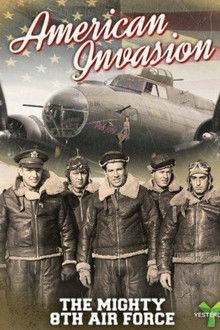
The American Invasion (2015)
In January 1942, the order activating the 'US Air Forces in the British Isles' was announced. On 12th May, the first contingent of USAAF personnel arrived in England, the beginnings of what was to become the largest air force in the world. The British people had never seen anything like them. Michael Brandon (Dempsey and Makepeace) presents the story of the courageous young Americans who fought the war from the foreign fields of eastern England. And of the local populations who welcomed them, resented them, admired and loved them. "The American Invasion" provides a powerful record of a momentous period in American and British history.

Three Minutes: A Lengthening (2022)
The story of the only three minutes of footage —a home movie shot by David Kurtz in 1938— showing images of the Jewish inhabitants of Nasielsk (Poland) before the beginning of the Shoah.
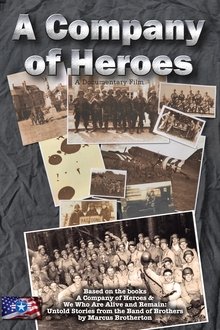
A Company of Heroes (2013)
Easy Company, the 2nd Battalion of the 506th Parachute Infantry Regiment of the 101st Airborne Division, fought their way through Europe, liberated concentration camps, and drank a victory toast in April 1945 at Hitler's hideout. Veterans from Easy Company, along with the families of three deceased others, recount their horrors and victories, bonds they made and the friends they lost.