The real estate industry has destabilized the natural surroundings of the city of Concón, on the Chilean coast, forcing the inhabitants and landscapes of the region to find new ways to adapt and survive. “Nidal” depicts the cohabitating of species and the accelerated transformation of the landscapes due to human occupation.
Related Movies

Papua New Guinea: Anthropology on Trial (1983)
"Papua New Guinea: Anthropology on Trial" was a 1983 episode of the PBS science documentary series NOVA. It explored the field of anthropology, particularly in the context of Papua New Guinea, from the perspective of the people being studied.

American Hardcore (2006)
Inspired by Steven Blush's book "American Hardcore: A tribal history" Paul Rachman's feature documentary debut is a chronicle of the underground hardcore punk years from 1979 to 1986. Interviews and rare live footage from artists such as Black Flag, Bad Brains, Minor Threat, SS Decontrol and the Dead Kennedys.

Corporate Accountability (2020)
Images of Argentinian companies and factories in the first light of day, seen from the inside of a car, while the director reads out documents in voiceover that reveals the collusion of the same concerns in the military dictatorship’s terror.

Sonar Rock City: Seattle (2019)
Sonar Rock City: Seattle is a journey through the city that caught our attention back in 1992 thanks to the grunge movement which today no longer exists. Still today the creative spirit runs through its veins with a new music scene that captures what Seattle is in its core.
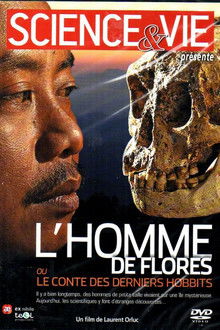
The Man of Flores or the tale of the last Hobbits (2011)
March 2008. The renowned journal ‘Science’ publishes an article confirming that the human bones discovered in 2004 on the island of Flores in Indonesia are indeed those of a new species of man. These tiny men lived there just a few thousand years ago... Scientists have named this new cousin “Homo floresiensis”, the Man of Flores.


Bamboo Theatre (2019)
This film is a portrait of unique cultural space for Spirits, Gods and People. While permanent theatres are commonly built in most cosmopolitan modern cities, Hong Kong preserves a unique theatrical architecture, a Chinese tradition that has lasted more than a century - Bamboo Theatre.

The Alaska-Siberian Expedition (1912)
Captain Kleinschmidt leads an expedition sponsored by the Carnegie Museum to the arctic regions of Alaska and Siberia to study the natives and the animal life.
Congo (1972)
An experimental ethnographic documentary that criticizes the colonizer view of anthropology.
The Trick Brain (2013)
A dark and magical visit to the fabled Parisian address Rue Fontaine 42. This was the residence of André Breton, the mastermind of surrealism, who surrounded himself with an impressive collection of modern, Western art and ethnographic objects from Oceania and North America. The collection was sold and divided up in 2003 at a controversial auction. 'The Trick Brain' is a delirious montage and a trip back in time to Breton's private art collection, where Atkins has been scouring the archives and come up with a possessing interior film of the place that once was, complete with surrealistic paintings, scores of Indian figures and hundreds of other displayed rarities. The film's soundtrack is provided by an observant narrator, who reveals to us that the objects shown are not necessarily what they claim to be - but instead are catalysts for some kind of wonderful linguistic virus which reveals the real identity of things.
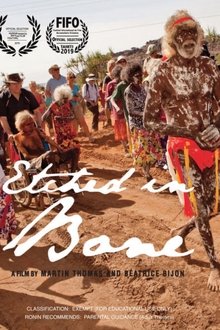
Etched in Bone (2018)
Drawing on original footage from National Geographic, Etched in Bone explores the impact of one notorious bone theft by a member of the 1948 American-Australian Scientific Expedition to Arnhem Land. Hundred of bones were stolen and deposited in the Smithsonian Institution in Washington DC, until it became known to Arnhem elders in the late 1990s. The return of the sacred artefacts was called for, resulting in a tense standoff between indigenous tribespeople and the Department of Anthropology at the Smithsonian.

Víctor Jara in Live in Lima (1973)
Concert by Víctor Jara at Panamericana Televisión in Lima, Peru, on July 17, 1973. This is one of the last audiovisual records of Víctor Jara. Two months later he would be assassinated by the Chilean military dictatorship.
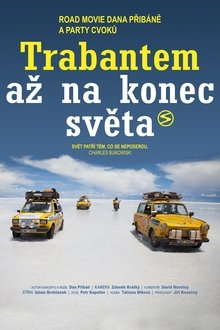
Trabantem až na konec světa (2014)
The third installment in Dan Přibáň's series of travel documentaries describes the author's journey with his friends across South America in vehicles that are often notorious but cult in their own way. The charming dynamics of the group on screen are further enhanced by the high-quality craftsmanship.
San Pedro de Atacama (1964)
Report on the town of San Pedro which exists in the middle of the desert and at over 2,430 meters above sea level. It also deals with the work of priest Gustavo Le Paige and the museum he helped develop.

The Decline of Western Civilization Part II: The Metal Years (1988)
An exploration of the heavy metal scene in Los Angeles, with particular emphasis on glam metal. It features concert footage and interviews of legendary heavy metal and hard rock bands and artists such as Aerosmith, Alice Cooper, Kiss, Megadeth, Motörhead, Ozzy Osbourne and W.A.S.P..

Kill Your Idols (2004)
A 2004 documentary on thirty years of alternative rock 'n roll in NYC.Documenting the history from the genuine authenticity of No Wave to the current generation of would be icons and true innovators seeing to represent New York City in the 21st century

Statues Also Die (1953)
Commissioned by the journal Présence Africaine, this short documentary examines how African art is devalued and alienated through colonial and museum contexts. Beginning with the question of why African works are confined to ethnographic displays while Greek or Egyptian art is celebrated, the film became a landmark of anti-colonial cinema and was banned in France for eight years.
La península de los volcanes (NaN)
The documentary portrays the desires and ftures of four young people from the third year of secundary education in Chile. Two of them attend the industrial high school in the San Joaquín commune, where they have already begun their training as a textile technician. They both have dreams, they want to study, work, start a family and improve themselves. On the other hand, at the exclusive Saint George school, two students study in privileged conditions. They want to be professionals and develop through the arts. This is the portrait of two worlds located less than 20 kilometers apart and that can only be together in the audiovisual montage. It is the manifestation of the coincidences and contradictions that exist between the realities and the discourses of four young Chilean students in a fundamental stage for their future.

Sweet Osmanthus Flowering Late (2024)
"Sweet Osmanthus Flowering Late" is a feature-length ethnographic film that envisions social rejuvenation and collective convalescence in the aftermath of the pandemic. Filmed in Wuhan, the film follows the everyday lives of three middle-class households. It postulates the existence of a mass dreaming phenomenon that facilitated fatigued Chinese inhabitants to rejuvenate themselves following the secluded episode of lived experience and to coexist with the enduring imprints of "the event" on their social lives.