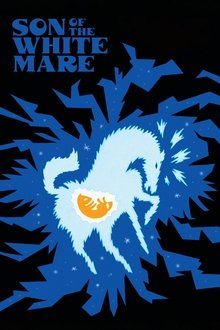
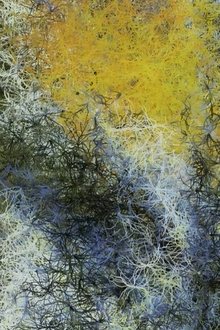
Claire is composed of digital scans and blow-ups of a series of three ink-on-paper artworks created in 2012 by French-Spanish researcher, publisher and artist Claire Latxague. While collecting drawings, written documents and other printed materials for a (yet unreleased) project called Un film de papier, I’ve stumbled upon Latxague’s artwork, entitled À la renverse. The blow-ups were made in an attempt of unearthing cartographic imagery in abstract compositions.
Related Movies
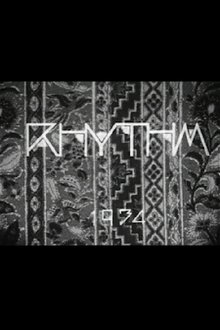
Rhythm (1934)
A comfortable rhythm composed of light and shadow. Director Ogino-style absolute movie which freely manipulates geometric figures.
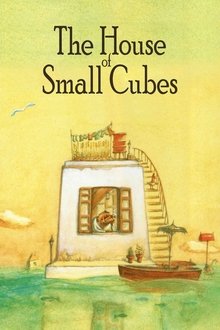
La Maison en Petits Cubes (2008)
La Maison en Petits Cubes tells the story of a grandfather's memories as he adds more blocks to his house to stem the flooding waters.
Out of the Inkwell (1919)
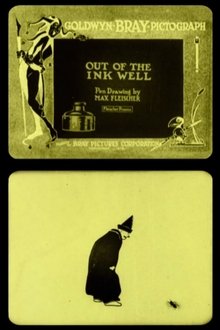
Max Fleischer draws the upper and lower halves of the Clown's body, which dance around separately before coming together. Max interacts with his creation before ultimately washing the Clown off the page with water.
Madhouse Mitchel (2017)
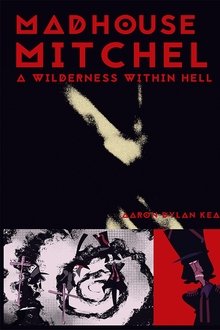
Creeping from the halls of the maze brain, corruption and terror is woven by devils born from the denied errors of mankind.
Trip!-Trap! (2005)
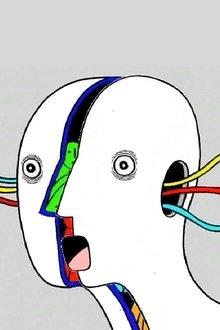
In the darkness of a cave, one man who had never seen even his own figure found a hollow flooded with light. An expression of a chaotic world. This experimental graduation film is a mixture of different animation techniques
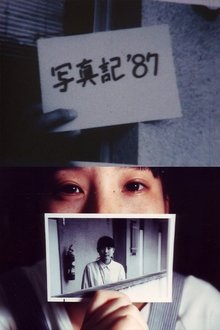
Photodiary '87 (1987)
I turned my gaze to the various events in daily life and made this filmic diary in a manner as if confessing my feelings. Of course, since I was making the film, I wanted to depict these feelings and events with tricky techniques. I used various methods to shoot photographs of a relative's wedding, the landscape I see from window of my house, commemorative travel photographs and the like frame-by-frame.
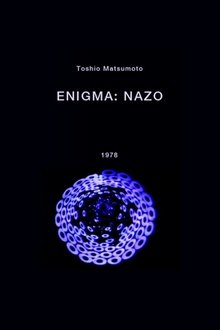
Enigma: Nazo (1978)
Enigma is something of a more glamorous version of White Hole, with a wide variety of elaborate textures (often composed of iconographic and religious symbols) converging towards the centre of the screen.
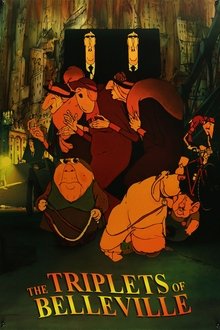
The Triplets of Belleville (2003)
When her grandson is kidnapped during the Tour de France, Madame Souza and her beloved pooch Bruno team up with the Belleville Sisters—an aged song-and-dance team from the days of Fred Astaire—to rescue him.
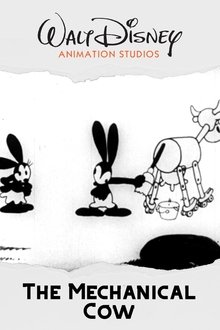
The Mechanical Cow (1927)
Oswald wakes up grumpy and takes it out on his alarm clock, afterward trying his best to wake up the mechanical cow sleeping in the bed beside him, with limited success. They finally do get going, sailing around the barnyard offering milk to denizens of the farm. When kidnappers arrive and takes Oswald's girlfriend away, he and the cow set off to rescue her.
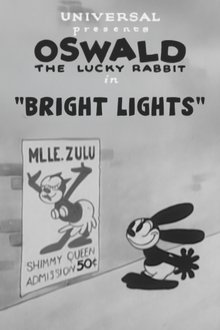
Bright Lights (1928)
Oswald would like to see Mlle. Zulu the Shimmy Queen but he's short on cash. Seeing the more stately gentlemen being admitted without tickets, he tries to fool the bouncer into thinking he's important by puffing up his chest and striding in. It doesn't work, and he's forced to try a second plan, sneaking in under another patron's shadow. He gets caught and spends his time being chased by the bouncer throughout the theater.
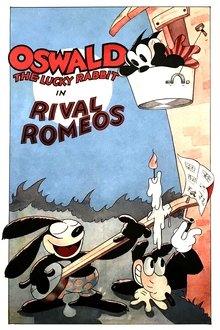
Rival Romeos (1928)
Oswald is off to see his sweetheart when he is passed by a rival in a faster car. He takes the lead, though, when both drivers encounter a mud puddle; Oswald isn't afraid to get a little dirty, while his competitor is. Oswald arrives and serenades his love, hampered by the animals in the yard. The rival shows up and they fight over the girl, during which time she slips away with a third suitor.
The Enchanted Spectacles (1909)
A parlor full of bon vivants pass around an enchanted pair of spectacles that “reveal the personality and pleasures of the one who wears them.”

Let's Be Sporty (1909)
This subject portrays in a vivid manner the operations of a puppet in his efforts to see the sights.
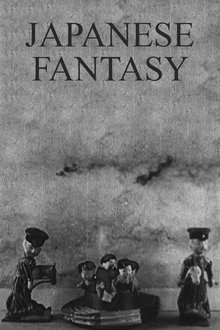
Japanese Fantasy (1909)
This subject presents a remarkably clever series of illusions in which a Japanese lantern, several dolls, chickens, mice and grasshoppers play a very prominent part.
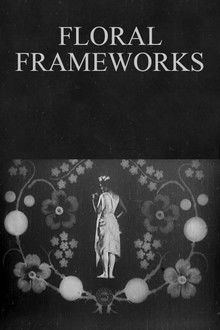
Floral Frameworks (1909)
There have been numerous studies of plants and flowers presented to the public, but none which exhibit the perfection of stereoscopic detail. The various plants have been photographed against black backgrounds and are carefully colored. In addition, the various groups were made to revolve during the time of exposure and thus show a succession of lights and shadows which produces the relief which adds so greatly to a picture. (Moving Picture World)
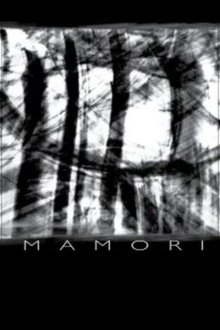
Mamori (2010)
Mamori transports us into a black-and-white universe of fluid shapes, dappled and striated with shadows and light, where the texture of the visuals and of the celluloid itself have been transformed through the filmmaker’s artistry. The raw material of images and sounds was captured in the Amazon rainforest by filmmaker Karl Lemieux and avant-garde composer Francisco López, a specialist in field recordings. Re-filming the photographs on 16 mm stock, then developing the film stock itself and digitally editing the whole, Lemieux transmutes the raw images and accompanying sounds into an intense sensory experience at the outer limits of representation and abstraction. Fragmented musical phrases filter through the soundtrack, evoking in our imagination the clamour of the tropical rainforest in this remote Amazonian location called Mamori.