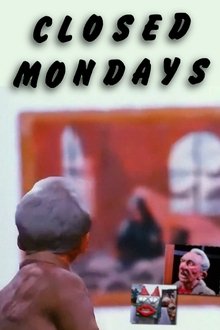
After becoming hypnotised Felix decides to try hypnotism himself. After he is successful a couple of times he decides to hypnotise his wife. The plan backfires and Felix is kicked out of his house again. Preserved by the Academy Film Archive in 2010.
Related Movies
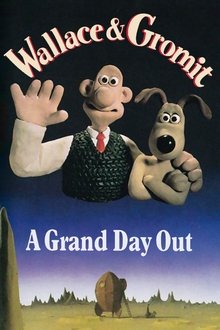
A Grand Day Out (1990)
Wallace and Gromit have run out of cheese, and this provides an excellent excuse for the duo to take their holiday to the moon, where, as everyone knows, there is ample cheese. Preserved by the Academy Film Archive.
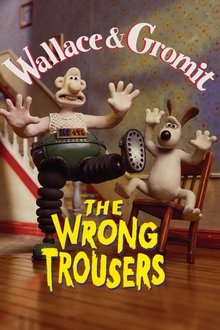
The Wrong Trousers (1993)
Wallace rents out Gromit's former bedroom to a penguin, who takes up an interest in the techno trousers created by Wallace. However, Gromit later learns that the penguin is a wanted criminal.
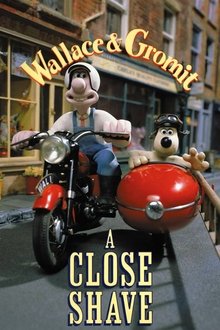
A Close Shave (1996)
Wallace's whirlwind romance with the proprietor of the local wool shop puts his head in a spin, and Gromit is framed for sheep-rustling in a fiendish criminal plot.
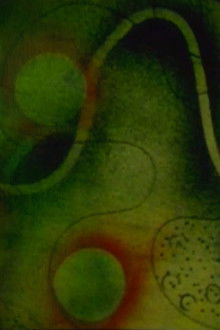
Things to Come (1953)
A vibrant animation by Patricia Marx. Preserved by the Academy Film Archive in 2000.
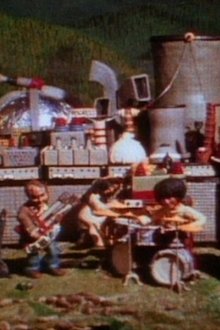
Mountain Music (1976)
Mountain Music illustrates what happens when technology gets too advanced too soon. Preserved by the Academy Film Archive in 2012.

Whitney Commercial (1973)
Commissioned by David Bienstock, creator of the New American Film Series at the Whitney Museum of Art to raise funds for the second season of the series. The film was projected at the end of each program and a box to receive donations was placed at the exit of the theater. Whitney Commercial ran for two or three years until the Museum agreed to sponsor the series on its own which has continued to the present season. Preserved by the Academy Film Archive in 2015.
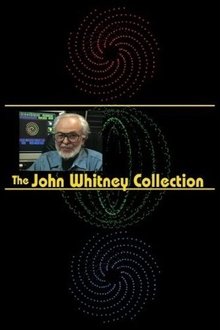
Five Film Exercises: Film 4 (1944)
The entire film is divided into four consecutive chosen approaches—the fourth section devoted to a reiteration and extension of the original material. Preserved by the Academy Film Archive in 1999.
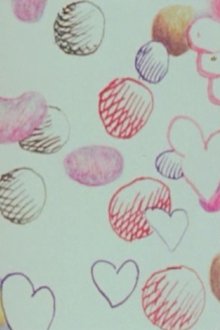
Dear Janice (1972)
Beckett cycles through a limited number of drawings, but adds new information to each drawing every time we see it, giving the sense of a world that is infinitely rich and also obviously contained tightly within the edges of the paper. Preserved by the Academy Film Archive in partnership with iotaCenter and National Film Preservation Foundation in 2007.

How to Bridge a Gorge (1942)
An instructional video that teaches, through stop-motion animation, how to build a bridge over a gorge that can hold heavy military equipment. Preserved by the Academy Film Archive in 2004.
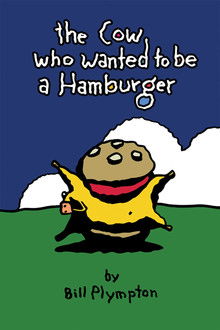
The Cow Who Wanted To Be a Hamburger (2010)
A children's fable about the power of advertising, the meaning of life and ultimately the test of a mother's love. Preserved by the Academy Film Archive in 2016.
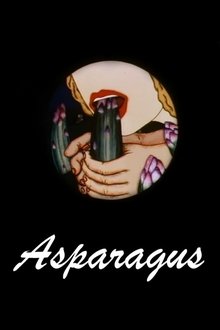

Eclipse Predictions (1982)
Diana Wilson’s mysteriously beautiful animated tableaux fluidly unfold before our eyes, a generous receptacle for the mournful, harrowing soundtrack, in which the filmmaker recounts a tragedy from her youth. Preserved by the Academy Film Archive in 2011.

Cinderella (1986)
“CINDERELLA is a musical treatment of the fairy tale. I have broken apart the story and set it as a mechanical game with a series of repetitions where CINDERELLA is projected back and forth like a ping-pong ball between the hearth and the castle. She never succeeds in satisfying the requirements of the ‘Cinderella Game’. The film was shot MOS, the dialogue is lip-synched, and along with the out-front score and effects track magnifies the film’s sense of alienation.” — E.B. 1984 - Preserved by the Academy Film Archive in 2017.
Why They Love Cavemen (1921)
An animated comedy short from the 1920s. Preserved by the Academy Film Archive in 2008.
Five Film Exercises: Film 5 (1944)
Opens with a short canonical statement of a theme upon which the entire film is constructed. The canon is repeated in contrasting variations by means of color. A second section poses the same image in deep film space. The image unfolds itself repeatedly, leaving the receding image to continue on smaller and smaller. Preserved by the Academy Film Archive in 2005.
Anijam (1984)
The bizarre adventures of the cartoon character Foska, drawn by 22 animators working in collaboration. Each animator worked on his or her own sequence only and did not know what action preceded or followed his or her sequence, except that the first drawing of a sequence is the last drawing from the previous sequence. Preserved by the Academy Film Archive in 2010.
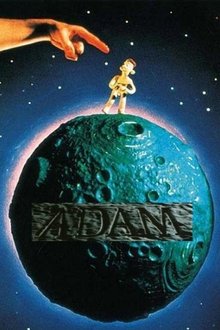
Adam (1992)
When The Hand of God creates Adam, he must learn the ways of the world, and can only hope for company.
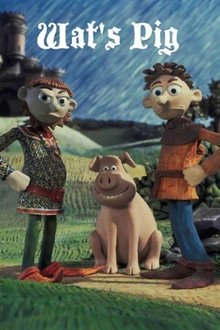
Wat's Pig (1996)
In a Medieval castle, a marauder tries to kidnap the twin infant sons of the lord. He makes off with only one, whom he drops about a mile away. A pig rescues this baby, so one brother grows up high on the hog, the other down with the swine; one is lazy, his lost brother is industrious. Years later, when a neighboring prince declares war, the brother in the castle is too soft to fight. Through happenstance, the twins are united just before the final battle. Will the upper-class brother let his humble sibling lead the troops to certain defeat and death? Preserved by the Academy Film Archive.