"Chair Times" charts a course through an ocean of chairs. In the focus are 125 objects from the Collection of the Vitra Design Museum. Arranged according to their year of production, they illustrate development from 1807 to the very latest designs straight off the 3D printer, forming a timeline to modern seating design. The film features many people whose vocations involve design and who are experts in the field, such as designers Hella Jongerius, Antonio Citterio and Ronan Bouroullec, architects and collectors Arthur Rüegg and Ruggero Tropeano, architect David Chipperfield, Director Emeritus of MAK Vienna/Los Angeles Peter Noever, Mateo Kries, Director of the Vitra Design Museum, Vitra Design Museum curators Amelie Klein, Jochen Eisenbrand and collection curator Serge Mauduit. And your guide through the history of chairs is Rolf Fehlbaum, Chairman Emeritus of Vitra.
Related Movies
The Gateway Arch: A Reflection of America (2006)
The Gateway Arch: A Reflection of America chronicles for the first time the complete story of this great American symbol… from Thomas Jefferson, Lewis & Clark, and St. Louis’ role in westward expansion; to the eventual construction of the largest stainless steel structure in history.
Empire City (1985)
A film essay contrasting the modern metropolis with its "golden age" from 1830-1930, with the participation of some of New York's leading political and cultural figures. Made at a time when the city was experiencing unprecedented real estate development on the one hand and unforeseen displacement of population and deterioration on the other. Empire City is the story of two New Yorks. The film explores the precarious coexistence of the service-based midtown Manhattan corporate headquarters with the peripheral New York of undereducated minorities living in increasing alienation.

Postmodernism: The Substance of Style (2011)
This film features some of the most important living Postmodern practitioners, Charles Jencks, Robert A M Stern and Sir Terry Farrell among them, and asks them how and why Postmodernism came about, and what it means to be Postmodern. This film was originally made for the V&A exhibition 'Postmodernism: Style and Subversion 1970 - 1990'.

Great Homes of Rochester (2002)
Travel through the streets of Rochester and you’ll find some extraordinary architecture. From California bungalows to English Tudors, French colonials to Victorians, the Flour City is home to so many beautiful dwellings. WXXI takes you on a private tour inside some of these exquisite house in Great Homes of Rochester.
The Architecture of Rudolf Steiner (1991)
Take a walking tour of not only the current Goetheanum, but also the original “First Goetheanum” that was destroyed by fire in 1924. Through the magic of the camera, LightFilled Productions has taken available photographs and recreated the First Goetheanum – beginning with construction. The camera guides the viewer along an intimate tour of the forms and expanses of this unique building. After the fire of 1924, we see the debris cleared and a new building rise out of its ashes. At the end, we are treated to a view of the surrounding buildings that have been built nearby – inspired by Steiner’s vision of architecture. The effect of this tour is heightened by the absence of narration, with music being the only sound as one “walks” along, pausing to look at these remarkable structures.
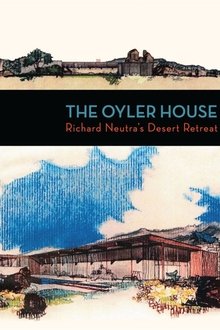
The Oyler House: Richard Neutra's Desert Retreat (2012)
In 1959, a government employee named Richard Oyler, living in the tiny desert town of Lone Pine, California, asked world-famous modern architect Richard Neutra to design his modest family home. To Oyler's surprise, Neutra agreed. Thus began an unlikely friendship that led to the design and construction of an iconic mid-century modern masterpiece.
Big Time (2017)
Big Time gets up close with Danish architectural prodigy Bjarke Ingels over a period of six years while he is struggling to complete his largest projects yet, the Manhattan skyscraper W57 and Two World Trade Center.
Kisho Kurokawa From Metabolism to Symbiosis (1993)
A portrait of the internationally acclaimed Japanese architect who employs Buddhist ideas and western modernism to achieve intercultural architecture.
An hour with Carlo Scarpa (1971)
A documentary with and about the legendary Italian Architect Carlo Scarpa.

Slums: Cities of Tomorrow (2014)
One billion people on our planet—one in six—live in shantytowns, slums or squats. Slums: Cities of Tomorrow challenges conventional thinking to propose that slums are in fact the solution, not the problem, to urban overcrowding caused by the massive migration of people to cities. (Lynne Fernie, HotDocs)

The Cabanon by Le Corbusier (2010)
Minimalist documentary by Rax Rinnekangas about the wooden cottage "La Cabanon" designed and built in 1952 by Swiss architect and furniture designer Le Corbusier - a refuge intended for a single person with a living space of only 3.66 x 3.66 meters. The construction followed Corbusier's maxim that architecture must adapt to the human body and not vice versa.
Antoni Gaudi: God's Architect (2003)
Documentary about Spanish architect Antoni Gaudi made for the BBC series "Visions of Space".
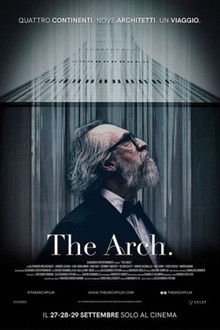
The Arch (2021)
A modern explorer leads us on a global journey to discover how nine of the world's greatest architects are shaping our future.
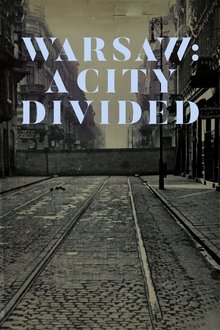
Warsaw: A City Divided (2019)
The history of the Warsaw Ghetto (1940-43) as seen from both sides of the wall, its legacy and its memory: new light on a tragic era of division, destruction and mass murder thanks to the testimony of survivors and the discovery of a ten-minute film shot by Polish amateur filmmaker Alfons Ziółkowski in 1941.