The Living Memory Project began back in 2009 on the 70th anniversary of the end of the Spanish Civil War with the recording of the event, organized in Paris to the Spanish Exiles and the victims of the Nazi extermination camp of Mauthausen. Our goal thereafter focused on collecting the greatest possible number of testimonies related to the history of Spanish anarcho-syndicalism. As part of the celebrations of 100 years of CNT we set up the project, the union decided to fund it and we set off . We travelled 12,000 km visiting three countries relying on the logistical support of CNT and selfless work of their members as well as partners Malicious Films GuerrillART. This is the result: 80 hours worth of records, 300 hours worth of testimony in timing and transcription meant for reference purposes at the Anselmo Lorenzo Foundation and 0 actors. Written by Antonio J. García de Quirós Rodríguez
Related Movies
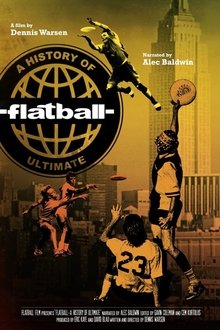
Flatball: A History of Ultimate (2016)
On May 8, 1989, Sports Illustrated ran an article about Ultimate frisbee… about a team with no name hailing from New York City that was about to change the sport forever. From its 1968 New Jersey birth to its unanimous 2015 recognition by the International Olympic Committee, FLATBALL circles the globe to showcase four decades of world-class Ultimate and goes even further: to a set of fields in the Middle East to understand and demystify the unique spirit of the game.
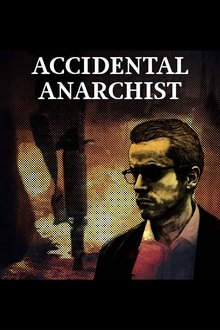
Accidental Anarchist (2017)
Carne Ross was a government highflyer. A career diplomat who believed Western Democracy could save us all. But working inside the system he came to see its failures, deceits and ulterior motives. He felt at first hand the corruption of power. After the Iraq war Carne became disillusioned, quit his job and started searching for answers.

When We Were Kings (1996)
It's 1974. Muhammad Ali is 32 and thought by many to be past his prime. George Foreman is ten years younger and the heavyweight champion of the world. Promoter Don King wants to make a name for himself and offers both fighters five million dollars apiece to fight one another, and when they accept, King has only to come up with the money. He finds a willing backer in Mobutu Sese Suko, the dictator of Zaire, and the "Rumble in the Jungle" is set, including a musical festival featuring some of America's top black performers, like James Brown and B.B. King.

1997: The Birth of the Camera Phone (2017)
On June 11th, 1997, Philippe Kahn created the first camera phone solution to share pictures instantly on public networks. The impetus for this invention was the birth of Kahn's daughter, when he jerry-rigged a mobile phone with a digital camera and sent photos in real time. In 2016 Time Magazine included Kahn's first camera phone photo in their list of the 100 most influential photos of all time.
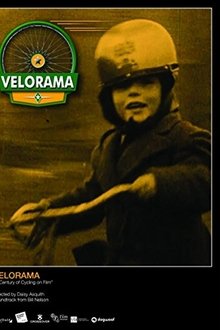
Velorama (2014)
Documentary looking at a century of cycling. Commissioned to mark the arrival of the 2014 Tour de France in Yorkshire, the film makes full use of stunning British Film Institute footage to transport the audience on a journey from the invention of the modern bike, through the rise of recreational cycling, to gruelling competitive races. Award-winning director Daisy Asquith artfully combines the richly-diverse archive with a hypnotic soundtrack from cult composer Bill Nelson in a joyful, absorbing watch for both cycling and archive fans.
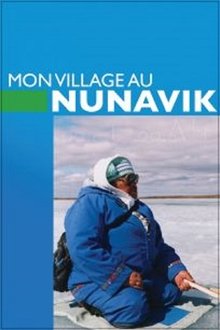
My Village in Nunavik (1999)
Shot during three seasons, Kenuajuak's documentary tenderly portrays village life and the elements that forge the character of his people: their history, the great open spaces and their unflagging humour. Though Kenuajuak appreciates the amenities of southern civilization that have made their way north, he remains attached to the traditional way of life and the land: its vast tundra, the sea teeming with Arctic char, the sky full of Canada geese. My Village in Nunavik is an unsentimental film by a young Inuk who is open to the outside world but clearly loves his village. With subtitles.
Heroic Spain (1938)
Documentary produced by Falange and edited in Berlin, in response to the international success of the Republican production "Spain 1936" (Le Chanois, 1937).
In Search of Dracula (2020)
Mark Gatiss explores and celebrates Dracula, an icon of popular culture, asking just why we keep coming back to the count.
James May's Top Toys (2005)
James May presents a celebration of the toys which have survived across the decades, including Meccano, Lego, Scalextric and Airfix. James's all-time number one is the train set.
The Unconquered (2017)
The Institute of National Remembrance, Fish Ladder and Juice present “The Unconquered” – an animated film that shows the fight of Poles for freedom, from the first day of World War II to the fall of communism in 1989.
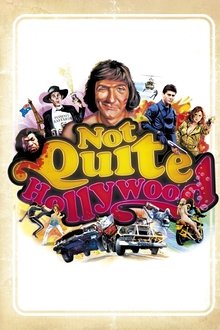
Not Quite Hollywood (2008)
As Australian cinema broke through to international audiences in the 1970s through respected art house films like Peter Weir's "Picnic At Hanging Rock," a new underground of low-budget exploitation filmmakers were turning out considerably less highbrow fare. Documentary filmmaker Mark Hartley explores this unbridled era of sex and violence, complete with clips from some of the scene's most outrageous flicks and interviews with the renegade filmmakers themselves.
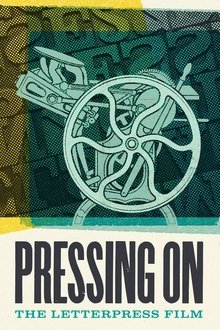
Pressing On: The Letterpress Film (2017)
Why has letterpress printing survived? Irreplaceable knowledge of the historic craft is in danger of being lost as its caretakers age. Fascinating personalities intermix with wood, metal, and type as young printers save a traditional process in Pressing On, a 4K feature-length documentary exploring the remarkable community keeping letterpress alive.
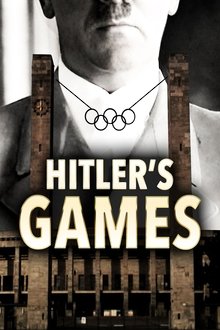
Hitler's Games, Berlin 1936 (2016)
Summer 1936 - The Berlin Olympics, organized by the Nazi regime on the eve of World War II, acted as a grand showcase for a Germany that was athletic, peaceful and rejuvenated. The violence and hate that until then had reigned in the streets of Berlin suddenly vanished. Adolf Hitler became the triumphant host of European countries he would soon try to invade or face in a deadly global conflict.
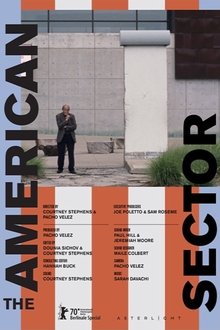
The American Sector (2020)
A documentary about the concrete sections of the Berlin Wall that have been acquired by institutions or individuals since 1989 and are now scattered across the USA. Cherished or abandoned, they have become silent witnesses to recent history.

Heil Hitler! Confessions of a Hitler Youth (1991)
This short-form documentary focuses on the true story of Alfons Heck, who as an impressionable 10-year-old boy became a high-ranking member of the Hitler youth movement during World War II. The story is told in his own words. This film originally aired as part of the "America Undercover" series on HBO.
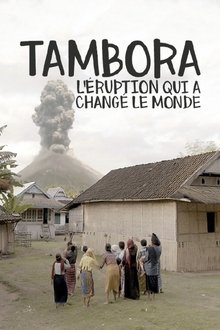
The Volcano That Changed The World (2017)
Unlike what people may think, Krakatoa was not the biggest volcanic eruption in history. More than two hundred years ago, on April 10th 1815, Mount Tambora in Eastern Indonesia became a merciless killer. It unleashed the most deadly volcanic eruption in human memory, wiping out at least 117,000 people. And an entire civilization and its language disappeared. But the killing didn’t stop there. It has now been proven that this eruption could have triggered an extraordinary and little known cataclysmic event: worldwide climate change.
Leonardo: The Man Who Saved Science (2017)
Did Leonardo da Vinci come up with all of his ideas and inventions by himself or did he also borrow some of them from ancient scientists including those who lived 1,700 years before him.
Turquie, voyage à la croisée des mondes (2016)
For two thousand years, caravans traveled from Xian in China along the Silk Road to Istanbul, a hub of world trade at the time. Julien Berjeaut begins his journey through Turkey on the banks of the Bosphorus. Istanbul, once called Byzantium and then Constantinople, is still a bubbling center of international trade in the 21st century: In the Grand Bazaar, with its thousands of stores, this half-mythical, half-historical past is brought back to life for customers and traders alike.

Silent Victory Submarine Warfare in WWII (2010)
This World War II documentary rests on an unusual thesis: it argues that, in the wake of Pearl Harbor, the actions precipitated by the U.S.A.F. that truly helped turn the tide were perpetrated not by the widely-ballyhooed U.S.N. aviators or aircraft carriers, but by the American submarines - silent warriors beneath the deceptively placid ocean surface. The subs, after all, were responsible for gravely wounding Japan's industry, all but destroying the Japanese merchant fleet, and therefore preventing reinforcement of Japanese military garrisons. In relaying this story, the program draws on a series of interviews with military veterans, and endless archival footage of naval battles that chronologically tells the gripping story of the Pacific Front of the war.

Devil Boat: The Saga of PT 658 (2006)
Sixty-years after setting sail on the PT 658, a group of World War II veterans reminisce about their extraordinary experiences on the boat while attempting to restore it to it's original condition in a documentary that has a little something for war buffs and amateur historians alike.