Directed by Oscar-nominated and NAACP Image Award winner David Massey, this dynamic documentary explores why so many unarmed black people have been targeted and killed by police officers. The filmmakers talk to legal experts, activists and law enforcement officials who discuss the inequality within our criminal justice system and who confront the crucial question of how to prevent more violence in this country, including Black on Black deaths. As the Black Lives Matter movement - and citizens nationwide - question the accountability of our justice system in cases of police violence, When Justice Isn't Just is an essential addition to the ongoing discussion about reform and renewal.
Related Movies
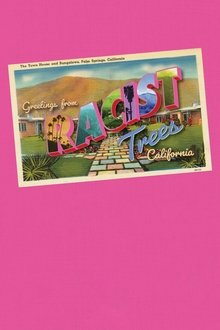
Racist Trees (2022)
Can a tree be racist? A few years ago, debate on this issue reached as far as Fox News. The focus was a row of tamarisk trees along a huge golf course in Palm Springs, which screened off the neighborhood of Crossley Tract. This is a historically Black neighborhood, named after its founder Lawrence Crossley, who was one of the first Black residents to settle in the largely white tourist paradise, established on indigenous land over a century ago.

Le Prince charmant est toujours blanc (2001)
The pupils of about fifteen secondary schools in the suburbs of Paris react to the projection of two short films taken from the series "No More Lies ! 12 perspectives on everyday racism". Their comments, questions and reactions are of course focused on the subject of racism, but they also take a stand about what it means to have two cultural identities. Is it enough to be born in France in order to feel French ? What is their vision of a society obsessed with the idea of integration? What do they expect of the future ? With their questions and their protests, they often put their finger on the heart of the issues at stake. Beyond fiction, we discover their reality...
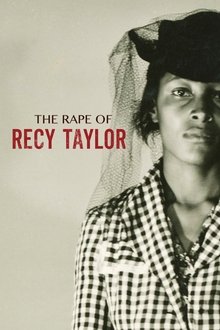
The Rape of Recy Taylor (2019)
Recy Taylor, a 24-year-old black mother and sharecropper, was gang raped by six white boys in 1944 Alabama. Common in Jim Crow South, few women spoke up in fear for their lives. Not Recy Taylor, who bravely identified her rapists. The NAACP sent its chief rape investigator Rosa Parks, who rallied support and triggered an unprecedented outcry for justice. The film exposes a legacy of physical abuse of black women and reveals Rosa Parks’ intimate role in Recy Taylor’s story.
After the Apology (2017)
Suellyn thought the Department of Community Services (DOCS) would only remove children in extreme cases, until her own grandchildren were taken in the middle of the night. Hazel decided to take on the DOCS system after her fourth grandchild was taken into state care. Jen Swan expected to continue to care for her grandchildren but DOCS deemed her unsuitable, a shock not just to her but to her sister, Deb, who was, at the time, a DOCS worker. The rate of Indigenous child removal has actually increased since Prime Minister Kevin Rudd delivered the apology to the ‘stolen generations’ in 2008. These four grandmothers find each other and start a national movement to place extended families as a key solution to the rising number of Aboriginal children in out-of-home care. They are not only taking on the system; they are changing it…

We Are Not Our Parents (2024)
Reserved by Citroën for immigrant workers, the Aulnay-sous-Bois factory experienced its first strike in 1982. Thirty years later, it's the turn of a new generation to join the fight. Worthy heirs of their parents, the workers revive a forgotten memory and offer a unique perspective on the history of contemporary France. Matteo Severi's film mirrors these two social struggles, led by workers from immigrant backgrounds.
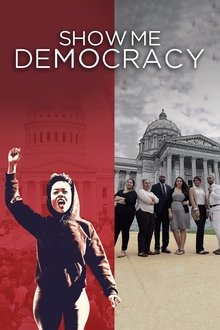
Show Me Democracy (2016)
Amidst the storm of Ferguson, 7 St. Louis college students evolve into advocates and activists as they demand change through policy and protest
But... Seriously (1994)
A documentary juxtaposing the events of the 20th century with the commentary of stand-up comedians.
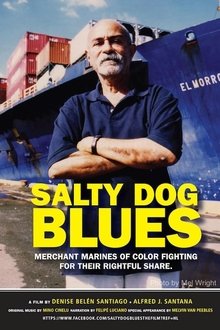
Salty Dog Blues (2012)
The film looks at men and women of color in the U.S. Merchant Marine from 1938-1975. Through chronicling the lives of these men and women who, with a median age of 82, are beset with a host of life-threatening illnesses, the movie tells how they navigated issues of racism, disparities in the workplace, gender and familial relations.
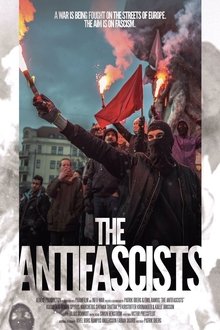
The Antifascists (2017)
A low-intensity war is being fought on the streets of Europe and the aim is on fascism. This critically acclaimed documentary takes us behind the masks of the militants called antifascists. In 2013 a group of armed nazis attacks a peaceful demonstration in Stockholm where several people are injured. In Greece the neo-nazi party Golden Dawn becomes the third largest in the election and in Malmö the activist Showan Shattak and his friends are attacked by a group of nazis with knives and he ends up in a coma. In this portrait of the antifascists in Greece and Sweden we get to meet key figures that explain their view on their radical politics but also to question the level their own violence and militancy.

The Problem with Apu (2017)
In the history of “The Simpsons,” few characters outside the title family have had as much cultural impact as Apu Nahasapeemapetilon, the Springfield convenience store owner. Comedian Hari Kondabolu is out to show why that might be a problem.
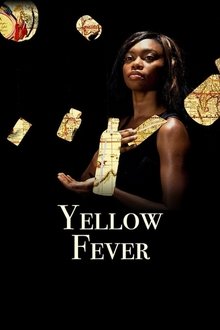
Yellow Fever (2012)
What does beauty look like? In this award-winning short, Kenyan filmmaker Ng’endo Mukii combines animation, performance, and experimental techniques to create a visually arresting and psychologically penetrating exploration of the insidious impact of Western beauty standards and media-created ideals on African women’s perceptions of themselves. From hair-straightening to skin-lightening, YELLOW FEVER unpacks the cultural and historical forces that have long made Black women uncomfortable, literally, in their own skin.
Victims Fight Back (1985)
Shocking documentary centering on victims of violent crime who seek to get revenge on their assailants.
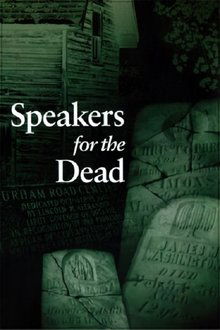
Speakers for the Dead (2000)
A film about small Ontario town's struggle to restore a desecrated African-Canadian cemetery and the resulting turmoil over it.

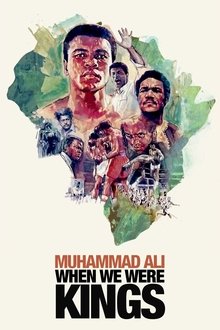
When We Were Kings (1996)
It's 1974. Muhammad Ali is 32 and thought by many to be past his prime. George Foreman is ten years younger and the heavyweight champion of the world. Promoter Don King wants to make a name for himself and offers both fighters five million dollars apiece to fight one another, and when they accept, King has only to come up with the money. He finds a willing backer in Mobutu Sese Suko, the dictator of Zaire, and the "Rumble in the Jungle" is set, including a musical festival featuring some of America's top black performers, like James Brown and B.B. King.
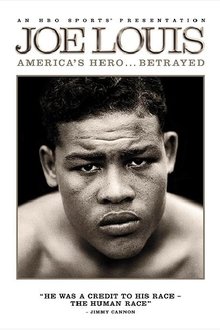
Joe Louis: America's Hero Betrayed (2008)
An American story. Traces the career of Joe Louis (1914-1981) within the context of American racial consciousness: his difficulty getting big fights early in his career, the pride of African-Americans in his prowess, the shift of White sentiment toward Louis as Hitler came to power, Louis's patriotism during World War II, and the hounding of Louis by the IRS for the following 15 years. In his last years, he's a casino greeter, a drug user, and the occasional object of scorn for young Turks like Muhammad Ali. Appreciative comment comes from boxing scholars, Louis's son Joe Jr., friends, and icons like Maya Angelou, Dick Gregory, and Bill Cosby.

De Quoi J'Me Mêle ! Banlieues, Guerre Et Paix (1995)
From the “integration model” to the “Islamist fanatic”, France fantasizes about these children of immigrants who grew up with it. Like every month “What I’m Meddling With!” presents portraits, the result of an in-depth investigation, to give a face to today's questions. The program, broadcast in the thematic evening of the Franco-German channel Arte, is made up of 2 ambivalent documentaries: "Les Lumières De La Zone" and "Les Soldats De Dieu" followed by debates.
Time (2020)
Fox Rich, indomitable matriarch and modern-day abolitionist, strives to keep her family together while fighting for the release of her incarcerated husband. An intimate, epic, and unconventional love story, filmed over two decades.
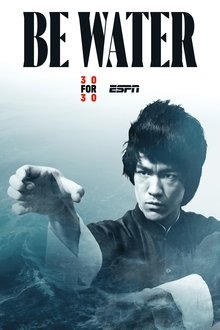
Be Water (2020)
In 1971, after being rejected by Hollywood, Bruce Lee returned to his parents’ homeland of Hong Kong to complete four iconic films. Charting his struggles between two worlds, this portrait explores questions of identity and representation through the use of rare archival footage, interviews with loved ones and Bruce’s own writings.