Five women from the North to the South of Quebec embark on a multisport expedition following the Koroc river in Nunavik. Travelling together against adversity, this journey soon becomes one of self-discovery for each participant.
Related Movies
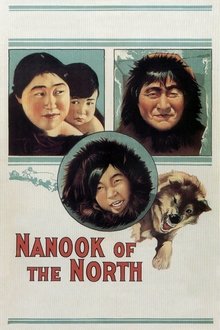
Nanook of the North (1922)
This pioneering documentary film depicts the lives of the indigenous Inuit people of Canada's northern Quebec region. Although the production contains some fictional elements, it vividly shows how its resourceful subjects survive in such a harsh climate, revealing how they construct their igloo homes and find food by hunting and fishing. The film also captures the beautiful, if unforgiving, frozen landscape of the Great White North, far removed from conventional civilization.

Honour to Senator Murray Sinclair (2021)
Murray Sinclair's acceptance speech for an award in honor of his role as chair of the Truth and Reconciliation Commission of Canada, intercut with the testimonies of survivors of the Indian residential school system.
Crossing the Divide (2025)
Two Canadians, one Liberal and one Conservative, attend a U.S. convention focused on depolarizing politics, determined to engage in tough conversations for a healthier democracy.
The Corporation (2003)
Since the late 18th century American legal decision that the business corporation organizational model is legally a person, it has become a dominant economic, political and social force around the globe. This film takes an in-depth psychological examination of the organization model through various case studies. What the study illustrates is that in the its behaviour, this type of "person" typically acts like a dangerously destructive psychopath without conscience. Furthermore, we see the profound threat this psychopath has for our world and our future, but also how the people with courage, intelligence and determination can do to stop it.

Festival Express (2003)
The filmed account of a large Canadian rock festival train tour boasting major acts. In the summer of 1970, a chartered train crossed Canada carrying some of the world's greatest rock bands. The Grateful Dead, Janis Joplin, The Band, Buddy Guy, and others lived (and partied) together for five days, stopping in major cities along the way to play live concerts. Their journey was filmed.
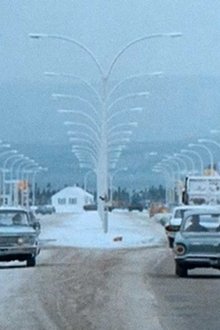
Québec...? (1967)
This short documentary film is a fascinating portrait of urban and rural Quebec in the late 1960s, as the province entered modernity. The collective work produced for the Quebec Ministry of Industry and Commerce calls on several major Quebec figures.
Les héritiers (1955)
Gilles Groulx's first film shot in 1955 with a camera borrowed from his brother and edited during his spare time when he worked as an editor at the Radio-Canada news service a few years before he joined the NFB. Silent film, presented as its author left it, where the soil and the dialectic of Groulx's work are already there: documentary realism, the social space to be explored, daily life, the relationship between individual and society, social disparities, the consumer society, seduction and happiness.
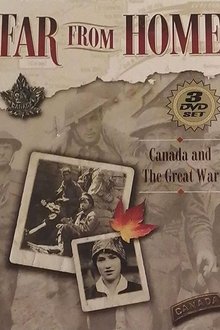
Sam's Army (1999)
Canada was led to war by a bigoted, ignorant, self-obsessed Minister of Militia, who may well have been clinically insane, but the importance of Canada's contribution in that war owes a great deal to him. The man of course, was Colonel - later made Lieutenant General by his own hand - Sam Hughes. Sam's Army is a compelling portrait of a complex man and the formidable military he built. Sam Hughes was not your standard-issue military leader. Canada's World War I Minister of Militia and Defence concentrated power in his own hands, insisted that the Canadian military use the ill-conceived Ross rifle and liberally promoted his cronies. But there was no denying Hughes was a visionary. He assembled the world's largest-ever volunteer army and bucked superiors to keep his ferocious fighting force together in one Canadian Corps.
The Battle of Vimy Ridge (1999)
A two-hour documentary which recreates for the viewer one of the greatest battles in Canadian military history. The film was made to show that Canadian character at its best, forging an identity for a country that before the First World War had been seen only as a British colony - an identity and a character that became recognized and respected throughout Europe.
The Last 100 Days (1999)
Canadian military accomplishments in the last hundred days of World War I, when the German Army was destroyed, surpassed those of any other army. The Canadian success was, in no small measure, due to Arthur Currie, whom a recent British historian describes as "the most successful Allied General and one of the least well known."
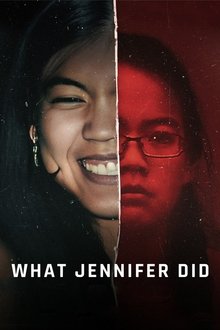
What Jennifer Did (2024)
When Jennifer Pan calls 911 to report that her parents have been shot, she becomes the primary focus of a captivating criminal case.
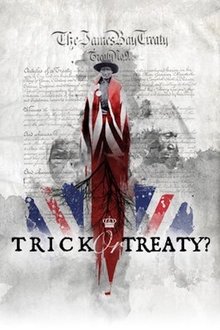
Trick or Treaty? (2014)
Legendary Canadian documentarian Alanis Obomsawin digs into the tangled history of Treaty 9 — the infamous 1905 agreement wherein First Nations communities relinquished sovereignty over their traditional territories — to reveal the deceptions and distortions which the document has been subjected to by successive governments seeking to deprive Canada’s First Peoples of their lands.

Who We Are (2013)
Autism spectrum disorder (DSA) - It is not what they have, but what they are, who they are. They are Felix, Anthony, Marc and Brigitte. They are different.
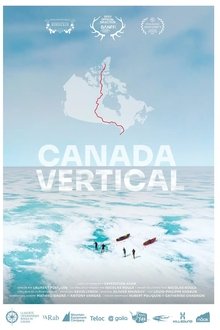
Canada Vertical (2023)
After years of preparation, a team of highly motivated Quebeckers set out on one of the longest wilderness expeditions ever documented. Stage one involves skiing in relentless polar conditions from Ellesmere Island to the Northwest Passage where the challenge was reaching the mainland. Cue canoes for a 2000km journey across Nunavut and NWT until they reach the first dirt road available where bikes are waiting to be pedalled 4000km to Point Pelee in Ontario.

Declutter (2017)
One Saturday morning, filmmaker Madison Thomas has a revelation: she’s just like her mother. As she thinks about a friend going through tough times, she feels the sudden urge to clean. Through the scrubbing and wiping and rinsing, Madison's thoughts drift to her mother — and her obsessive need to tidy. Madison’s mother survived a traumatic childhood: her own mother never reconciled what she went through at residential school. Cleaning offers moments of control that she didn’t have as a child. She’s fought hard, against all odds, to become a strong woman. They say trauma is in the genes, that it’s passed from one generation to the next. But strength is inherited too. Through rituals as simple as spending time together and smudging, Madison and her mother are beginning to mend the cycle of pain in their family. Declutter is an intimate look into a private moment between mother and daughter and the strength that carries them both.
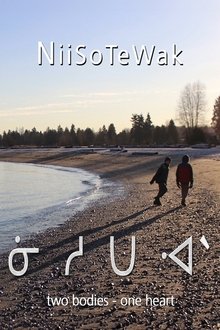
NiiSoTeWak: Two Bodies, One Heart (2017)
NiiSoTeWak means “walking the path together.” Tapwewin and Pawaken are 10-year-old brothers trying to make sense of the world, their family and each other. They’re already grappling with some heady questions about identity. What does it mean to be a twin? What does it mean to be Cree? How do you define yourself when you’re forever linked to someone else? The twins discuss these questions with their two elder brothers — 22-year-old actor Asivak and 20-year-old basketball player Mahiigan — and their parents, Jules and Jake.
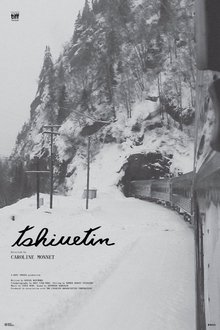
Tshiuetin (2016)
Take a breathtaking train a ride through Nothern Quebec and Labrador on Canada’s first First Nations-owned railway. Come for the celebration of the power of independence, the crucial importance of aboriginal owned businesses and stay for the beauty of the northern landscape.
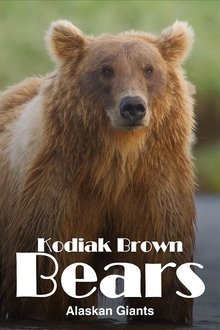
Alaska's Giant Bears (2023)
In Canada and Alaska, the consequences of global warming are being keenly felt by brown bears - but in different ways by different populations. Their survival depends mainly on the quantity of wild salmon available in the region, as it is the fruit of their catch that enables the bears to accumulate fat reserves for the winter. While salmon populations off Canada's Pacific coast continue to decline year after year, in the immense Bristol Bay in western Alaska, as well as on Kodiak Island, they are increasing considerably. The water temperature in the North Pacific is now ideal for salmon development. From Canada to Alaska, the documentary follows different bear populations over a two-year period.
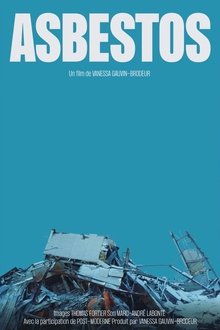
Asbestos (2024)
A cinematic and introspective look at the residents of a Quebec town—once the site of the world's largest asbestos mine—as they grapple with their community's industrial past. Striving to honour their heritage while reconciling with their history and forging a new path forward, the miners delve into the intricacies of progress and healing.