Pakistani folk artists talk about their struggle to keep a fading art form alive while reminding the world what they are about to lose.
Related Movies
Displaced Perssons (2013)
Per Persson left Sweden 40 years ago. In Pakistan he fell in love and became the father of two daughters. Trouble starts when the girls grow up and the family decides to emigrate to Sweden. When they end up living in a caravan outside Hässleholm, all their expectations are dashed.
Mogul Mowgli (2020)
Zed, a young British rapper, is about to start his first world tour, when a crippling illness strikes him down, forcing him to move back in with his family. He tries to find himself between an international music career and Pakistani family traditions.
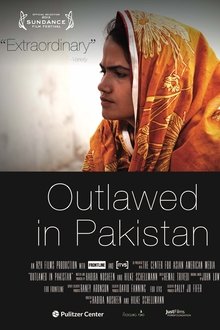
Outlawed in Pakistan (2013)
Outlawed in Pakistan tells the story of Kainat Soomro as she takes her rape case to Pakistan's deeply flawed court system in hopes of getting justice. The 13-year-old Kainat accuses four men of gang rape and shortly after is ordered to be killed by her village elders. Spanning over five years, the story is told through the perspective of Kainat and the four men accused of her rape.
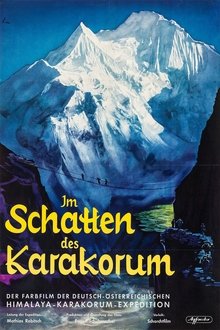
In the Shadow of Karakorum (1955)
In 1954, a German-Austrian expedition led by Mathias Rebitsch set off for the difficult-to-access Karakoram Mountains, geographically north of the Himalayas. They come across the Hunza, a people who live in the valley of the same name and believe they are descended from the soldiers of Alexander the Great. The documentary conveys impressions of the poor life of the Hunza people, the harvest, a court hearing, festivals and the children's everyday school life. Finally, the expedition sets off again and sets up its main camp on the moraine ridge of a glacier, where they measure the glacier and the earth's magnetic field. Finally, some men from the research community set off for a sub-peak of Batura.
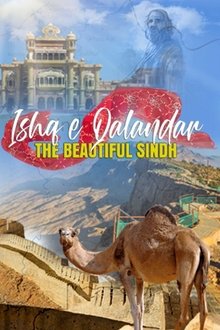
Ishq e Qalandar - The Beautiful Sindh (2020)
Ishq e Qalandar - The Beautiful Sindh is a travel film that takes viewers through one of the most ancient civilizations on Earth called Sindh. Shezan Saleem Jo-G takes a journey of self-realization, the discovery of his roots, and building a connection with people and spirituality in Sindh.
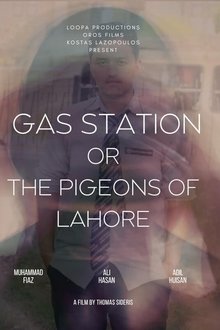
The Pigeons of Lahore (2024)
The parallel stories of four Pakistani immigrants in Greece become the trigger for the director to explore the story of his father, a worker in the Perama Shipyard. The background unfolds a most deadly shipwreck, Libyan immigrants found in limbo, as well as a (possibly racist) crime, which was committed during the shooting of this film.


The Kalash of the Hindu Kush (2020)
In the remote valleys of the Hindu Kush live the Kalash people, the smallest ethnic minority in Pakistan. With a distinct culture and polytheistic religion, they are said to be descendants of Alexander the Great’s troops. But modern life is reaching their valleys and their culture and way of live is under threat.

Behind Closed Doors (2023)
Politically Exposed Persons (PEPs) are people who hold a public function and as a result, present higher risks of being involved in bribery or corruption. Offshore leaks have revealed repeatedly that PEPs use British finance and British offshore jurisdictions to launder their wealth, hide their wealth and re-invest it into the global financial system. London is the place where they buy property, where they take legal action against their critics and where they live when they fall from grace. But what happens when a developing country fights back and attempts to get Britain to return the money that it claims has been stolen? Watch Behind Closed Doors and find out.

In Zainab's Heaven (2023)
A Hazara film director follows a gravestone maker, a water girl and a man who buried his limb, as their daily lives unfold in a graveyard.
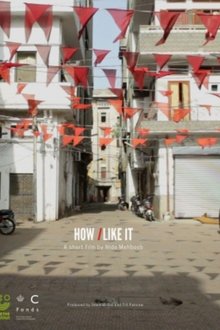
How I Like It (2021)
In Pakistan, the public space is dominated by men. The confidence with which they walk the streets or weight train quickly disappears once they are confronted with female sexuality. Off-screen, several anonymous women talk about their sexuality. The images of the conventional partiarchal society are in sharp contrast to the liberating explicitness of the accounts of clit stimulation, sex with multiple partners, pissing, abortions, and rape.
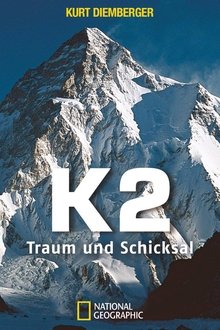
K2, Traum und Schicksal (2013)
Documentary about K2 tragedy of 1986. On August 4, 1986, Diemberger and Julie Tullis reached the summit of K2 very late in the day. Shortly after starting their descent, Tullis fell and dragged Diemberger down with her. Fortunately, they somehow stopped from going over the edge and spent the night above 8,000 metres. They managed to reach Camp IV the next day, where they were forced to share a tent with six other climbers after their tent had collapsed from hurricane force winds. Tullis died later that night, possibly from high altitude cerebral edema (HACE), and only one other climber, Austrian Willi Bauer, survived the descent with Diemberger. Both climbers suffered severe frostbite during the descent and had to have amputations.
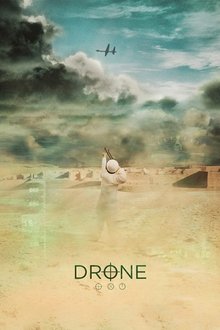
Drone (2014)
DRONE is a documentary about the covert CIA drone war. Through voices on both sides of this new technology, DRONE reveals crucial information about the drone war in Pakistan and offers unique insights into the nature of drone warfare.
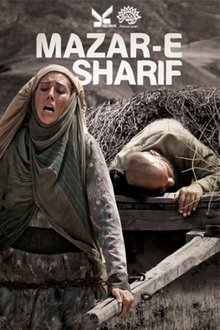
Mazar Sharif (2015)
An Iranian diplomat who miraculously survived Taliban's raid on the Iranian consulate in Mazar E Sharif (Afghanistan) narrates his 19 days of hide and escape to reach Iran's borders meanwhile on the other side, the Iranian troops are preparing for retaliation.
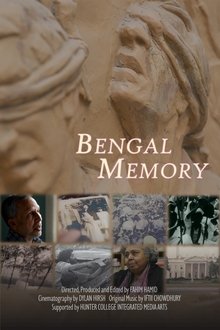
Bengal Memory (NaN)
A Bangladeshi American undertakes a journey to learn about the liberation war in his native country, traveling there for the first time in nearly two decades, and uncovering the controversial role the U.S. played in a forgotten genocide that occurred there over 50 years ago. From 1971 to the present day, this is a story of Bangladesh’s independence, a family’s journey immigrating to America, and the cognitive dissonance of a person belonging to both homelands. Driven by interviews with his father and other family members, along with experts and witnesses, archival videos, declassified recordings, and animations, BENGAL MEMORY is a unique and untold oral history through a personal lens.

A Life Too Short (2021)
Social media superstar Qandeel Baloch pushed boundaries in conservative Pakistan like no other. In 2016, high on her newfound celebrity, Qandeel exposes a well-known Muslim cleric – with tragic results.

Bo Kata (2007)
Bo Kata, loosely translated in English means hacked! That is the victory battle cry when kites are eliminated in raging sky duels, sometimes lasting hours. Filmed entirely in Lahore, Pakistan, over three continuous days, Bo Kata is a rare cinematic documentary treat, depicting uniquely the rooftop kite flyers of Lahore, who have been a traditional part of Pakistan's culture and heritage that has lasted for over 400 years. Their sport is now under threat from a complete ban, after a series of tragic fatalities involving children and motorcyclists, resulting in decapitations and dismemberment from illegal chemically coated strings used to fly the kites. The documentary highlights a population that is associated with the mysterious art of kite dueling amidst the political backdrop of an impending ban
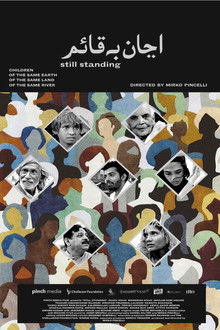
Still Standing (2022)
A character-driven documentary exploring the life and culture of the Sindhi, one of the oldest and least known civilisations in the world.