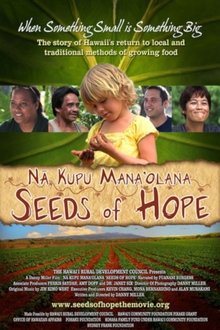
Taro grower and Native Hawaiian practitioner Jerry Konanui works to propagate and save from extinction the numerous varieties of kalo (taro), a staple of the Hawaiian diet. Jerry’s mission is also to protect kalo, revered as the elder sibling (Haloa) of the Hawaiian people, from the risks of genetic engineering.
Related Movies
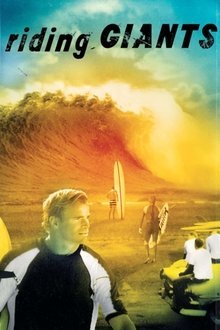
Riding Giants (2004)
Riding Giants is story about big wave surfers who have become heroes and legends in their sport. Directed by the skateboard guru Stacy Peralta.
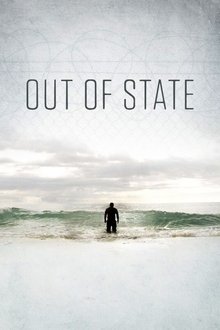
Out of State (2017)
Out of State is the unlikely story of native Hawaiians men discovering their native culture as prisoners in the desert of Arizona, 3,000 miles, and across the ocean, from their island home.
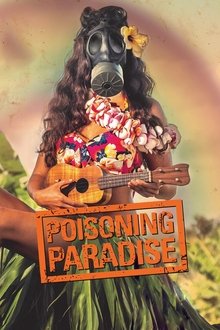
Poisoning Paradise (2017)
Journey to the seemingly idyllic world of Native Hawaiians, whose communities are surrounded by experimental test sites for genetically engineered seed corn and pesticides sprayed upwind of their homes, schools, hospitals, and shorelines.


Follow Me (1969)
Documentary about two boys and a girl who travel to surfing spots around the world.
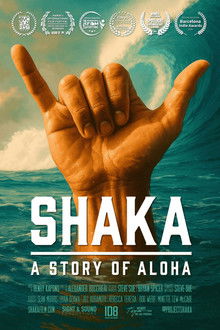
Shaka: A Story of Aloha (2024)
A documentary on the origin, meanings and uses of the gesture. The shaka sign is reputed to be over a century old, but its origins are the stuff of myths and legends. It turns out that kupuna (Hawaiian elders) have kept the story secret for almost a century. Why? They didn't want it told incorrectly or commercialized. But given advancing age and a world in need, they decided it was time to share the story.
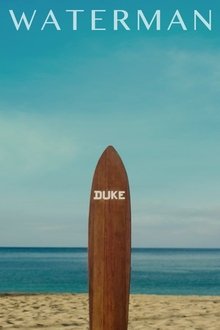
Waterman (2022)
Five-time Olympic medalist and Native Hawaiian Duke Paoa Kahinu Mokoe Hulikohola Kahanamoku shattered records and brought surfing to the world while overcoming a lifetime of personal challenges. Waterman explores his journey and legacy as a legendary swimmer, trailblazer, and the undisputed father of modern-day surfing, following the sport’s first-time inclusion in this year’s Summer Olympics – a fitting tribute to his work promoting the sport around the globe.
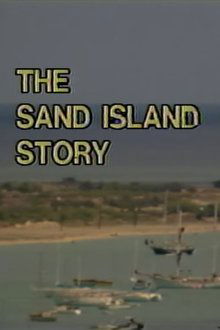
The Sand Island Story (1981)
This short documentary chronicles a four-month period between 1979 and 1980 when residents of Hawaii's Sand Island "squatter" community attempted to resist eviction from the Honolulu shoreline - resulting in displacement, arrests, and the destruction of a community.
Endangered Hawaiʻi (2000)
Endangered Hawaiʻi produced by American Bird Conservancy (ABC) with funding by the National Fish and Wildlife Foundation, and narrated by actor Richard Chamberlain. The film explores the on-going bird extinction crisis in Hawaiʻi that has led to about 70 percent of all native bird species in the state becoming extinct. With beautiful footage of many of Hawaiʻi’s stunning birds and their habitats, the film showcases the unique biodiversity of our 50th state and explains the environmental crisis that has caused Hawaiʻi to become known as the “Bird Extinction Capital of the World.” It describes the nature of the crisis, its causes, and current efforts to implement solutions for species on the brink.
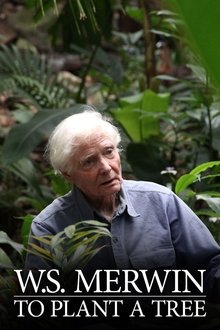
W.S. Merwin: To Plant a Tree (2016)
A documentary on the life and work of Poet Laureate, two-time Pulitzer winner, and environmental activist W.S. Merwin.

Patsy Mink: Ahead of the Majority (2008)
In 1965, Patsy Takemoto Mink became the first woman of color in the United States Congress. Seven years later, she ran for the US presidency and was the driving force behind Title IX, the landmark legislation that transformed women’s opportunities in higher education and athletics.
Across the World with Mr. and Mrs. Johnson (1930)
As if they were showing their film to a few friends in their home, the Johnsons describe their trip across the world, which begins in the South Pacific islands of Hawaii, Samoa, Australia, the Solomons (where they seek and find cannibals), and New Hebrides. Thence on to Africa via the Indian Ocean, Suez Canal, North Africa, and the Nile River to lion country in Tanganyika. (They are briefly joined in Khartum by George Eastman and Dr. Al Kayser.) Taking a safari in the Congo, the Johnsons see animals and pygmies, and travel back to Uganda, British East Africa, and Kenya.
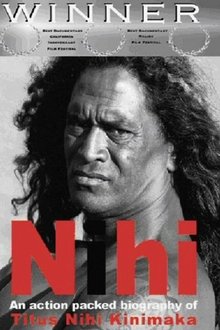
Nihi (2003)
Nihi is a film biography of Titus Kinimaka, one of the last remaining professional big-wave riders of pure Hawaiian descent. As a boy, he won surf contests against those twice his age; by his teens, he was recognized as one of the best surfers to have ever hit the waves. In 1996 at age 41, Titus was named Waterman of the Year by the Hawaiian Lifeguard Association for outstanding rescues as a lifeguard. He has spent over twenty years spreading aloha spirit, traveling the world as an ambassador for surfing and Hawaiian culture
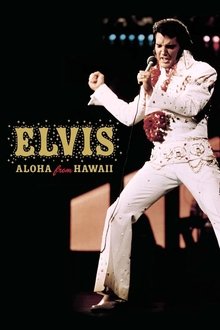
Elvis - Aloha from Hawaii (1973)
A 1973 concert by Elvis Presley that was broadcast live via satellite on January 14, 1973. The concert took place at the Honolulu International Center in Honolulu and aired in over 40 countries across Asia and Europe. Viewing figures have been estimated at over 1 billion viewers world wide, and the show was the most expensive entertainment special at the time, costing $2.5 million.

Tua (2020)
Quarterback Tua Tagovailoa, a generational football talent, embarks on a journey that began from a childhood family prophecy. Follow Tua as he attempts to overcome a career-threatening injury and rise as one of the most uniquely skilled players in the history of the game.
The Rain Follows The Forest (2012)
Catch Jason Scott Lee in “The Rain Follows The Forest” as he sets out on a journey to learn about sustainable life in our island home. Through interesting conversations, he learns about Hawaiʻi’s fragile fresh water supply and discovers connections to our upland forest environment.
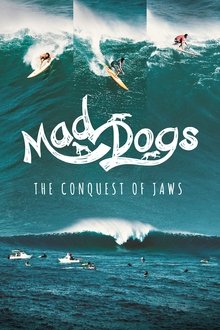
Mad Dogs (2015)
In mid 90s, with no money and no English, Danilo, Marcio and Yuri left Brazil and everything behind to live in Hawaii and surf the world's most famous waves. At that time, Laird Hamilton and his gang had just invented tow surfing, using the help of jet skis to catch giant waves on the outer reefs. Laird became a legend and his new sport attracted surfers looking for fame and money. Then, in 2006, dreaming of surfing Jaws in the purest style, the 3 “amigos” began a saga that lasted 5 years. They challenged Jaws year after year, paddling, with no safety, no inflatable vests, nothing.
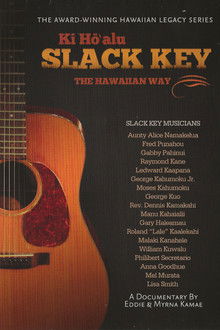
The Hawaiian Way - Ki Hōʻalu Slack Key (2010)
This film is a moving journey into the beauty and meaning of Hawaiian slack key music. Award-winning director Eddie Kamae"s rare combination of master musician and cinematic storyteller is the key to showing how Hawaii"s cultural traditions and the ki ho"alu guitar intertwine - and opening the door to a greater love of that music. Candid interviews and archival images combine with the music of many virtuoso performers, from legendary Fred Punahou and Gabby Pahinui to Raymond Kane and today"s Ledward Kaapana, to tell the slack key story from the 1830s to the present. It shows how this music perpetuates family tradition as songs, techniques and special string tunings are passed from one generation to the next.
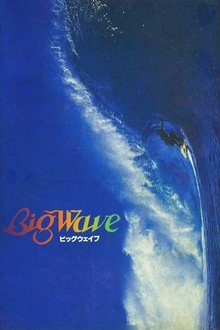
Big Wave (1984)
Big Wave is a documentary directed by Walt Mulconery and published on May 25, 1984 that presents the types of outdoor and risky sports present on the west coast of the United States such as paragliding, surfing, skydiving, bmx or the BASE jumping together with others, going from Hawaii to Texas through California to present them.