The First 54 Years: An Abbreviated Manual for Military Occupation (2021)
An exhaustive explanation of how the military occupation of an invaded territory occurs and its consequences, using as a paradigmatic example the recent history of Israel and the Palestinian territories, the West Bank and the Gaza Strip, from 1967, when the Six-Day War took place, to the present day; an account by filmmaker Avi Mograbi enriched by the testimonies of Israeli army veterans.
Related Movies
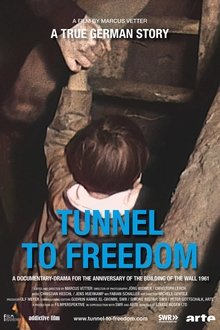
Tunnel to Freedom (2021)
13 August 1961: the GDR closes the sector borders in Berlin. The city is divided overnight. Escape to the West becomes more dangerous every day. But on September 14, 1962, exactly one year, one month and one day after the Wall was built, a group of 29 people from the GDR managed to escape spectacularly through a 135-meter tunnel to the West. For more than 4 months, students from West Berlin, including 2 Italians, dug this tunnel. When the tunnel builders ran out of money after only a few meters of digging, they came up with the idea of marketing the escape tunnel. They sell the film rights to the story exclusively to NBC, an American television station.

The Country Upside Down (2009)
Returning to the island that her father left 50 years earlier, the filmmaker goes back in time to retrace the history of her name.
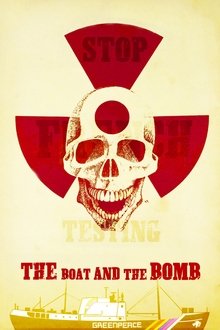
The Boat and the Bomb (2006)
In Aukland Harbour, New Zealand, on July 10th 1985, French navy combat frogmen placed two mines against the hull of the Greenpeace flagship Rainbow Warrior, sinking the ship and killing photographer Fernando Pereira.
From Harlem with Love (2014)
Tensions between the USSR and the United States were high in 1959, with the seemingly constant threat of nuclear war. Then some unlikely ambassadors stepped forward to clear all that away: the Harlem Globetrotters. From Harlem With Love is the story of how a group of barnstorming basketball players traveled to the heart of the Soviet Union at the height of the Cold War and bridged a cultural gap many thought would stand forever.
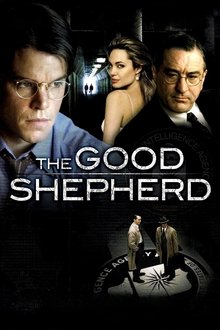
The Good Shepherd (2006)
Edward Wilson, the only witness to his father's suicide and member of the Skull and Bones Society while a student at Yale, is a morally upright young man who values honor and discretion, qualities that help him to be recruited for a career in the newly founded OSS. His dedication to his work does not come without a price though, leading him to sacrifice his ideals and eventually his family.
The Basque Ball: Skin Against Stone (2003)
An attempt to create a bridge between the different political positions that coexist, sometimes violently, in the Basque Country, in northern Spain.
Fertile Memory (2024)
A portrait of two Palestinian women whose individual struggles both define and transcend the politics that have torn apart their homes and their lives. Farah Hatoum, a widow living with her children and grandchildren, and Sahar Khalifeh, a novelist from the West Bank.
The Town That Cried Bigfoot (NaN)
In the bitter winter of 1978, four desperate council members from a small Virginia town hatched a daring Bigfoot hoax to save it from the brink of bankruptcy. But as the money grew, so did the greed-triggering the town's first unsolved murder.
Pierre Clément, Cinéma et Révolution (2023)
Pierre Clément, student and photographer of René Vauthier, first accompanied him to Tunisia to make a film on the country's independence in 1957. Destiny led him to Algeria and his presence in February 1958 at the Tunisian-Algerian border changed his life. . Forever. He took his camera and photographed the attacks on Sakia Sidi Youssef before committing himself body and soul to the Algerian cause. Shortly after, he directed the film “Algerian Refugees” before being arrested, tortured and imprisoned, while his third film, “The National Liberation Army in Almaki”, was not finished. Abdel Nour Zahzah, a director who commemorates Pierre Clément, the director who risked his life, the brother of the Algerian resistance, who disappeared in 2007.
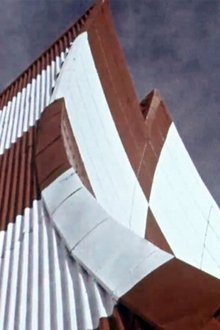
Land of White Alice (1960)
Film sponsored by Western Electric (AT&T's equipment manufacturing division), the builder of the United States Air Force's White Alice Communications System in Alaska. Introduces the people and geography of the new state as well as the Western Electric radio-relay system, which links far-flung military sites, alert stations, and missile-warning facilities. Ralph Caplan praised the film's "intrinsically dramatic and highly photogenic" portrayal of communications equipment.
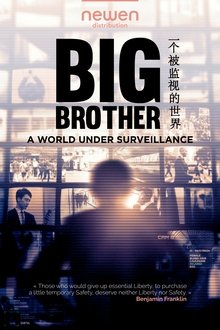
Big Brother: A World Under Surveillance (2020)
Under the pretext of fighting terrorism or crime, the major powers have embarked on a dangerous race for surveillance technologies. Facial recognition cameras, emotion detectors, citizen rating systems, autonomous drones… A security obsession that in some countries is giving rise to a new form of political regime: numerical totalitarianism. Orwell's nightmare.
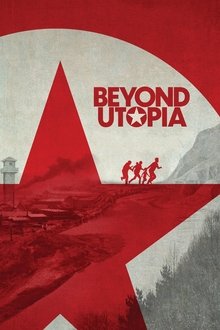
Beyond Utopia (2023)
A courageous pastor uses his underground network to rescue and aid North Korean families as they risk their lives to embrace freedom.
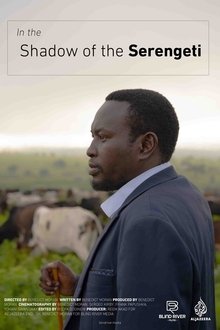
In the Shadow of the Serengeti (NaN)
A Maasai human rights lawyer fights to stop the evictions of his people from their homelands in Tanzania. On the outskirts of Serengeti National Park in East Africa, Maasai face eviction from their land to make way for international tourism and hunting grounds. Human rights lawyer Joseph Oleshangay campaigns for his community to remain on its homeland as it has done for generations. While he represents Maasai communities in court, Joseph also remains close to his traditions among the cattle at his rural home near the Ngorongoro Crater. Risking his life to gather evidence from recently depopulated villages, Joseph battles in court where he leads the fight to resist the evictions.

The Right Stuff (1983)
At the dawn of the Space Race, seven test pilots set out to become the first American astronauts to enter space. However, the road to making history brings momentous challenges.
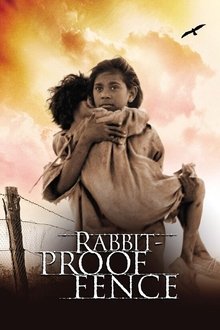
Rabbit-Proof Fence (2002)
In 1931, three Aboriginal girls escape after being plucked from their homes to be trained as domestic staff, and set off on a trek across the Outback.
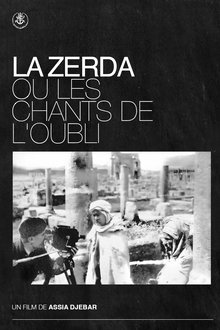
The Zerda or the Songs of Forgetting (1983)
“La Zerda and the songs of oblivion” (1982) is one of only two films made by the Algerian novelist Assia Djebar, with “La Nouba des femmes du mont Chenoua” (1977). Powerful poetic essay based on archives, in which Assia Djebar – in collaboration with the poet Malek Alloula and the composer Ahmed Essyad – deconstructs the French colonial propaganda of the Pathé-Gaumont newsreels from 1912 to 1942, to reveal the signs of revolt among the subjugated North African population. Through the reassembly of these propaganda images, Djebar recovers the history of the Zerda ceremonies, suggesting that the power and mysticism of this tradition were obliterated and erased by the predatory voyeurism of the colonial gaze. This very gaze is thus subverted and a hidden tradition of resistance and struggle is revealed, against any exoticizing and orientalist temptation.
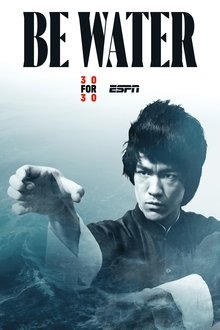
Be Water (2020)
In 1971, after being rejected by Hollywood, Bruce Lee returned to his parents’ homeland of Hong Kong to complete four iconic films. Charting his struggles between two worlds, this portrait explores questions of identity and representation through the use of rare archival footage, interviews with loved ones and Bruce’s own writings.

The Hole In The Ground (1962)
Made at the height of 'cold war' paranoia, this drama-documentary shows the work of the UK Warning and Monitoring Organisation, who's duties included the issuing of public warnings of any nuclear missile strike and the subsequent fallout.
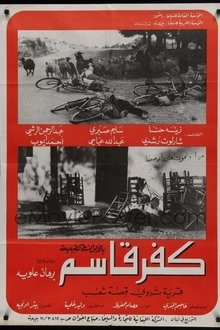
Kafr Kassem (1974)
On the eve of the Israeli attack on Egypt in 1956, Israel declares martial law in all the occupied Arab territories without any previous notice. When the villagers of Kafr Kassem returned home from the fields, they were butchered and killed in what is known today as the massacre of “Kafr Kassem”.