This documentary / fund raiser film was produced in 1984 by the Hong Kong Salvation Army to raise sponsorship for their educational activities in the infamous Kowloon Walled City. The project was filmed in 16mm film.
Related Movies
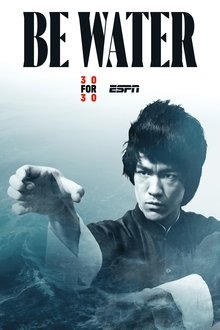
Be Water (2020)
In 1971, after being rejected by Hollywood, Bruce Lee returned to his parents’ homeland of Hong Kong to complete four iconic films. Charting his struggles between two worlds, this portrait explores questions of identity and representation through the use of rare archival footage, interviews with loved ones and Bruce’s own writings.
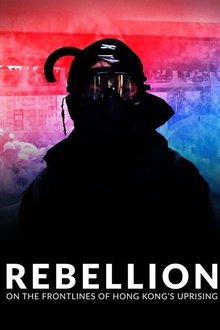
Rebellion (2019)
As the 'one country two systems' policy in Hong Kong has slowly eroded, resentment among the territory's citizens has steadily grown. What began as a series of spontaneous protests against an extradition law in March 2019 has now escalated in to a full-blown popular uprising that shows no signs of abating. ABC Four Corners reports from the frontline of the action, capturing extraordinary footage of the growing tension and violence.

Follow Me (1969)
Documentary about two boys and a girl who travel to surfing spots around the world.
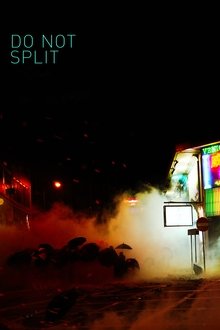
Do Not Split (2020)
The story of the 2019 Hong Kong protests, told through a series of demonstrations by local protestors that escalate into conflict when highly armed police appear on the scene.
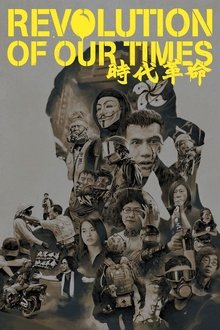
Revolution of Our Times (2021)
Throughout Hong Kong’s history, Hongkongers have fought for freedom and democracy but have yet to succeed. In 2019, a controversial extradition bill was introduced that would allow Hongkongers to be tried in mainland China. This decision spurred massive protests, riots, and resistance against heavy-handed Chinese rule over the City-State. Award-winning director Kiwi Chow documents the events to tell the story of the movement, with both a macro view of its historical context and footage and interviews from protestors on the front lines.
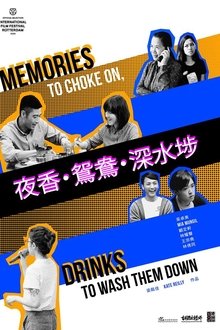
Memories to Choke On, Drinks to Wash Them Down (2019)
This anthology film, whose Chinese title begins with a romantic name for human excrement, premiered internationally at Rotterdam and won Best Screenplay from the Hong Kong Film Critics Society. A variety of Hong Kong people wrestle with nostalgia when facing an uncertain future. Their stories give way to a documentary featuring a young barista turned political candidate.
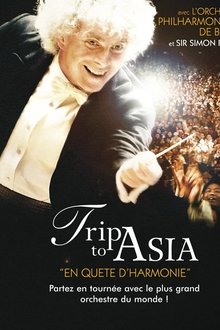
Trip to Asia: The Quest for Harmony (2008)
Journey with the musicians of the Berlin Philharmonic and their conductor Sir Simon Rattle on a breakneck concert tour of six metropolises across Asia: Beijing, Seoul, Shanghai, Hong Kong, Taipei and Tokyo. Their artistic triumph onstage belies a dynamic and dramatic life backstage. The orchestra is a closed society that observes its own laws and traditions, and in the words of one of its musicians is, “an island, a democratic microcosm – almost without precedent in the music world - whose social structure and cohesion is not only founded on a common love for music but also informed by competition, compulsion and the pressure to perform to a high pitch of excellence... .” Never before has the Berlin Philharmonic allowed such intimate and exclusive access into its private world.
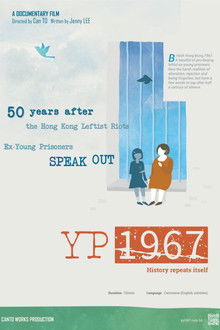
YP1967 (2017)
Everyone has their secrets. Everyone has the past no one’s heard about. But what makes an entire generation sit in stunned silence with unmentionable hesitation to talk about their past? Even the past was 50 years ago. Five decades after the Hong Kong leftist riots, six ex-young prisoners speak out for the first time about their personal and unmentionable experience. Documentary film YP1967 is about their love and hate towards their country, their honour and dishonour as a convicted criminal, their condonation and condemnation of the parties involved, and their truth-seeking and reconciliation with the past.
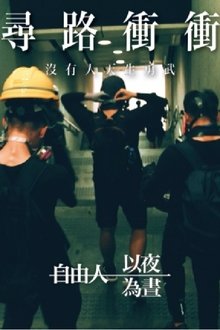
Age of Valiant (2020)
At the forefront of most of Hong Kong's demonstrations, 'frontliners' (aka 'the valiant', yung mo in Cantonese) are the black-clad, masked, often armed youth willing to use violence against the HK government and its heavily-armed police force. Willis Ho's remarkably revealing doc approaches from the inside, giving them voices and offering understanding, not judgment.

Golden Surge (2021)
Hong Kong is facing tyranny, and a pair of brothers are marching on their own ways in the revolution. However, the horror is approaching, and it’s like this city knows everything, it reborns after it collapses. There seems to be a huge energy behind this, asking inwardly: What is the fight for?

We Have Boots (2020)
The Umbrella Movement of 2014, also known as the Occupy Movement, paved the way for Hong Kong’s current upheavals, but unfolded in significantly different ways. This creative documentary focuses on the intellectual, political, and discursive underpinnings of the social and political actions of 2014, before fast-forwarding to 2019. A range of thoughtful and engaged intellectuals, students, scholars, activists, and artists including Benny Tai, Chan Kin-man, Ray Wong, and Agnes Chow (many of whom are facing imprisonment for their democratic activism) articulate a range of philosophies, viewpoints and emotions, set against Hong Kong’s spectacular urban background of skyscrapers, night lights, and street-occupying mass movements.
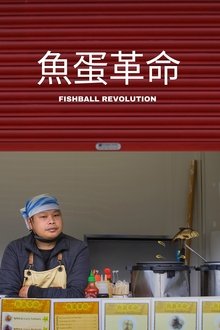
Fishball Revolution (NaN)
An asylum seeker from Hong Kong builds a new life for himself in Glasgow, using his passion for street food to maintain his cultural identity.

TAEYEON's Frozen Journey (2024)
Rising beyond K-pop to become Asia's ultimate diva, TAEYEON explores the World of Frozen at Hong Kong Disneyland. Step into the enchanting world and engage in the stories with TAEYEON, who has drawn endless inspiration from Disney since childhood and now captivates audiences as a dream-weaving singer. From lovable characters to scenic winter landscapes, every aspect feels like a fairy tale come to life. Get immersed in the captivating World of Frozen and hear TAEYEON's behind-the-scenes tales of this beloved story.
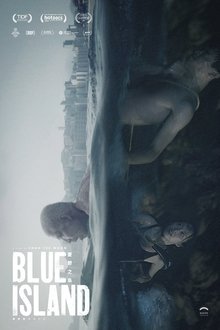
Blue Island (2022)
Although the Chinese government promised that Hong Kong would retain separate status until 2047, in recent years the Chinese state has consolidated its power over the metropolis. Large-scale protests by the populace have been brutally suppressed. This mix of documentary, fiction, and visions of the future reveals the current state of desolate depression among the people of Hong Kong. “A desperate attempt to capture the final moments of a sinking island”, as maker Chan Tze-woon himself puts it.
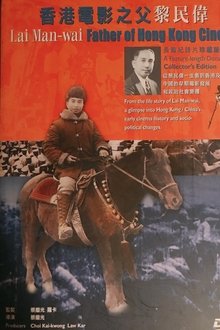
Lai Man-wai: Father of Hong Kong Cinema (2002)
In the life of Mr. Lai Man-wai, he had seen the most turbulent times of recent Chinese history. From the fall of the Qing Dynasty to the founding of the Republic, from the Sino-Japanese War to the founding of the People’s Republic. With a patriotic spirit, he joined the revolution and used the theatre to promote the revolutionary course. For a ‘stronger China’, and ‘education for all’, he chose film as his life long goal and career. Lai was more than the father of Hong Kong cinema was; he was also one of the pioneers of the Chinese cinema. He made Hong Kong’s first short fiction film ‘Zhuangzi Tests His Wife’. He opened the first Chinese owned cinema, the New World Cinema, in Hong Kong…. In the several decades, Lai had devoted his life and fortune in writing this glorious inaugural chapter in early Chinese film history. The technical enhancement, the introduction of foreign techniques and equipment were all part of his contribution to the Chinese cinema.

A Gentle Glow (2017)
The camera floats quietly to capture the beauty that emerges from the mundane. Accompanied by Ryuichi Sakamoto's composition, Arseny Tarkovsky's poem celebrates life.
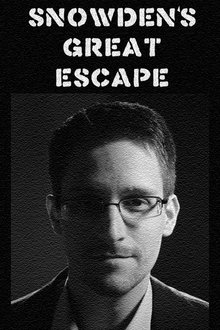
Snowden's Great Escape (2015)
Tells the story of how Edward Snowden managed to evade capture by the US. For the first time Snowden tells the story of how he managed to escape so that not to have to spend the rest of his life in an American prison.
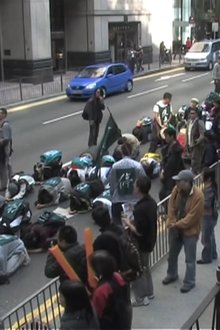
Anti-XRL Campaign - Media Perspective (2010)
In late 2009, over twenty Hong Kong civic groups united as the "Anti-High-Speed Rail, Stop Funding" coalition, aiming to halt Legislative Council approval of the HKD 66.9 billion Express Rail Link amid deep social rifts. The "Post-80s Anti-High-Speed Rail Youth" group drew thousands of young people with their slogan “Defend Our Homeland, Protest with Joy,” leading to three funding suspensions that surprised the public. Media coverage was intense and innovative, featuring rare camera angles and lively online debate among journalists. This documentary explores how reporters shaped the movement, their emotional involvement, and the dynamic relationship between the media and activists during Hong Kong’s pivotal 2009–10 protests.
Mong Kok First Aid (2020)
Mong Kok First Aid investigates the experiences and unheard stories of a group of young volunteers who provided First Aid services to wounded participants during Hong Kong’s landmark Umbrella Movement of 2014. Just half a decade later, their first-person narratives reveal an intense feeling of time passing and memories fading, as this documentary seeks to challenge history by intervening to supplement the record. After all, who decides whose story can be a part of history?
