Imagine being forced to leave your family and fight in war you don't understand - and you are only eleven years old. Sadly, for many of these child soldiers in Nepal this is a reality and the peace process has not solved their problems. These children quickly discovered that the return home is even more painful than the experience of war. Returned weaves the voices of Nepal's child soldiers, organizations working to help them, and military leader's from Nepal's opposing forces, who answer challenging questions about their use of childen as warriors.
Related Movies

Born Schizophrenic: Jani's Next Chapter (2012)
Jani is one of the youngest children ever diagnosed with schizophrenia. At age 9, she's seen great improvements and some setbacks. But now her parent's attention turns toward her brother, Bodhi. At age 4, is he showing signs of schizophrenia too?

The children trapped in Bangladesh's brothel village (2016)
Daulatdia is an entire village in Bangladesh dedicated to prostitution. Every day, 1,600 trafficked, enslaved and abandoned women and girls sell themselves for £2 a time. In the midst of the trade live 300 children, many born in the village. Some will be groomed to be the future of the business like their mothers and grandmothers. With education programmes and support provided by Save The Children, a few may find their way out.

The History of the Civil War (1921)
The epic story of the Russian Civil War (1918-21): the White Terror, the counterrevolutionary uprisings, the guerrilla war, the Kolchak front, the Wrangel front and the Kronstadt rebellion. Chaos and violence, devastation and death.
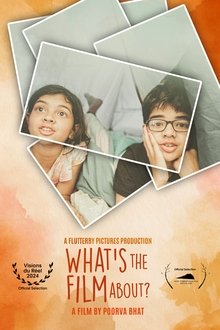
What's the Film About? (2024)
During a camping weekend, Indian filmmaker Poorva Bhat tries to find the right way to discuss consent with her two children. In the intimacy of the tent, the three find the safe space needed to explore together the innocence or otherwise of looks and gestures, both in everyday life and in the cinema.

Chris and Bernie (1975)
The story of two young single mothers who join forces to make a new kind of family unit for themselves and their children.
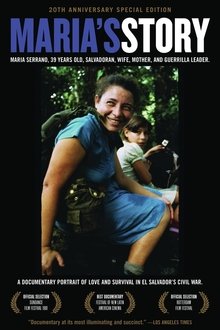
Maria's Story (1991)
It is El Salvador, 1989, three years before the end of a brutal civil war that took 75,000 lives. Maria Serrano, wife, mother, and guerrilla leader is on the front lines of the battle for her people and her country. With unprecedented access to FMLN guerrilla camps, the filmmakers dramatically chronicle Maria's daily life in the war.
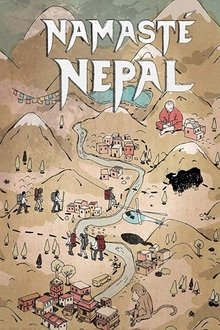
Namaste Nepal (2009)
American high school students from the privileged Silicon Valley travel to Manang, Nepal in this documentary about how travel and life experiences can change personal perceptions. Together with a group of Manangi high schoolers, the students expand their cultural knowledge and experience a slice of life as a citizen of the globe.
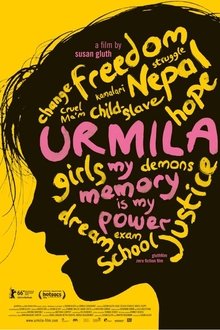
Urmila: My Memory Is My Power (2016)
The film tells the story of 25-year-old Urmila Chaudary from Nepal. At the age of six she was sold by her family and was forced to work as a slave under appalling conditions for 12 years. Her dream is to end child slavery in Nepal. To this end she fights today as a freedom activist. A film about the quest for justice with a strength that gives courage and hope.
Someday My Prince Will Come (2005)
An exposed Cumbrian village by the sea surrounded by windmills, fields and factories provides a striking setting for this fairy tale of young love and the loss of childhood innocence. Over one year, the film follows the 9 year-old Laura Anne and her 11 year-old cousin, Steven as they move towards the end of their childhoods. The narrative is told in rhyme by the young female protagonist. As time passes and the seasons change, feelings and memories from all our childhoods are evoked and we wonder what time will make of Laura Anne and Steven.
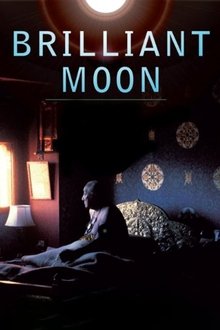
Brilliant Moon: Glimpses of Dilgo Khyentse Rinpoche (2010)
Brilliant Moon chronicles the life of the writer, poet, and meditation master Khyentse Rinpoche, one of Tibet's most revered 20th-century Buddhist teachers. Spiritual guide to His Holiness the Dalai Lama and the Royal Family of Bhutan, his life and teachings were an inspiration to all who encountered him. Richard Gere and Lou Reed provide the narration for his dangerous journey out of China, the subsequent spread of his influence and the search for his reincarnation after his death.
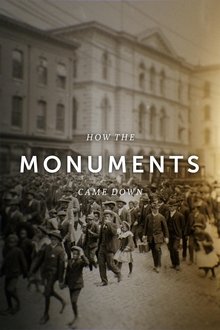
How the Monuments Came Down (2021)
How the Monuments Came Down is a timely and searing look at the history of white supremacy and Black resistance in Richmond. The feature-length film-brought to life by history-makers, descendants, scholars, and activists-reveals how monuments to Confederate leaders stood for more than a century, and why they fell.
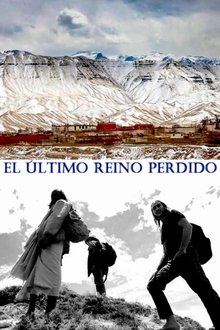
The Last Lost Kingdom (2014)
Following in the footsteps of his father, Folco Felzani embarks on an epic journey on foot in search of Mustang, the last lost kingdom, in northern Nepal. The story of a king without a kingdom. The adventure of a son without a father.

Suno (2022)
An experimental short documentary essay about the dreams of Roma women living in the ghetto in Kosice. Roma are one of the largest ethnic groups living in Slovakia. Despite this, integration into all spheres of society is difficult. And it should be noted that this applies not only to Slovakia. Luník IX houses the largest community of Romani people in Slovakia. Although originally built for 2,500 inhabitants, it is estimated that the population is now three times larger. Living standards are low, with services such as gas, water, and electricity cut off, as the majority of inhabitants are not paying rent or utilities fees.
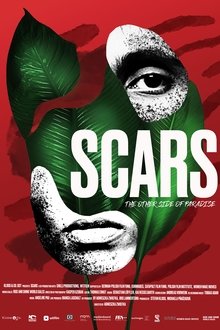
Scars (2020)
Vetri decided to find her fellow former child soldiers. They, like her, fought for the independence of the Tamil state in northern Sri Lanka. Talking together, they open up the traumas of war and reveal stories that were meant to be forgotten.

Objects of War (2000)
‘Objects of War’ is a series of testimonials on the Lebanese war. Each person chooses an object, ordinary or unusual, which serves as a starting point for his / her story. These testimonials while helping to create a collective memory, also show the impossibility of telling a single History of this war. Only fragments of this History are recounted here, held as truth by those expressing them. In ‘Objects of War’, the aim is not to reveal a truth but rather to gather and confront many diverse versions and discourses on the subject. ‘Objects of War’ started in 1999 assembling the testimonials of eleven persons. It was first shown in 2000 . It continued in 2003 with ‘Objects of War n°2’, recording seven additional testimonials. This time however, and since then, the recorded material is left unedited, shown in its integrity. The work of collecting and assembling these stories continued with ‘Objects of War n°3 & n°4’ in 2006 and ‘n°5 & 6’ in 2014.