Fascinating underwater documentary filmed with hand-held cameras by frogmen and mostly filmed in deep-water seas from within a special designed batiscaff, by the Cousteau family of sea explorers. Preserved by the Academy Film Archive in 2010.
Related Movies
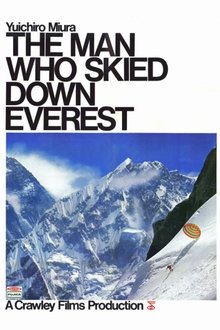
The Man Who Skied Down Everest (1975)
This Oscar-winning documentary tells the story behind Japanese daredevil Yuichiro Miura's 1970 effort to ski down the world's tallest mountain.
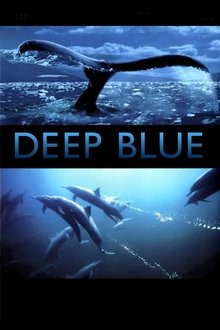
Deep Blue (2003)
Deep Blue is a major documentary feature film shot by the BBC Natural History Unit. An epic cinematic rollercoaster ride for all ages, Deep Blue uses amazing footage to tell us the story of our oceans and the life they support.

Seeing Them Through (1945)
Documentary short film reporting on the activities of the American Red Cross and the useage made of contributed funds for the previous year. Preserved by the Academy Film Archive in 2012.
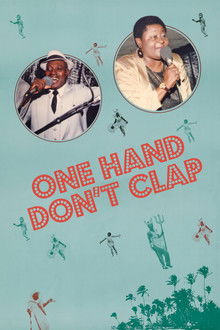
One Hand Don't Clap (1991)
Kavery Kaul’s engaging documentary traces the history of calypso and soca music from their birth in the African-East Indian traditions of Trinidad and Tobago through its worldwide diaspora, including its popularization in the 1950s by Harry Belafonte and the new independent distribution networks that arose to serve the expatriate community in the 1980s. North American restoration premiere at To Save and Project: The 19th MoMA International Festival of Film Preservation on January 27 and 31, 2023. Digital restoration by the Academy Film Archive and the Women’s Film Preservation Fund of New York Women in Film & Television; courtesy of Riverfilms.
Kid City (1972)
Documentarian Jon Boorstin follows architect Frank Gehry and his sister, Doreen Gehry Nelson, as they attempt a new method of teaching elementary school children in Los Angeles. With funding from the National Endowment for the Arts, the siblings work together on a pilot program of “design-based learning” that would restructure the typical classroom curriculum, replacing rote math or civics lessons with an imaginary city designed and built entirely by the students themselves. Restored in 2018 by the Academy Film Archive.
People Who Make Things (1970)
A portrait of three Los Angeles area residents who create things with their hands. Angelo Austin decorates wedding cakes; Dean Jeffries designs, manufactures, and paints custom cars; and Pamela Weir-Quiton creates wooden dolls. Restored by the Academy Film Archive in 2016.
Migration (1969)
"Whereas SQUARE INCH FIELD was composed largely in the camera, Rimmer's next film, MIGRATION, made full use of rear-projection rephotography, stop-framing, and slow motion. The migration of the title is interpreted as the flight of a ghost bird through aeons of space/time, through the micro-macro universe, through a myriad of complex realities. A seagull is seen flying gracefully in slow motion against a grainy green sky; suddenly the frame stops, warps and burns, as though caught in the gate of the projector. Now begins an alternation of fast and slow sequences in which the bird flies through time-lapse clouds and fog and, in a stroboscopic crescendo, hurtles into the sun's corona. Successive movements of the film develop rhythmic, organic counterpoints in which cosmic transformations send jelly fish into the sky and ocean waves into the sun." - Gene Youngblood. Preserved by the Academy Film Archive in 2014.
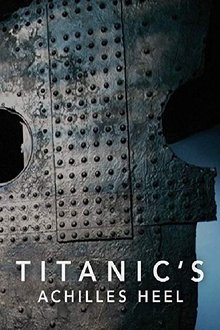
Titanic's Achilles Heel (2007)
An expedition looks into whether Titanic's hull had a construction design flaw that caused her to break apart. Featuring advanced CGI technology, archive documents and photographs, as well as footage from the modern-day History(R) expeditions, "Titanic's Achilles Heel" is a remarkable journey into the ongoing legacy of a ship that continues to capture the world's attention.

Soft Fiction (1979)
Chick Strand's SOFT FICTION is a personal documentary that brilliantly portrays the survival power of female sensuality. It combines the documentary approach with a sensuous lyrical expressionism. Strand focuses her camera on people talking about their own experience, capturing subtle nuances in facial expressions and gestures that are rarely seen in cinema. Preserved by the Academy Film Archive in partnership with The Film Foundation in 2015.
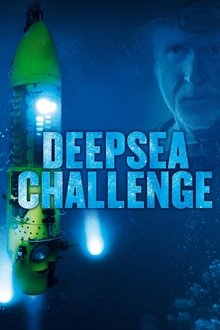
Deepsea Challenge 3D (2014)
Described as being a film about determination, danger and the ocean’s greatest depths, James Cameron's "Deepsea Challenge 3D" tells the story of Cameron’s journey to fulfill his boyhood dream of becoming an explorer. The movie offers a unique insight into Cameron's world as he makes that dream reality – and makes history – by becoming the first person to travel solo to the deepest point on the planet.

Wonderland of California (1933)
Short film made up of various clips showcasing the Cinecolor process, including a visit to a Marx Brothers film set. Preserved by the Academy Film Archive in partnership with The Film Foundation.
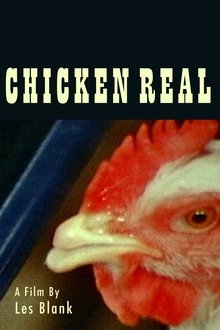
Chicken Real (1970)
One of Les Blank's industrial films, which follows a Holly Farms "broiler" chicken from factory incubation to the county fair barbecue pit. A hilarious, disturbing and surreal look at a large-scale chicken farm producing 156 million chickens a year! Film includes lots of chicken songs and music recorded live in the Blue Ridge Mountains of North Carolina. Preserved by the Academy Film Archive in 2013.
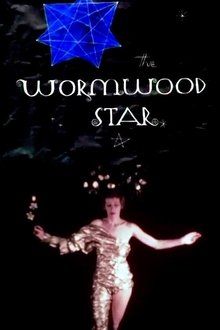
The Wormwood Star (1956)
A portrait of artist, actress, poet and occultist Marjorie Cameron, it shows images of her paintings and recitations of her poems. Preserved by the Academy Film Archive in 2006.
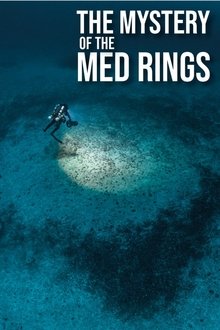
The Mystery of the Med Rings (2025)
Explore the mysterious giant rings of the Mediterranean, buried at a depth of 120m, with the world-famous Laurent Ballesta, world-renowned diver and his team, to understand the origin of these unique and unknown formations.
I Don't Know (1971)
A truly major work, I Don’t Know observes the relationship between a lesbian and a transgender person who prefers to be identified somewhere in between male and female, in an expression of personal ambiguity suggested by the film’s title. This nonfiction film – an unusual, partly staged work of semi-verité – is the first of Spheeris’s films to fully embrace what would become her characteristic documentary style: probing, intimate, uncompromising. Preserved by the Academy Film Archive in 2014.
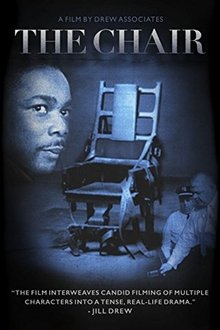
The Chair (1963)
Follows a crusading lawyer as he embarks on a campaign to save an African-American man, Paul Crump, from the electric chair. Preserved by the Academy Film Archive in partnership with The Film Foundation in 2007.
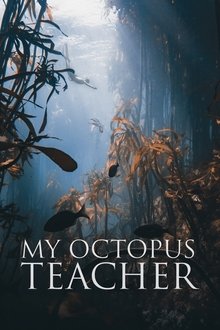
My Octopus Teacher (2020)
After years of swimming every day in the freezing ocean at the tip of Africa, Craig Foster meets an unlikely teacher: a young octopus who displays remarkable curiosity. Visiting her den and tracking her movements for months on end he eventually wins the animal’s trust and they develop a never-before-seen bond between human and wild animal.
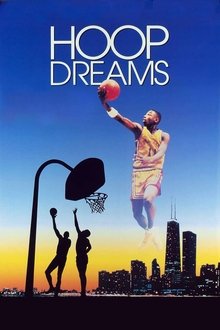
Hoop Dreams (1994)
Every school day, African-American teenagers William Gates and Arthur Agee travel 90 minutes each way from inner-city Chicago to St. Joseph High School in Westchester, Illinois, a predominately white suburban school well-known for the excellence of its basketball program. Gates and Agee dream of NBA stardom, and with the support of their close-knit families, they battle the social and physical obstacles that stand in their way. This acclaimed documentary was shot over the course of five years.
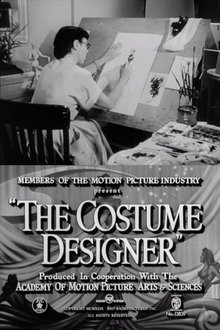
The Costume Designer (1950)
This short focuses on the job of the costume designer in the production of motion pictures. The costume designer must design clothing that is correct for the film historically and geographically, and must be appropriate for the mood of the individual scene. We see famed costume designer Edith Head at work on a production. The Costume Designer was part of The Industry Film Project, a twelve-part series produced by the film studios and the Academy. Each series episode was produced to inform the public on a specific facet of the motion picture industry. Preserved by the Academy Film Archive in 2012.
City Streaming (1990)
This is a film made in Toronto, in memoriam, so to speak - a memory piece, a "piecing-together" of the experience of living there. The consciousness of the maker comes to sharply focused visual music - not to arrive at snapshots, as such, but rather to "sing" the city as remembered from daily living...complementary, then, to an earlier film, "Unconscious London Strata." Preserved by the Academy Film Archive in 2015.