Documenting the Kapu Aloha movement, as they take a stand to defend Mauna Kea in the wake of the Thirty Meter Telescope protests.
Related Movies

Yakuza and Constitution (2016)
Since the enactment of the Anti-Boryokudan Act and Yakuza exclusion ordinances, the number of Yakuza members reduced to less than 60,000. In the past 3 years, about 20,000 members have left from Yakuza organizations. However, just numbers can’t tell you the reality. What are they thinking, how are they living now? The camera zooms in on the Yakuza world. Are there basic human rights for them?
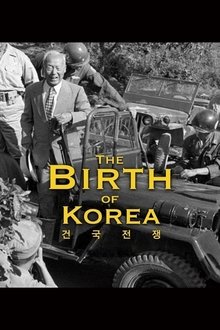
The Birth of Korea (2024)
Since South and North Korea's liberation in 1945, North Korea, a communist dictatorship that suppresses freedom and oppresses human rights, and South Korea, which has entered the path of economic prosperity and advanced countries based on freedom and democracy, have taken different paths. How did the two countries with the same language, history, and race, become divided into two extreme countries? A work that highlights the sacrifices and struggles of President Syngman Rhee and the first generation of founding members who worked to create and protect today's Republic of Korea over the past 70 years of history.
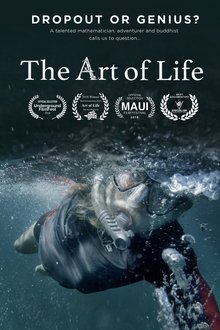
The Art of Life (2019)
As a rising star in the field of abstract mathematics, Michael discovered that he could see beauty and pattern where others could not. But his path was not to be inside academia, or even inside society. He went on a grand adventure to unify his Buddhism with his ability to see an expanded view of reality. He created beauty in a place where nobody else would, and made his friends amongst dolphins.
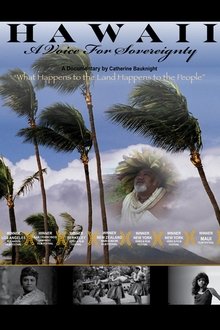
Hawaii: A Voice for Sovereignty (2009)
The goal of Hawaii, a Voice for Sovereignty is to raise awareness of the issues that threaten the Hawaiians ancient and once-environmentally-sustainable culture. It is an epic documentary about Hawaiian spirituality and the peoples close connection to the land. It focuses on the complicated social, economic and ecological issues that have arisen in Hawaii since the overthrow of Queen Liliuokalani by the United States in 1893. For Hawaiians, sovereignty is the legal, political and moral right to live on and care for the land; build and grow a sustainable economy; protect natural resources; practice spiritual and cultural traditions; honor their ancestral past; and care for family and community. The film is in the voice of native Hawaiian people who address the issues they continue to face in their long struggle to regain sovereignty over their rights and the native lands lost after the U.S. businessmen and military overthrew the Kingdom of Hawaii.
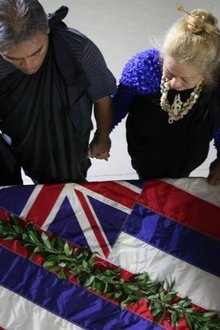
Ka Ho‘ina: Going Home (2014)
Ka Hoʻina documents members of Hui Mālama I Nā Kūpuna O Hawaiʻi Nei's final repatriation of over 140 sets of iwi kupuna and provides an intimate look into the legacy forged by these committed and passionate few, ensuring that Hawaiians will mālama or care for kupuna for generations to come.
Lava Land - Glowing Hawaii (2013)
Hawaii, with its tropical rainforests and diverse coral reef is a spectacular natural paradise for travellers, surfers and all fans of breathtaking sandy beaches and lush green mountains. But life on the American island chain also has a dangerous side: permanently active volcanoes, lava caves, and even burning lava pours into the sea! Here you can see black smoke rise up, spray the red-hot magma into the sky and feel how the earth trembles. Located on the Pacific plate is unusual for volcanoes, Hawaii is thus researchers a fascinating destination. At Kilauea, the most active volcano on earth, the inhabitants have to live in constant danger found over the centuries cope. Lava Land - Glowing Hawaii takes you into the world of researchers and residents on the Big Iceland, the largest island of Hawaii.

Fight the Power: The Movements That Changed America (2021)
“Looks at the impact key movements throughout U.S. history have had in shaping our society, laws and culture. From the labor movement of the 1880s, women's suffrage and civil rights, to the LGBTQ+ and Black Lives Matter movements, protest is in the American DNA and this documentary gives an unfiltered look at the ways it has evolved the world in which we live.”
Riding Giants (2004)
Riding Giants is story about big wave surfers who have become heroes and legends in their sport. Directed by the skateboard guru Stacy Peralta.

Out of State (2017)
Out of State is the unlikely story of native Hawaiians men discovering their native culture as prisoners in the desert of Arizona, 3,000 miles, and across the ocean, from their island home.
Visions in the Dark: The Life of Pinky Thompson (2017)
Pinky Thompson grew up in Hawaii during a time when one was punished for being Native Hawaiian. After almost losing his life in the battlefields of Normandy in World War II, Pinky brought his fierce energy to the arena of social service whre he championed a health care system, created invaluable educational programs and strengthened the pride of Native Hawaiians. Pinky fostered new methods of policy collaboration and community testimony. He elevated a new generation of Hawaiian leaders to represent the vibrant cultural identity and value system of the Hawaiian people.
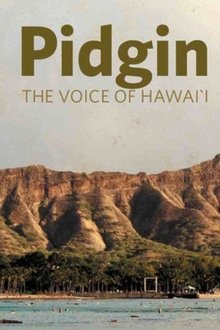
Pidgin: The Voice of Hawai'i (2009)
What if you are made to feel ashamed when you speak your "mother tongue" or ridiculed because of your accent? "Pidgin: The Voice of Hawai'i" addresses these questions through its lively examination of Pidgin - the language spoken by over half of Hawai'i's people.

Alice in the Land of National Guard of Russia (2019)
A girl from St. Petersburg walks around protest-ridden Moscow, talking to riot police and believing that sooner or later they will go over to the side of the demonstrators. An 18-year-old student of a St. Petersburg college introduces herself as Alice and tells about herself that from the age of four she lived in an orphanage and in foster families. In Moscow, Alisa, for whom this is the first rally in her life, walks along the police cordons and looks under the OMON helmet. "Under the mask you can't see, are you even human?"
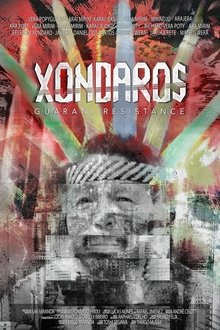
Xondaros - Guarani Resistance (2023)
The 6 Guarani villages of Jaraguá, in São Paulo, fight for land rights, for human rights and for the preservation of nature. They suffer from the proximity to the city, which brings lack of resources, pollution of rivers and springs, racism, police violence, fires, lack of infrastructure and sanitation, among others. Unable to live like their ancestors, their millenary culture is lost as it merges with the urban culture.
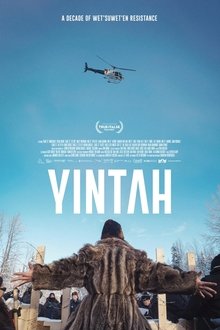
Yintah (2024)
Wet’suwet’en leaders unite in a battle against the Canadian government, corporations, and militarized law enforcement to safeguard their territory from gas and oil pipelines.
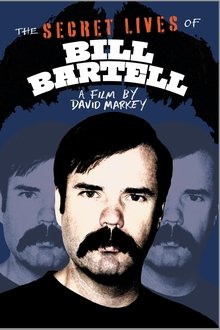
The Secret Lives of Bill Bartell (2025)
Bill Bartell was a multifaceted individual who traversed the punk rock scene, law enforcement, rodeo riding, and country music. Known for his unique contribution to punk rock through his label Gasatanka Records and band White Flag, Bartell's life defies conventional boundaries, blending hyper-masculinity with subcultural rebellion. His story, filled with mysterious and seemingly contradictory roles, offers a compelling narrative about identity, transformation, and the unexpected paths life can take.

Hawaii, l'âme du ukulélé (2020)
A passionate ukulele player, cartoonist Joann Sfar ("The Rabbi's Cat") flies to Hawaii to explore the history of the little instrument, as well as the culture that surrounds it. For the pocket guitar, imported in 1879 by the Portuguese from Madeira who had come to harvest sugar cane, is the vector of a philosophy specific to the archipelago: the spirit of "Aloha", which condenses hospitality, joy, love and respect. With brushes in hand, Joann Sfar set out in search of the ideal instrument, meeting craftsmen, musicians, dancers and guardians of Hawaiian culture.

Shaka: A Story of Aloha (2023)
A documentary on the origin, meanings and uses of the gesture. The shaka sign is reputed to be over a century old, but its origins are the stuff of myths and legends. It turns out that kupuna (Hawaiian elders) have kept the story secret for almost a century. Why? They didn't want it told incorrectly or commercialized. But given advancing age and a world in need, they decided it was time to share the story.

Rise of the Wahine (2014)
In the years following the Civil Rights movement and the passage of Title IX in 1972, Dr. Donnis Thompson (a headstrong African-American female coach), Patsy Mink (the first Asian-American U.S. congresswoman), and Beth McLachlin (the team captain of a rag-tag female volleyball team), battled discrimination from the halls of Washington D.C. to the dusty volleyball courts of the University of Hawaii, fighting for the rights of young women to play sports.