A poetic exploration of three subterranean telescopes in remote regions of Canada, Japan, and Antarctica that reveal a new way of perceiving the universe from within. Underground, we are dreaming into the earth.
Related Movies
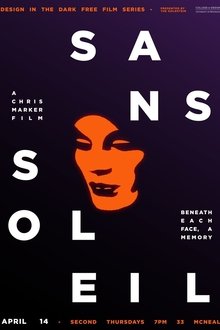
Sans Soleil (1983)
A woman narrates the thoughts of a world traveler, meditations on time and memory expressed in words and images from places as far-flung as Japan, Guinea-Bissau, Iceland, and San Francisco.
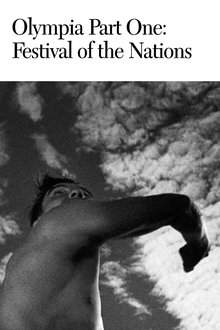
Olympia Part One: Festival of the Nations (1938)
Starting with a long and lyrical overture, evoking the origins of the Olympic Games in ancient Greece, Riefenstahl covers twenty-one athletic events in the first half of this two-part love letter to the human body and spirit, culminating with the marathon, where Jesse Owens became the first track and field athlete to win four gold medals in a single Olympics.
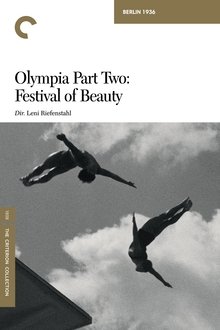
Olympia Part Two: Festival of Beauty (1938)
Part two of Leni Riefenstahl's monumental examination of the 1938 Olympic Games, the cameras leave the main stadium and venture into the many halls and fields deployed for such sports as fencing, polo, cycling, and the modern pentathlon, which was won by American Glenn Morris.
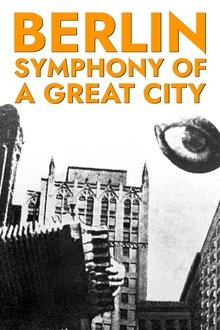
Berlin: Symphony of a Great City (1927)
A day in the city of Berlin, which experienced an industrial boom in the 1920s, and still provides an insight into the living and working conditions at that time. Germany had just recovered a little from the worst consequences of the First World War, the great economic crisis was still a few years away and Hitler was not yet an issue at the time.
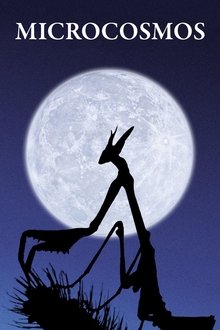
Microcosmos (1996)
A documentary of insect life in meadows and ponds, using incredible close-ups, slow motion, and time-lapse photography. It includes bees collecting nectar, ladybugs eating mites, snails mating, spiders wrapping their catch, a scarab beetle relentlessly pushing its ball of dung uphill, endless lines of caterpillars, an underwater spider creating an air bubble to live in, and a mosquito hatching.

Liyana (2017)
A talented group of orphaned children in Swaziland create a fictional heroine and send her on a dangerous quest.
Routine (2025)
An experimental half-documentary half-fiction about a young person’s routine of getting to sleep and waking up.
Glass Life (2021)
A dynamic configuration of images and videos overlaid with musings on human existence.
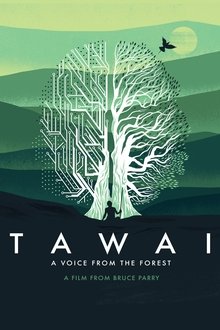
Tawai: A Voice from the Forest (2017)
Explorer Bruce Parry visits nomadic tribes in Borneo and the Amazon in hope to better understand humanity's changing relationship with the world around us.

Chronos (1985)
Carefully picked scenes of nature and civilization are viewed at high speed using time-lapse cinematography in an effort to demonstrate the history of various regions.

Being 97 (2018)
Herbert Fingarette once argued that there was no reason to fear death. At 97, his own mortality began to haunt him, and he had to rethink everything.
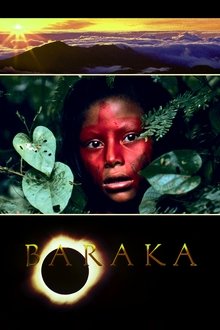
Baraka (1992)
A paralysingly beautiful documentary with a global vision—an odyssey through landscape and time—that attempts to capture the essence of life.
Capturing Memories (2027)
Time passes, slips away, dissolves. But what if we could hold it for a moment? "Capturing Memories" is a dive into the essence of the inconsistent, an invitation to reflect on the importance of preserving moments before they are lost in oblivion. Through visual fragments, the documentary reveals how small scenes of everyday life carry echoes of the past and seeds of the future. In a world where everything passes, what really remains? This film is a tribute to the art of immortalizing the moment, to the beauty of seeing beyond the present and to the need to give meaning to what may one day become a memory.
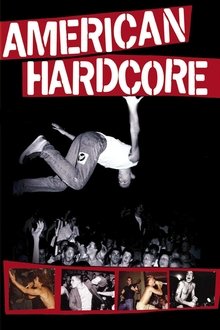
American Hardcore (2006)
Inspired by Steven Blush's book "American Hardcore: A tribal history" Paul Rachman's feature documentary debut is a chronicle of the underground hardcore punk years from 1979 to 1986. Interviews and rare live footage from artists such as Black Flag, Bad Brains, Minor Threat, SS Decontrol and the Dead Kennedys.
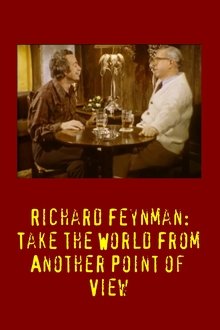
Take the World From Another Point of View (1973)
In 1973 Yorkshire public television made a short film of the Nobel laureate while he was there. The resulting film, Take the World from Another Point of View, was broadcast in America as part of the PBS Nova series. The documentary features a fascinating interview, but what sets it apart from other films on Feynman is the inclusion of a lively conversation he had with the eminent British astrophysicist Fred Hoyle.


A Propos D'Un Crime (1967)
In 1967, Visconti came to Algiers for the filming of The Stranger with Mastroianni and Anna Karina. Camus, during his lifetime, had always refused to allow one of his novels to be brought to the screen. His family made another decision. The filming of the film was experienced in Algiers, like a posthumous return of the writer to Algiers. During filming, a young filmmaker specializing in documentaries Gérard Patris attempts a report on the impact of the filming of The Stranger on the Algerians. Interspersed with sequences from the shooting of Visconti's film, he films Poncet, Maisonseul, Bénisti and Sénac, friends of Camus, in full discussions to situate Camus and his work in a sociological and historical context. “The idea is for us to show people, others, ourselves as if they could all be Meursault, or at least the witnesses concerned to his drama.”

Panta Rhei (1952)
In 1952, Haanstra made Panta Rhei , another view of Holland through the eyes of a painter and filmmaker. Its poetic images of water, skies and clouds reflect Haanstra's own moods.
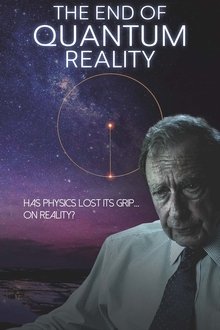
The End of Quantum Reality (2020)
Almost one hundred years ago, the project to reduce the world to mathematical physics failed suddenly and completely: “One of the best-kept secrets of science,” physicist Nick Herbert writes, “is that physicists have lost their grip on reality.” The world, we are now told, emerges spontaneously, out of “nothing,” and constitutes a “multiverse,” where “anything that can happen will happen, and it will happen an infinite number of times.” Legendary reclusive genius Wolfgang Smith demonstrates on shockingly obvious grounds the dead end at which physics has arrived, and how we can “return, at last, to the real world.” The End of Quantum Reality introduces this extraordinary man to a contemporary audience which has, perhaps, never encountered a true philos-sophia, one as intimately at ease with the rigors of quantum physics as with the greatest schools of human wisdom.