In January 2017, a video showing a young Gambian man named Pateh Sabally drowning in the waters of Venice’s Grand Canal went viral on social networks. From the shore, passers-by could be heard insulting him, rather than attempting to help. 4,000 kilometres away, the voices and faces of his family tell the story that preceded this tragedy, the story behind the images.
Related Movies

Into Madness (1989)
Initially airing on HBO's "America Undercover" series, this riveting documentary focuses on three families shattered by the psychiatric disorder of schizophrenia. Subjects "Bob," "Missy" and "Steven" have lived for over a decade with schizophrenia. The film documents the difficult day-to-day existence of both those afflicted with this order and the families searching for answers to their loved ones' suffering. This film also shows the varied and variably successful treatment methods for each of the subjects—one is placed in a group home, one is placed in an institution, and one is cared for at home. The documentary was critically acclaimed for its compassionate treatment of mental illness.
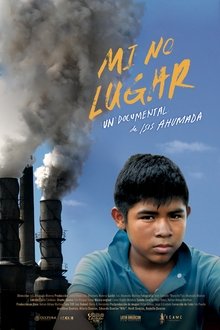
My No Place (2022)
A boy migrates from Guerrero to Colima in Mexico, guided by the illusion of his parents, who want him to study high school. Nevertheless, the inequality barriers force him to work as a sugarcane harvester.

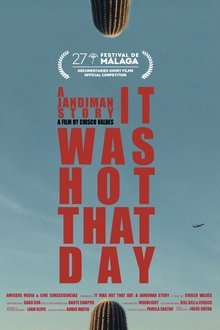
It Was Hot That Day: A Jandiman Story (2024)
Enduring 28 days of relentless construction labor, Frank struggles to prep a house for painting amidst Phoenix's scorching pandemic summer.
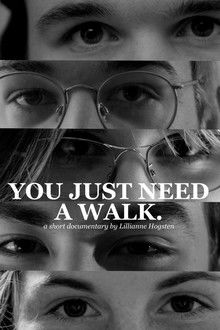
You Just Need a Walk. (2022)
Five subjects from Gen-Z take the PHQ-9 - a survey to assess the degree of one's depression severity. They -also- have a lot to say.
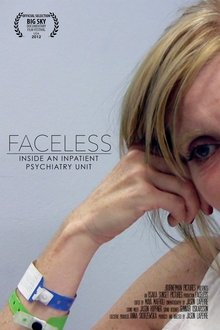
Faceless (2012)
Faceless is a documentary film about the workings of an inpatient psychiatry unit, seen through the eyes of both the patients trying to get well and the staff trying to help them.
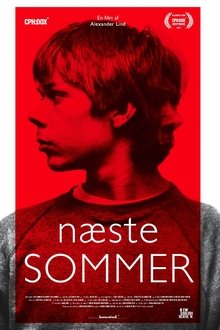
Next Summer (2017)
When Rasmus was 15, his mother and siblings moved from the island Bornholm and left Rasmus with his mentally ill father. Influenced by his father's insecurity, anger and failure, Rasmus chooses to move from Bornholm at the age of 18. Two years later, Rasmus is trying to see if a reunion is possible, but in order to forgive and create a new relationship, father and son must go on a common journey that requires extreme courage and determination to succeed.
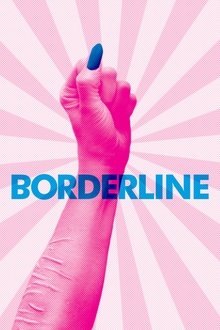
Borderline (2016)
The first time Regina tried to kill herself, she was 5 years old. Now she's 45 and hell-bent on trying to live.
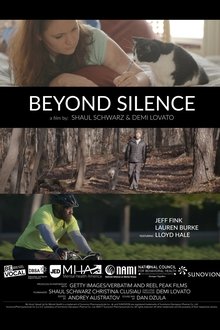
Beyond Silence (2017)
The lives of Jeff, Lauren and Lloyd—three very different people who share one common experience—have been transformed by speaking up for mental health. These inspiring stories depict what mental health in America really looks like and highlights just how important it is to speak up and seek help.

Palm to Palm: Love. Home. Family (2019)
"Everybody should have a home. If you punish a nation, this is so abstract, it's very mean to use your power to put another country in your control... Instead of punishment, maybe we should have love." Eliane from Chile, Milad from Iran, and Georgia from Greece, three migrants in the UK and their thoughts on love, home, family, and Shakespeare's Romeo and Juliet.

The Fiend (2011)
Joe wants to be a rapper. Max wants to be a filmmaker. They go to a secluded house in rural Virginia to document the production of Joe's demo CD. But what begins as a funny music documentary turns into a film about Joe's harrowing battle with a self-destructive alter-ego.


The Distraction (2020)
A short form exploration of the very visceral and disorienting world of living with severe anxiety and depression, the world’s biggest health problem.

The Prime Minister Is Missing (2008)
With Australia at war in Vietnam in 1967, suddenly Prime Minister Harold Holt disappeared without a trace—an event unparalleled in the history of western democracy. Four decades later, a coronial inquiry confirmed that Harold Holt had accidentally drowned. Some people may still believe that Holt was a spy and fled to China in a submarine. But most suspect there was more to his disappearance than has ever been revealed. Reconstructed from eyewitness accounts, this dramatised documentary tells the story of the Prime Minister's secret world in the months before he disappeared — a world of betrayal, blackmail, political treachery, a poisonous feud, mounting physical and mental strain, and near-death experiences. Featuring Normie Rowe as Harold Holt, Nicholas Hope as William McMahon and Tony Llewellyn-Jones as John McEwen, this film reveals explosive new aspects of the case.

Billy (2024)
Billy is a film buff who films himself non-stop. During a film shoot, he meets Lawrence Côté-Collins and the two become friends. One night, he assaults her. Years later, in prison for the deaths of two people, Billy is diagnosed with schizophrenia. With the help of the filmmaker, his only remaining relationship apart from his family, his personal archives become an invaluable resource for understanding his illness. A formal deconstruction of schizophrenia through a remarkably open-minded gaze.
Three Identical Strangers (2018)
New York, 1980. Three complete strangers accidentally discover that they're identical triplets, separated at birth. The 19-year-olds' joyous reunion catapults them to international fame, but also unlocks an extraordinary and disturbing secret that goes beyond their own lives – and could transform our understanding of human nature forever.


Soaked in Bleach (2015)
Twenty years ago, Kurt Cobain was found dead of an apparent gunshot wound to the head. The world was told it was a suicide, but evidence would lead many people to believe it might be otherwise. The film investigates the possibilities that exist that Kurt Cobain's death might not have been a suicide, that the Seattle Police Department rushed their verdict, and the global media perpetuated lies and misinformation fed to them by Courtney Love that created the belief in many that Cobain killed himself—but when revealed to be lies—lead many to now question what happened.