East German film about the history of Red Orchestra, a real life German pro-Soviet spy ring created after the rise of Hitler that turned into a resistance movement led by a leftist Nazi officer, Harro Schulze-Boysen, and Arvid Harnack.
Related Movies

Leroy (2007)
A gently humorous look at otherness and xenophobia in modern day German with this tale of a black Berlin teen named Leroy who rediscovers his roots after falling for a pretty white girl and meeting her racist family.
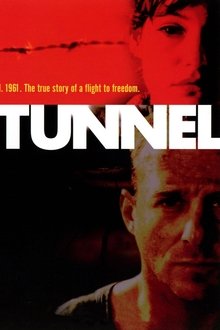
The Tunnel (2001)
Inspired by true events, Olympic swimmer Harry Melchior defects from East Germany in the 1960s and hatches a daring plot to help his sister and others flee East Berlin through a 145-yard underground tunnel.

The Girls with the Red Ribbons (1978)
Jeta is a student who is a member of the illegals and tries to create a group of antifascist girls in her school.
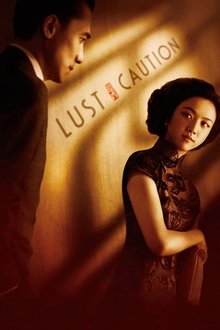
Lust, Caution (2007)
During World War II, a secret agent must seduce and assassinate an official who works for the Japanese puppet government in Shanghai.
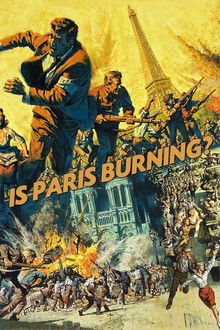
Is Paris Burning? (1966)
Near the end of World War II, Gen. Dietrich von Choltitz receives orders to burn down Paris if it becomes clear the Allies are going to invade, or if he cannot maintain control of the city. After much contemplation Choltitz decides to ignore his orders, enraging the Germans and giving hope to various resistance factions that the city will be liberated. Choltitz, along with Swedish diplomat Raoul Nordling, helps a resistance leader organize his forces.

We Won't Go to the Woods Anymore (1969)
In the spring of 1944, in the Woëvre forest of Lorraine, a group of young maquisards takes in four German deserters. led by Saint-Brice is based in the Woevre forest. Lise, a nineteen-year-old girl, is their liaison officer. One evening, four German soldiers turn up as deserters. After a period of doubt, the maquisards agree to integrate them into their group. Lise falls in love with one of the newcomers, Werner, and becomes his mistress. One day, she leaves on a mission with Lucien, and comes across an enemy patrol. The SS shoot Lucien and free Lise. In the camp, people begin to think that the maquis has been betrayed.

Angels of Iron (1981)
The subject of this historical drama is a splintering Berlin in the years of 1948 and 1949. Played against the backdrop of social upheaval, the characters in the drama come to epitomize the best and worst of each pole of the political sphere. A 17-year-old hoodlum by the name of Gladow works hand-in-glove with a local white-collar criminal to rob and pillage every day and night, defying capture. While he and his gang of thugs are terrorizing the people of Berlin, the Soviets are trying to make the blockade of their region of control impermeable. The future casts long shadows over the drama, as Berlin's problems take the shape of times to come.

1900 (1976)
The epic tale of a class struggle in twentieth century Italy, as seen through the eyes of two childhood friends on opposing sides.

Summer in Berlin (2005)
An intimate study of two women friends who come to each other because of troubles with everyday life and with men and thus try to enjoy a life based on their ideas.

About the Looking for and the Finding of Love (2005)
Director helmut Dietls and Patric Susskinds illustrate a legendary story of two lovers who cant keep themselves away from death.

The Pianist (2002)
The true story of pianist Władysław Szpilman's experiences in Warsaw during the Nazi occupation. When the Jews of the city find themselves forced into a ghetto, Szpilman finds work playing in a café; and when his family is deported in 1942, he stays behind, works for a while as a laborer, and eventually goes into hiding in the ruins of the war-torn city.
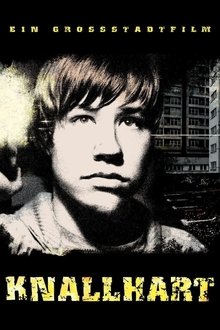
Tough Enough (2006)
From the youth directed novel of the same name by Greogor Tressnow comes a film by Detlev Buck that is a realistic portrait of life in the section of Berlin called Neukölln. It’s about power and weakness, delinquents and victims, and the difficulties a 15-year-old faces in a poor and criminal environment.
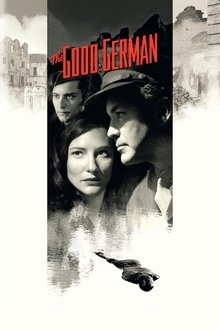
The Good German (2006)
An American journalist arrives in Berlin just after the end of World War Two. He becomes involved in a murder mystery surrounding a dead GI who washes up at a lakeside mansion during the Potsdam negotiations between the Allied powers. Soon his investigation connects with his search for his married pre-war German lover.
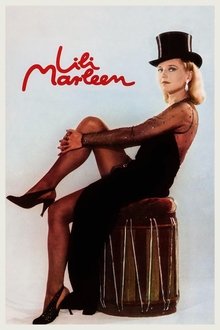
Lili Marleen (1981)
The story of a German singer named Willie, who while working in Switzerland, falls in love with a Jewish composer named Robert, whose family is helping people to flee from the Nazis. Robert’s family is skeptical of Willie, thinking she could be a Nazi as she becomes famous for singing the song “Lili Marleen”.

Casablanca (1943)
In Casablanca, Morocco in December 1941, a cynical American expatriate meets a former lover, with unforeseen complications.

Rome, Open City (1945)
During the Nazi occupation of 1944 Rome, Resistance leader Giorgio Manfredi is pursued by the Nazis as he seeks refuge and a means of escape.
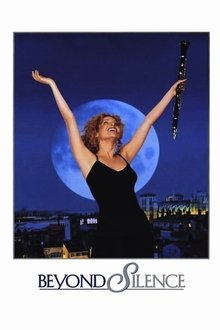
Beyond Silence (1996)
Beyond Silence is about a family and a young girl’s coming of age story. This German film looks into the lives of the deaf and at a story about the love for music. A girl who has always had to translate speech into sign language for her deaf parents yet when her love for playing music grows strong she must decide to continue doing something she cannot share with her parents.

People on Sunday (1930)
A semi-documentary experimental 1930 German silent film created by amateurs with a small budget. With authentic scenes of the metropolis city of Berlin, it's the first film from the later famous screenwriters/directors Billy Wilder and Fred Zinnemann.

Walk on Water (2004)
Eyal, an Israeli Mossad agent, is given the mission to track down and kill the very old Alfred Himmelman, an ex-Nazi officer, who might still be alive. Pretending to be a tourist guide, he befriends his grandson Axel, in Israel to visit his sister Pia. The two men set out on a tour of the country, during which Axel challenges Eyal's values.

The Elementary Particles (2006)
Based on Michel Houellebecq's controversial novel, Atomised (aka The Elementary Particles) focuses on Michael and Bruno, two very different half-brothers and their disturbed sexuality. After a chaotic childhood with a hippie mother only caring for her affairs, Michael, a molecular biologist, is more interested in genes than women, while Bruno is obsessed with his sexual desires, but mostly finds his satisfaction with prostitutes. But Bruno's life changes when he gets to know the experienced Christiane. In the meantime, Michael meets Annabelle, the love of his youth, again.