Affectionate portrait of Timothy "Speed" Levitch, a tour guide for Manhattan's Gray Line double-decker buses.
Related Movies
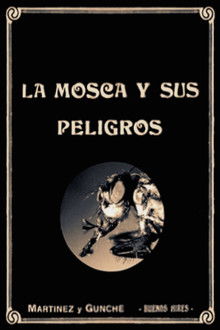
The Dangers of the Fly (1920)
The Dangers of the Fly is an educational film made by Ernesto Gunche and Eduardo Martínez de la Pera, also responsible for Gaucho Nobility (1915), the biggest blockbuster of Argentinean silent cinema. De la Pera was a talented photographer, always willing to try new gadgets and techniques. This film experiments with microphotography in the style of Jean Comandon's films for Pathé and it is part of a series which included a film about mosquitoes and paludism and another one about cancer, which are considered lost. Flies were a popular subject of silent films and there are more than a dozen titles featuring them in the teens and early twenties.

Leonardo da Vinci (1952)
This documentary tells the story of the brilliant Italian polymath, artist, sculptor, painter, poet, musician, writer, philosopher, scientist, botanist, geologist, cartographer, mathematician, anatomist, paleontologist, architect, urban planner, engineer, and inventor. The legacy of the brilliant Leonardo (1452-1519) to the world came in many forms: in the breathtaking beauty of The Last Supper and The Mona Lisa; in his rich collection of engravings; and in his notes on original thoughts on astronomy, biology, and physiology.
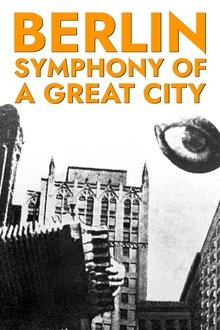
Berlin: Symphony of a Great City (1927)
A day in the city of Berlin, which experienced an industrial boom in the 1920s, and still provides an insight into the living and working conditions at that time. Germany had just recovered a little from the worst consequences of the First World War, the great economic crisis was still a few years away and Hitler was not yet an issue at the time.
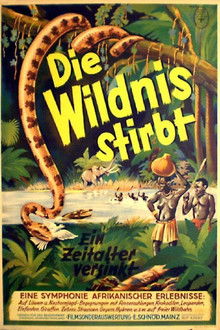
Die Wildnis stirbt! (1936)
A reportage cross-cutting film about the development of Africa from 1900-1936, using archive footage and film material from earlier African expeditions.
Die Seehunde (1934)
Short film about seals, the hunt for them and how they are processed afterwards.

My Courtyard (2021)
During the pandemic, a 14 year old boy remains stuck in his school dormitory while his mother tries to contact him.
L’angle du monde (2006)
'The angle of the world allows us to see the real as an outer and inner presence at the same time, an opaque otherness, yet capable of becoming an intimate space. These incommensurable lengths and distances of an interior that opens up: The mysterious movement of the clouds, the cadence of the waves against the light, or the silent slippage of a barely identifiable human silhouette, everything seems transfigured, derealized and reinvented by light in a poetic world that evokes the paintings of Turner or Friedrich, the writings of Poe or Baudelaire.’ — Violeta Salvatierra
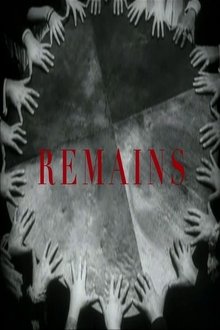
Remains (2014)
Something takes us underground, where gods and monsters are active, amid the ruins of a world they move around with their innumerable hands. Inspired by Fritz Lang and Richard Wagner, Remains is a daydream.
Hakenkreuz am Stahlhelm (1933)
The film shows the various stages of the Stahlhelm's integration into the NSDAP and the Third Reich.
Der Nürnberger Parteitag der Nationalsozialistischen Deutschen Arbeiterpartei (1929)
A film about the Nuremberg Party Congress of the NSDAP in 1929.
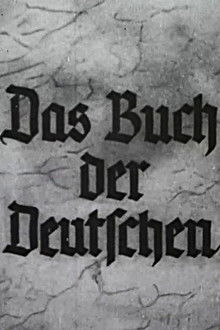
Das Buch der Deutschen (1936)
The film shows the manufacture of a luxury edition of "Mein Kampf" on real parchment, handwritten.
Ein Fenster in die Welt (1951)
Students from nine nations unite on August 7, 1950 at the Franco-German border near Germanshof, tear down the barriers and remove the border posts and barriers, which they burn in a ceremony. This act is a commitment to Europe and a protest against the arbitrariness of borders between nations.

Steph Jane - A Portrait Story (2019)
Through an intimate conversation, Steph Jane, age 28, shares the struggles and lessons her second diagnosis of stage-4 cancer has taught her. From being genuinely present and savouring simple moments to thoughts of the future and what really matters, Steph reveals beauty and wisdom which transcend appearance and years.
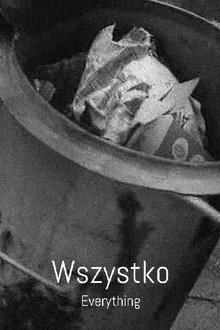
Everything (1972)
Here's a strange one. First, a song on a blackboard: a Polish translation of “I love my little rooster” by American folk writer Almeda Riddle. Then, two men roll around trash bins and lift them to the garbage truck. They do it several times. A woman shouts in the distance. At the end, the picture stops, and the woman sings the song. An early short by Piotr Szulkin.