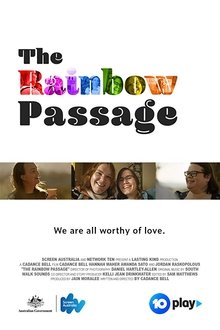
During the time of the Stolen Generations, thousands upon thousands of Aboriginal girls were taken from their families and pressed into domestic servitude by the Australian Government. They were supposedly employed as servants, but with total control over their movements, wages and living conditions, their lives all too frequently became an inescapable cycle of abuse, rape and enslavement, with consequences that echo powerfully to this day. Recounting the stories of five of these women – Rita, Violet and the three Wenberg sisters – Servant or Slave is a commanding piece of first-person testimony to a dark and unacknowledged corner of Australian history. Shot with admirable craft and humanity by documentarian Steven McGregor (Croker Island Exodus, MIFF 2012), Servant or Slave is a work of great sadness and urgency, bringing to forceful life the human tragedy of Australia's Indigenous history in the unadorned words of those who lived it.
Related Movies
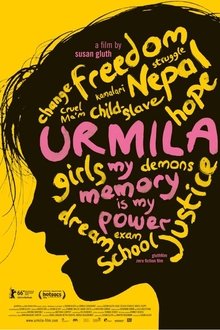
Urmila: My Memory Is My Power (2016)
The film tells the story of 25-year-old Urmila Chaudary from Nepal. At the age of six she was sold by her family and was forced to work as a slave under appalling conditions for 12 years. Her dream is to end child slavery in Nepal. To this end she fights today as a freedom activist. A film about the quest for justice with a strength that gives courage and hope.
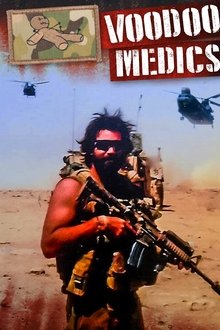
Voodoo Medics (NaN)
About trauma, resilience and post-traumatic growth in the medics who served with Australia's special forces in Afghanistan. From losing mates in the battlefield to treating horrifically injured Afghan kids in remote surgical theatres.
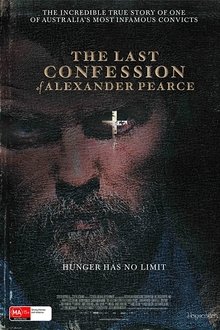
The Last Confession of Alexander Pearce (2009)
Eight men escape from the most isolated prison on earth. Only one man survives and the story he recounts shocks the British establishment to the core. This story is the last confession of Alexander Pearce.
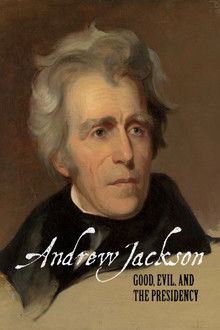
Andrew Jackson: Good, Evil & The Presidency (2007)
A fascinating account of the presidency of Andrew Jackson, who was both one of America's great presidents and a borderline tyrant. The seventh president shook up the glossy world of Washington, DC with his "common-man" methods and ideals, but also oversaw one of the most controversial events in American history: the forced removal of Indian tribes, including the Cherokees, from their homes.
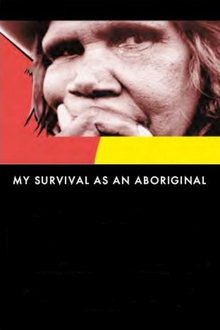
My Survival as an Aboriginal (1979)
Essie Coffey gives the children lessons on Aboriginal culture. She speaks of the importance of teaching these kids about their traditions. Aboriginal kids are forgetting about their Aboriginal heritage because they are being taught white culture instead.
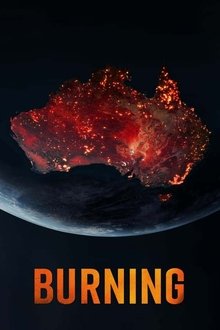
Burning (2021)
Follows the deadly Australian bushfires of 2019-2020, known as ‘Black Summer’. Burning is an exploration of what happened as told from the perspective of victims of the fires, activists and scientists.


Everybody knew (2025)
In 2023, the Ombudsman presented a report on sexual abuse in the Church in Spain. Victims' accounts reached the European Parliament. Among them were the abuse suffered by two brothers at the boarding school where they attended as children.
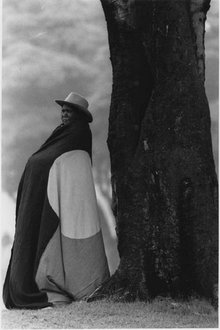
My Life As I Live It (1993)
In her second film, MY LIFE AS I LIVE IT (1993), Essie Coffey returns to her home in Dodge City where she and the A-Team are running in the shire elections. Inter-cutting between 1993 and 1978, the film presents the fascinating contrasts of a society in transition. Some of the kids we met in the earlier film now have families of their own and are involved in education, art and sports. Others are drifting, trying to cope with alcohol and depression. Most significantly, community programs offer the possibility of dignity and self-determination. In this film, Essie shows us the Community Development Employment Program (CDEP) making a real difference. Although the CDEP has now come under attack from the Federal government, MY LIFE AS I LIVE IT portrays the CDEP as providing meaningful work and services to an impoverished remote community.
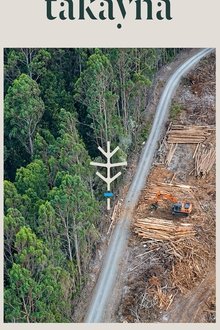
Takayna (NaN)
takayna / Tarkine in northwestern Tasmania is home to one of the last undisturbed tracts of Gondwanan rainforest in the world, and one of the highest concentrations of Aboriginal archaeology in the hemisphere. Yet this place, which remains largely as it was when dinosaurs roamed the planet, is currently at the mercy of destructive extraction industries, including logging and mining. Weaving together the conflicting narratives of activists, locals and Aboriginal communities, and told through the experiences of a trail running doctor and a relentless environmentalist, this documentary, presented by Patagonia Films, unpacks the complexities of modern conservation and challenges us to consider the importance of our last truly wild places.

The White Death (1999)
"Don't go in the Water." This line bred fear in millions of people around the world. In 1975, Jaws showcased the greatest eating machine, the great white shark, on the big scren and changed the swimming habits of movie-goers everywhere. By far the most feared creature in the sea, this species is responsible for more attacks on human beings that all other sharks combined. Step outside the Hollywood hype and travel to South Australia with an expedition as they attempt to increase understanding and reduce human/shark confrontations. Observe the behavior and lifestyle of the great white shark, and see these miracles of evolution up close in this unforgettable exploration under sea.
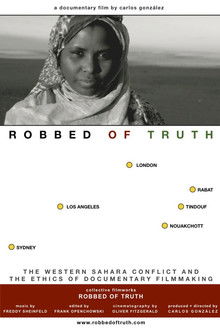
Robbed of Truth (2011)
This is the true story of Fetim Salam, a Saharawi refugee falsely portrayed as a slave in the Australian documentary 'Stolen'. Australian filmmakers, Violeta Ayala and Daniel Fallshaw, travel to the Saharawi refugee camps in Tindouf, Algeria in 2007 and claim to discover 20,000 slaves in the camps run by the independence movement Polisario Front. Refugees are outraged for being portrayed as slaves, and humanitarian aid workers are incredulous about these allegations as they know the camps intimately. Filmmaker Carlos Gonzalez retraces their steps in search of the truth and finds a web of lies, misinformation and Moroccan operatives reshaping the truth.
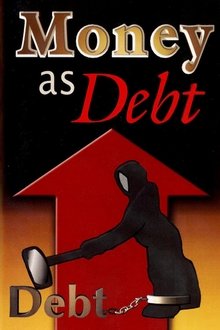
Money as Debt (2006)
Paul Grignon's 47-minute animated presentation of "Money as Debt" tells in very simple and effective graphic terms what money is and how it is being created
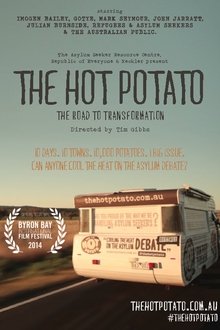
The Hot Potato: The Road to Transformation (2013)
To cool the heat on the asylum debate - the biggest 'hot potato' in Australian politics, we took a hot potato food van around the country in the lead up to the 2013 Federal Election. The mission? To see what Australia really thinks asylum seekers. This is an account of this journey.
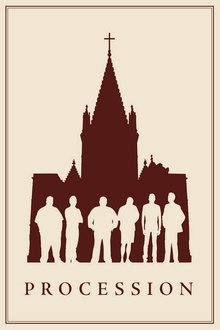
Procession (2021)
Six men who were sexually abused by Catholic clergy as boys find empowerment by creating short films inspired by their trauma.
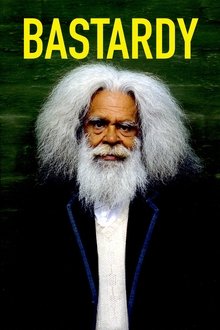
Bastardy (2008)
Provocative, funny and profoundly moving, Bastardy is the inspirational story of a self proclaimed Robin Hood of the streets. For Forty years and with infectious humour and optimism, Jack Charles has juggled a life of crime with another successful career- acting

Spiegelbeeld (2025)
Tilburg artist Tommy van der Loo searches for the influence of superiority thinking, racism and colour in his life. Van der Loo is an emerging artist and his work has been purchased by Boijmans van Beuningen in Rotterdam. He also had an exhibition at the Kunsthal. He also made the memorial for the abolition of slavery in Eindhoven. He has had multiple experiences with discrimination and incorporates that into his sculptures. Identity and image formation are important to him: How do you look at others, how do others look at you. The search is the inspiration for his new sculpture.

Lord Howe Island: Pacific Eden (2006)
A place of biological superlatives with a flora and fauna that have only just begun to be researched: Lord Howe Island, between Australia and New Zealand. This is the first documentary on what may be the most isolated nature reserve on the planet.
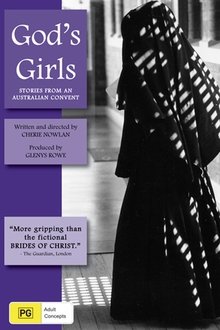
God's Girls (1992)
God's Girls describes life in a Sisters of Mercy convent in country New South Wales from the 1940's to present day. This courageous and clever film investigates the subtle complexities of change within a society that has been surrounded by mystery for hundreds of years. The stories from the women in the film reflect the often intricate paths of social, political and religious history, not only in Australia but also in the rest of the world.