Related Movies
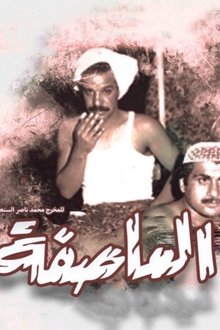
The Storm (1965)
The Kuwaiti short film العاصفة (The Storm) explores Kuwait's social and economic shifts before and after the discovery of oil. Through the perspectives of an older father and his modernized son, it delves into the challenges of tradition versus rapid modernization.
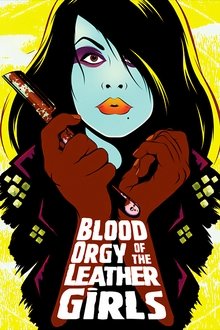
Blood Orgy of the Leather Girls (1988)
A gang of women wreak havoc in the city, killing various men who have treated women poorly. And sometimes they do it just for fun.
La Escala (1964)
Experimental film by Aldo Francia that consists in diverse situations through the 123 steps of the Santa Justina staircase in the Cerro Larraín of Valparaíso.

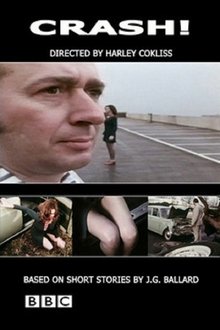
Crash! (1971)
Short film produced by the BBC about JG Ballard's Crash. “The film was a product of the most experimental, darkest phase of Ballard’s career. It was an era of psychological blowback from the sudden, shocking death of his wife in 1964, an era that had produced the cut-up ‘condensed novels’ of Atrocity plus a series of strange collages and ‘advertisers’ announcements. After Freud’s exploration within the psyche it is now the outer world of reality which must be quantified and eroticised. Later there were further literary experiments, concrete poems and ‘impressionistic’ film reviews, and an aborted multimedia theatrical play based around car crashes. After that came an actual gallery exhibition of crashed cars, replete with strippers and the drunken destruction of the ‘exhibits’ by an enraged audience.” (from: http://aaaaaaaaaaaaaaaaaaaargh.blogspot.de/2013/01/short-film-adaptation-of-jg-ballards.html)
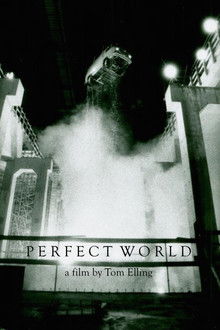
Perfect World (1990)
A take it or leave it auteur-experimental fiction exercise: two women are monitoring their dreams, dreams that may of course also be stark naked reality, at least to the dreamers, as they come and they go like bubbles, rising, floating, bursting. A man appears out of nowhere. Poet Peter Laugesen co-wrote the script with Tom Elling, who was Lars von Trier's director of photography on "The Element of Crime".

An Ode to Solitude (2020)
Exploring the duality between friendship and loneliness, this intimate narrative short tells the story of David, a bright young boy struggling with a broken home life, as he tries to reconnect with his childhood best friends as they search for something to do in their small suburban town.

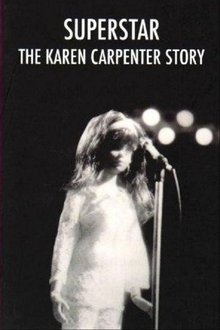
Superstar: The Karen Carpenter Story (1987)
The final 17 years of American singer and musician Karen Carpenter, performed almost entirely by modified Barbie dolls.
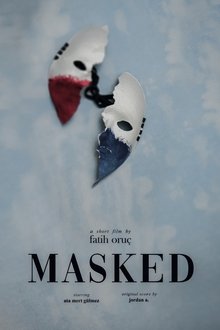
Masked (2019)
An average working man who is alone in a world of deception finds himself in a marriage of convenience.
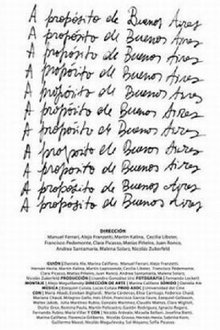
About Buenos Aires (2006)
Eleven young film-makers got together to collaborate in this atypical project. Atypical not only because of its technical specs, but because of its narrative structure. There are several scenes with only the city in common, and more as a conceptual presence at that than as a precise geography. None of those scenes contains a single "story": Each one of them is part of a larger situation that we cannot see, as though the beginning and end of each "story" had to be filled in by the audience.
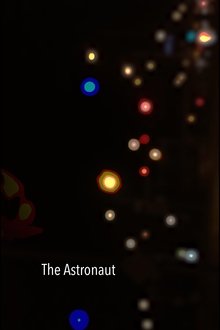
The Astronaut (2017)
A short film recounting the travels of a lonely astronaut confronted by the unknown. Unfolding as a mystery, it becomes a carefully subtle, autobiographical examination of the feeling of loneliness and the existential issue of not understanding life on earth and ones place among it.
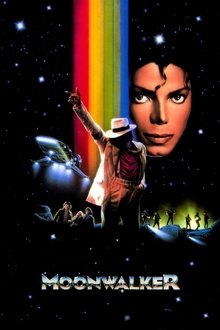
Moonwalker (1988)
This fantastical movie inspired by the music of Michael Jackson features imaginative interpretations of hit tracks from the iconic 1987 album “Bad”.
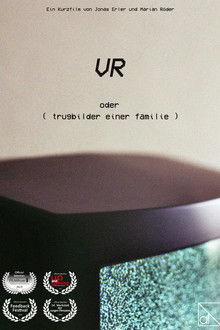
VR or ( mirages of a family ) (2019)
The interface of contrary realities is torn. Passion and fear of unbelievable strength are connecting and scattering the siblings. What remains: the search for love - the getaway into another reality?
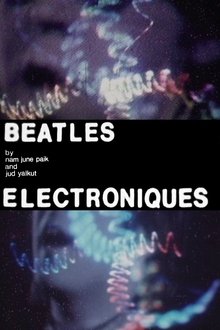
Beatles Electroniques (1969)
Part of a collection of restored early works by Nam June Paik, the haunting Beatles Electronique reveals Paik's engagement with manipulation of pop icons and electronic images. Snippets of footage from A Hard Day's Night are countered with Paik's early electronic processing.
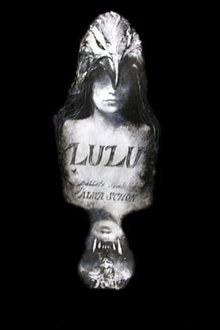
Lulu (1978)
This highly stylized, critically acclaimed film from the 70's mixes silent film cards, a soundscape, color, opera music and atmosphere to explore the Freudian truths about men's fear of women that Wedekind powerfully exposed. A kinetic melodrama of the rise of a femme-fatale and her fate at the hands of Jack-the-Ripper. Rethinking Pabst's silent film and Alban Berg's opera.