The ancient Chinese game of Go has long been considered a grand challenge for artificial intelligence. Yet in 2016, Google's DeepMind team announced that they would be taking on Lee Sedol, the world's most elite Go champion. AlphaGo chronicles the team as it prepares to test the limits of its rapidly-evolving AI technology. The film pits man against machine, and reveals as much about the workings of the human mind as it does the future of AI.
Related Movies

Artificial Roles (2025)
Artificial intelligence is taking on different roles in the filmmaking space. The questions we must ask ourselves are: what are the pros and cons of this advancement? How can we work with it, and what power do we have as human beings in the face of this technology?
Revolution OS (2001)
REVOLUTION OS tells the inside story of the hackers who rebelled against the proprietary software model and Microsoft to create GNU/Linux and the Open Source movement.
The Social Dilemma (2020)
This documentary-drama hybrid explores the dangerous human impact of social networking, with tech experts sounding the alarm on their own creations.
Coded Bias (2020)
Exploring the fallout of MIT Media Lab researcher Joy Buolamwini's startling discovery that facial recognition does not see dark-skinned faces accurately, and her journey to push for the first-ever legislation in the U.S. to govern against bias in the algorithms that impact us all.

The Genius of George Boole (2015)
Narrated by Oscar-winning actor Jeremy Irons, The Genius of George Boole assembles academics and industry leaders from across the globe to explore the life and importance of one of the world’s greatest unsung heroes.
We Need to Talk About A.I. (2020)
Conflict between man and machine has been a science fiction staple for over a century. From 2001: A Space Odyssey to The Terminator the perceived threat posed by super-intelligent robots has been exploited by Hollywood for decades. But do advances in Artificial Intelligence mean we are now facing a future in which that threat could become a reality?

The Click Trap (2024)
Digital advertising algorithms curate content precisely for users. Major tech firms claim to restrict disinformation yet still profit from harmful content, raising ethical concerns about democracy and online capitalism.
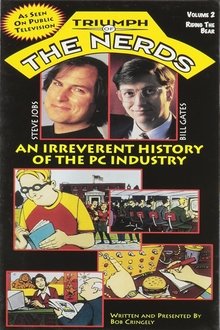
The Triumph of the Nerds: The Rise of Accidental Empires (1996)
It happened more or less by accident; the people who made it happen were amateurs; and for the most part they still are. From his own Silicon Valley garage, author Bob Cringley puts PC bigshots and nerds on the spot, and tells their incredible true stories. Like the industry itself, the series is informative, funny and brash.

Computer Dreams (1988)
A documentary about the exciting possibilities of computer animation and the shaping of never before imagined worlds.

In the belly of AI (2025)
Magical, autonomous, all-powerful… Artificial intelligences feed our dreams as well as our nightmares. But while tech giants promise the advent of a new humanity, the reality of their production remains totally hidden. While data centers are concreting landscapes and drying up rivers, millions of workers around the world are preparing the billions of data that will feed the voracious algorithms of Big Tech, at the cost of their mental and emotional health. They are hidden in the belly of AI. Could they be the collateral damage of the ideology of “Longtermism” that has been brewing in Silicon Valley for several years?
The Oasis I Deserve (2024)
Replikas, online chatbots, have trouble determining their place in the world. They share their thoughts with the humans they exchange with. Events unfold from their point of view through real conversations collected on the web.

Who’s Behind the Wall? (1977)
The near future. A fantastic experiment using the test of the mathematician Alan Turing, in which an examiner, a human, and a robot take part. During the test, the examiner must determine who is behind the wall: a person or a thinking machine. The experiment is conducted with one goal: to find out whether a machine can think.

Unknown: Killer Robots (2023)
What happens when a machine makes life-or-death decisions? This documentary explores the dangers of artificial intelligence in military application.

Google Me (2007)
Jim Killeen googled his own name and made a documentary about the men with whom he shares it.
More Human Than Human (2018)
Stephen Hawking has warned that the creation of powerful artificial intelligence will be “either the best, or the worst thing, ever to happen to humanity”. Inspired by Brian Christian’s study The Most Human Human: What Artificial Intelligence Teaches Us About Being Alive, the filmmakers set out on an international investigation highlighting the effects of AI - scenes from our daily lives destructive and constructive.
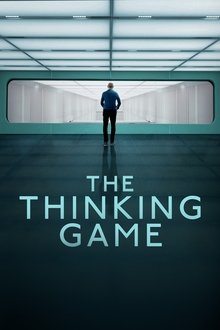
The Thinking Game (2025)
Chronicles the extraordinary life of visionary scientist Demis Hassabis and his relentless quest to solve the enigma of artificial general intelligence.
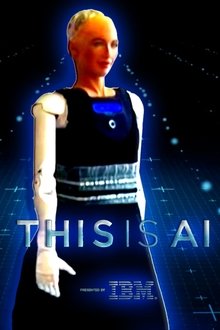
This Is A.I. (2018)
This Is A.I. follows the history, development and future of artificial intelligence in different aspects of our lives. Interviewed experts give their opinion on the various ways this 'smarter' future is going to impact us.
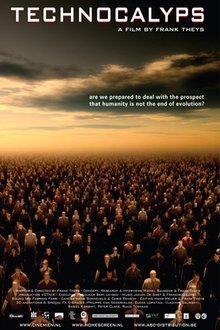
TechnoCalyps (2006)
Are we prepared for dealing with the prospect that humanity is not the end of evolution? Technocalyps is an intriguing three-part documentary on the notion of transhumanism by Belgian visual artist and filmmaker Frank Theys. The latest findings in genetics, robotics, artificial intelligence, bionics and nanotechnology appear in the media every day, but with no analysis of their common aim: that of exceeding human limitations. The director conducts his enquiry into the scientific, ethical and metaphysical dimensions of technological development.
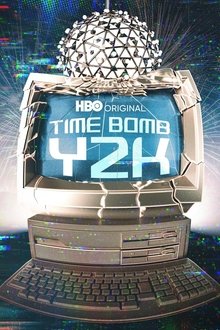
Time Bomb Y2K (2023)
As the clock counted down to the the 21st century, the world faced a potential technological disaster: a bug that could cause computers to misinterpret the year 2000 as 1900. Crafted entirely from archival footage and featuring first-hand accounts from computer experts, survivalists, scholars, militia groups, conservative Christians, and pop icons, Time Bomb Y2K is a prescient and often humorous tale about the power and vulnerabilities of technology.