NOTHING TO HIDE is an independent documentary dealing with surveillance and its acceptance by the general public through the "I have nothing to hide" argument. The documentary was produced and directed by a pair of Berlin-based journalists, Mihaela Gladovic and Marc Meillassoux. It was crowdfunded by over 400 backers. NOTHING TO HIDE questions the growing, puzzling and passive public acceptance of massive corporate and governmental incursions into individual and group privacy and rights. After the emotion initially triggered by the Snowden revelations, it seems that the general public has finally accepted to live in a monitored digital world.
Related Movies
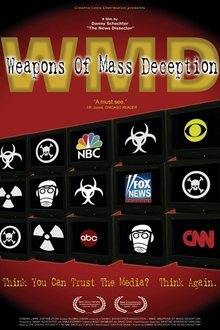
WMD: Weapons of Mass Deception (2004)
There were two wars in Iraq--a military assault and a media war. The former was well-covered; the latter was not. Until now... Independent filmmaker, Emmy-award winningTV journalist, author and media critic, Danny Schechter turns the cameras on the role of the media. His new film, WMD, is an outspoken assessment of how Pentagon propaganda and media complicity misled the American people...
The Lie Detector (2023)
In the first decades of the 20th century, when life was being transformed by scientific innovations, researchers made a thrilling new claim: they could tell whether someone was lying by using a machine. Popularly known as the “lie detector,” the device transformed police work, seized headlines and was extolled in movies, TV and comics as an infallible crime-fighting tool. Husbands and wives tested each other’s fidelity. Corporations routinely tested employees’ honesty and government workers were tested for loyalty and “morals.” But the promise of the polygraph turned dark, and the lie detector too often became an apparatus of fear and intimidation. Written and directed by Rob Rapley and executive produced by Cameo George, The Lie Detector is a tale of good intentions, twisted morals and unintended consequences.

CyberBaby (1998)
In this video series an individual confronts fears and, through the process of confessing directly to the camera, transcends trauma. It is also about agin, longing, the delusions and misconceptions we are encumbered with as we mature towards self-awareness, and the masks we assume to deny or hide understanding. The tapes rupture, fracture, and use digital effects to mirror the psychological changes of the protagonist.

Instagram Is (2013)
In a culture immersed in technology, Instagram is reviving adventure, face to face community and real relationships. Through sharing the stories of friends old and new, "Instagram Is" sets out to discover the answer to the question "How can something so digital get people out from behind their devices and into the analog world?"
Into the Deep: The Submarine Murder Case (2020)
In 2016, a young Austrialian filmmaker began documenting amateur inventor Peter Madsen. One year in, Madsen brutally murdered Kim Wall aboard his homemade submarine. An unprecedented revelation of a killer and the journey his young helpers take as they reckon with their own complicity and prepare to testify.
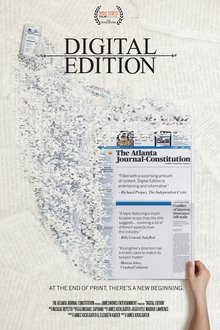
Digital Edition (2016)
In the midst of a publishing revolution, The Atlanta Journal-Constitution, one of America's most storied institutions of journalism, is experimenting with new tools to tell stories in preparation for the end of print in the digital era.

Koyaanisqatsi (1983)
Takes us to locations all around the US and shows us the heavy toll that modern technology is having on humans and the earth. The visual tone poem contains neither dialogue nor a vocalized narration: its tone is set by the juxtaposition of images and the exceptional music by Philip Glass.

Lotus: A New Dawn (2021)
This short documentary follows the fortunes of iconic car manufacturer Lotus. Once famous for its championship-winning race cars and iconic sports cars, Lotus has struggled to remain in profit. A new investor and managing director set out to build the first new Lotus road cars in over a decade: their final petrol-powered car Emira and their first pure electric British hypercar, the 2000bhp Evija.
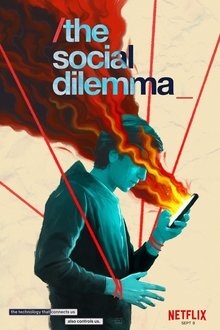
The Social Dilemma (2020)
This documentary-drama hybrid explores the dangerous human impact of social networking, with tech experts sounding the alarm on their own creations.

Doty (2024)
Richard Doty is a former Air Force Intelligence operative whose job at Kirtland AFB in New Mexico involved creating and disseminating disinformation about the existence of extraterrestrial spacecraft to UFO researchers. In the late 1970s and early 1980s, Kirtland AFB was home to a wide range of highly classified technology experiments involving lasers, stealth aircraft, and nuclear weapons. Strange phenomena in the skies above the base piqued the interest of amateur and professional UFO investigators. Doty’s job was to recruit UFO researchers to be informants to the Air Force about goings-on in the UFO community and to spread military disinformation about UFOs among their peers. To accomplish this, Doty supplied fake documents to UFO investigators purporting to tell the “truth” about government involvement with extraterrestrials.
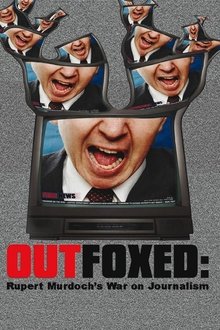
Outfoxed: Rupert Murdoch's War on Journalism (2004)
This film examines how media empires, led by Rupert Murdoch's Fox News, have been running a "race to the bottom" in television news, and provides an in-depth look at Fox News and the dangerous impact on society when a broad swath of media is controlled by one person. Media experts, including Jeff Cohen (FAIR) Bob McChesney (Free Press), Chellie Pingree (Common Cause), Jeff Chester (Center for Digital Democracy) and David Brock (Media Matters) provide context and guidance for the story of Fox News and its effect on society. This documentary also reveals the secrets of Former Fox news producers, reporters, bookers and writers who expose what it's like to work for Fox News. These former Fox employees talk about how they were forced to push a "right-wing" point of view or risk their jobs. Some have even chosen to remain anonymous in order to protect their current livelihoods. As one employee said "There's no sense of integrity as far as having a line that can't be crossed."
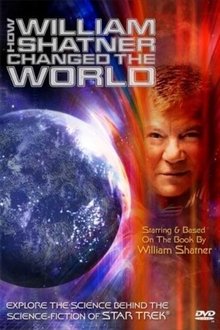
How William Shatner Changed The World (2005)
William Shatner presents a light-hearted look at how the "Star Trek" TV series have influenced and inspired today's technologies, including: cell phones, medical imaging, computers and software, SETI, MP3 players and iPods, virtual reality, and spaceship propulsion.
Citizen Krone, Austria between the Lines (2002)
This film journeys deep into the heart of Austria’s favorite daily newspaper, the Kronen Zeitung, the most widely-read paper per capita in the world. The “Krone’s” 2.7 million readers represent 43% of the Austrian press market. A reflection of the Austrian soul, this newspaper serves as a prism through which we can understand the rise of the populist Right in this country and examine the dangerous flirtation between media and politics.
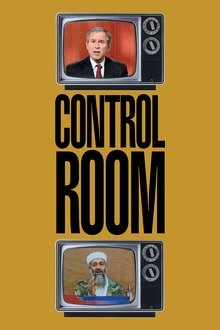
Control Room (2004)
A chronicle which provides a rare window into the international perception of the Iraq War, courtesy of Al Jazeera, the Arab world's most popular news outlet. Roundly criticized by Cabinet members and Pentagon officials for reporting with a pro-Iraqi bias, and strongly condemned for frequently airing civilian causalities as well as footage of American POWs, the station has revealed (and continues to show the world) everything about the Iraq War that the Bush administration did not want it to see.
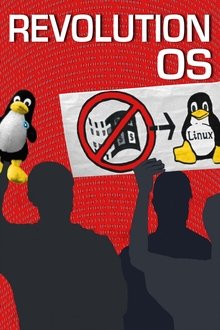
Revolution OS (2001)
REVOLUTION OS tells the inside story of the hackers who rebelled against the proprietary software model and Microsoft to create GNU/Linux and the Open Source movement.
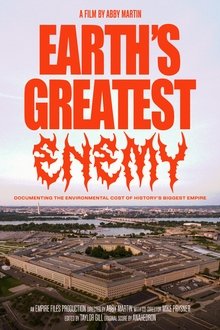
Earth's Greatest Enemy (2025)
In Abby Martin's second feature documentary, Earth’s Greatest Enemy reveals a hidden truth behind the climate crisis: the role of the U.S. military as the world’s largest institutional polluter. Drawing on powerful testimonies from veterans, scientists, and frontline communities, it uncovers how military operations poison ecosystems, accelerate global warming, and sacrifice the future for endless expansion. From Alaska’s melting glaciers to contaminated bases across the U.S. and toxic battlefields abroad, Earth’s Greatest Enemy delivers a provocative and unflinching examination of the untouchable institution playing an outsized role in the climate crisis.
Digital Amnesia (2014)
Focusing on the vulnerability of digital data, Digital Amnesia ponders the sustainability of modern artifacts that have no material state. Notable archivists share their perspectives on the Digital Age and whether it poses great promise or threat to the longevity of digital information and our collective memory.
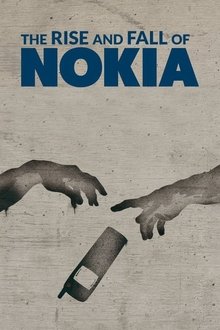
Nokia Mobile: We Were Connecting People (2017)
Once upon a time there was a large Finnish company called Nokia that manufactured the world’s best and most innovative mobile phones. Nokia’s annual budget was larger than that of the Government of Finland and their phones spread everywhere and changed the whole culture of communication. But then something changed. Film portrays the rise and fall of Nokia and the Finnish mobile phone industry. Nokia engineers, designers and managers tell their story about the creation, success and downfall of the Finnish mobile phone.
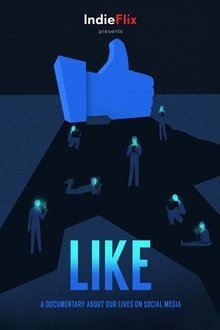
LIKE (2018)
LIKE is an IndieFlix Original documentary that explores the impact of social media on our lives and the effects of technology on the brain. The goal of the film is to inspire us to self-regulate. Social media is a tool and social platforms are a place to connect, share, and care … but is that what's really happening?