A well-preserved mammoth carcass is found in the remote New Siberian Islands in the Arctic Ocean, opening up the possibility of a world-changing “Jurassic Park” moment in genetics.
Related Movies

Hardcore Chambermusic (2006)
This documentary follows Swiss improvisation musicians and tells their stories.
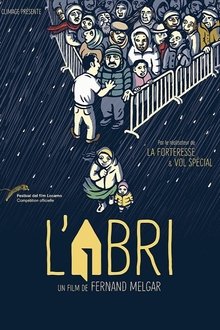
The Shelter (2014)
It is winter at an emergency shelter for the homeless in Lausanne. Every night at the door of this little-known basement facility the same entry ritual takes place, resulting in confrontations which can sometimes turn violent. Those on duty at the shelter have the difficult task of “triaging the poor”: the women and children first, then the men. Although the total capacity at the shelter is 100, only 50 “chosen ones” will be admitted inside and granted a warm meal and a bed. The others know it will be a long night.
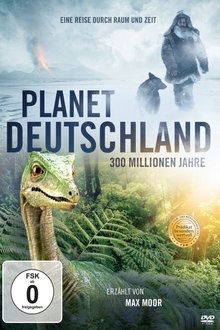
Planet Deutschland - 300 Millionen Jahre (2014)
Documentary tells the story of Germany's origins from the Carboniferous period to the present day. It leads from the highest Alpine peaks to the rugged North Sea coasts - from the craters of the Eifel to the river labyrinth of the Spreewald. Back then - around 300 million years ago - giant dragonflies, for example, buzzed through dozens of meter-high fern forests. In the course of the Earth's history, however, we also encounter dying dinosaurs, meet rhinos and elephants on the Rhine and come across what is probably the first human in Heidelberg. Later, the Neanderthals appear and suddenly disappear again - for reasons that are still unknown. And finally, modern humans gradually spread and began to shape their environment.
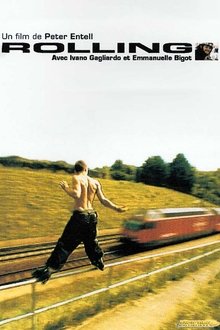
Rolling (1997)
The hills of Lausanne, Switzerland, have become a Mecca for roller-skaters and Ivano has become a prince among them. Ivano rises above the ordinary and often dead-end choices that most young people face today.
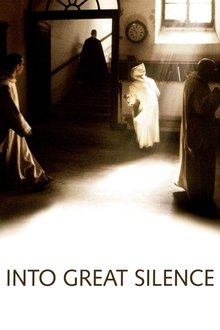
Into Great Silence (2005)
An intimate portrayal of the everyday lives of Carthusian monks of the Grande Chartreuse, high in the French Alps (Chartreuse Mountains). The idea for the film was proposed to the monks in 1984, but the Carthusians said they wanted time to think about it. The Carthusians finally contacted Gröning 16 years later to say they were now willing to permit Gröning to shoot the movie, if he was still interested.
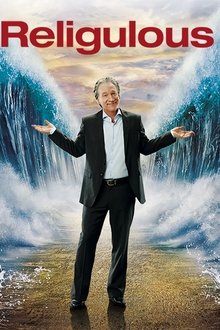
Religulous (2008)
Commentator-comic Bill Maher plays devil's advocate with religion as he talks to believers about their faith. Traveling around the world, Maher examines the tenets of Christianity, Judaism and Islam and raises questions about homosexuality, proof of Christ's existence, Jewish Sabbath laws, violent Muslim extremists.

Expelled: No Intelligence Allowed (2008)
Pro-intelligent design scholars and scientists are often chastised, fired or denied tenured positions by those who believe in Darwin's theory of evolution.
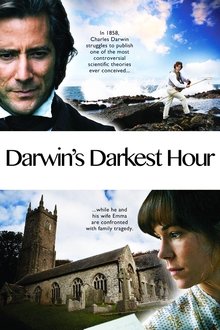
Darwin's Darkest Hour (2009)
In 1858 Charles Darwin struggles to publish one of the most controversial scientific theories ever conceived, while he and his wife Emma confront family tragedy.
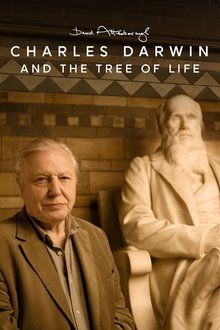
Charles Darwin and the Tree of Life (2009)
Darwin's great insight – that life has evolved over millions of years by natural selection – has been the cornerstone of all David Attenborough’s natural history series. In this documentary, he takes us on a deeply personal journey which reflects his own life and the way he came to understand Darwin’s theory.
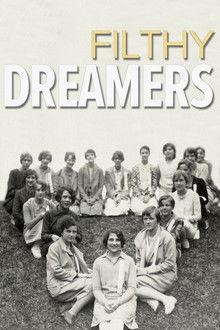
Filthy Dreamers (2020)
Following the verdict of the Scopes Monkey Trial, religious activism influenced members of the Florida state legislature to force the Florida State College for Women (FSCW) to ban the teaching of evolution, psychoanalysis, and other “controversial” subjects taught by professors such as Raymond Bellamy. Activists claimed the school was promoting atheism and labeled Bellamy, the administration, and the students of FSCW as “Filthy Dreamers.”
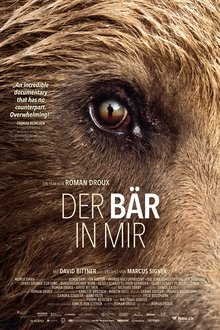
Bear-Like (2019)
At the far end of the Alaskan peninsula, for filmmaker Roman Droux a childhood dream comes true. He discovers together with the bear researcher David Bittner the universe of wild grizzlies. The two adventurists face bears at smelling-distance, experience the struggle for survival of a bear family and witness dramatic fighting scenes. Driven by a desire to explore the unknown the film tells a personal story of wilderness, framed in breathtaking pictures of unique creatures.

GLOW (2023)
She was a muse, model and performer – a star, dazzling and intense. Lady Shiva managed to rise from street prostitution to the top. She lived in the fast lane and died tragically young. Her dream was to become a singer. With her companions, we trace her life during a vibrant time that kindles a yearning and provokes until today. The story of a woman’s meteoric fate and a great dream. An irrepressible desire for freedom in all its beauty and destructive force - and a stirring friendship and love.

Arada (2021)
The story of three Turkish men. They all grew up in Switzerland and all got deported after various criminal offenses.
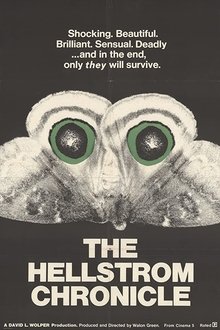
The Hellstrom Chronicle (1971)
A scientist explains how the savagery and efficiency of the insect world could result in their taking over the world.
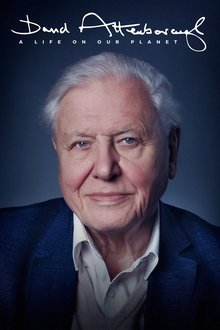
David Attenborough: A Life on Our Planet (2020)
The story of life on our planet by the man who has seen more of the natural world than any other. In more than 90 years, Attenborough has visited every continent on the globe, exploring the wild places of our planet and documenting the living world in all its variety and wonder. Addressing the biggest challenges facing life on our planet, the film offers a powerful message of hope for future generations.
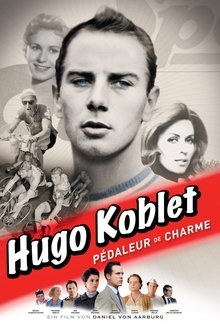
Hugo Koblet - The Charming Cyclist (2010)
Zurich-born Hugo Koblet was the first international cycling star of the post-war period. He was a stylist on the bicycle and in life, and a huge heartthrob. Koblet had a meteoric rise and won the Giro d'Italia in 1950. Once he had reached the zenith of his career, Koblet was put under pressure by overly ambitious officials and ended up ruining his health with drugs. In 1954, he married a well-known model and they became a celebrity dream couple. After his athletic career ended, Koblet began to lose his footing. Threatened by bankruptcy, he crashed his Alfa into a tree.

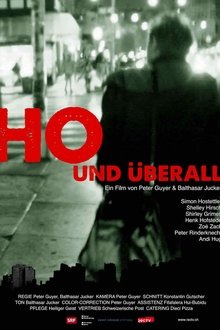

Family Fragments (2015)
The film reconstructs the memories of a divorced family with empathy yet merciless precision. An intimate family story emerges during the investigation into the reasons for the separation. Hinging on the subtle and touching testimonies of the family members, the film delves into complex interrelationships. Actors bring the family's memories alive as if they were their own. The result is a chronicle of a family drama, which the real protagonists complement and comment on – a reflection on the mechanisms and dynamics shaping and directing their family life over the years.