Related Movies
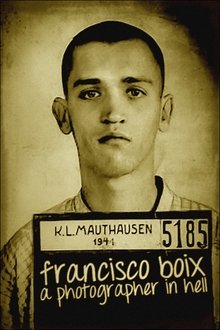
Francisco Boix: A Photographer in Hell (2000)
In 1939, just finished the Spanish Civil War, Spanish republican photographer Francesc Boix escapes from Spain; but is captured by the Nazis in 1940 and imprisoned in the Mauthausen concentration camp, in Austria, a year later. There, he works as a prisoner in the SS Photographic Service, hiding, between 1943 and 1945, around 20,000 negatives that later will be presented as evidence during several trials conducted against Nazi war criminals after World War II.


Les Misérables (2026)
After enduring 19 years in prison for stealing a loaf of bread, Jean Valjean emerges a hardened man. He seeks redemption by reinventing himself as a respected dignitary under a new identity. He promises Fantine, a dying factory worker, to rescue and protect her daughter Cosette, who is being exploited and mistreated by the deceitful Thénardier family. As Valjean raises Cosette as his own, he is relentlessly pursued by Inspector Javert. Admist the social unrest shaking France, the fates of Valjean, Cosette, her lover Marius, and Javert become intertwined in a turbulent, revolutionary Paris. Through struggles, sacrifices, and a deep yearning for justice, Valjean strives to complete his journey of redemption and offer Cosette a future of love and freedom.

Fat Chance (2016)
Alison, an overweight dental assistant, is challenged to find her self-worth when she falls into an online relationship with her long-time friend and crush, Justin. But there's a problem -- she used the photo of her attractive friend in her online dating profile, which is what caught Justin's eye. Alison spends the summer with Justin, balancing both versions of herself until the secret slips out. Inspired by a true story.
Red Rock Run (NaN)
A dyslexic girl seeks to win her distant father’s attention by taking on an ultra-marathon.
Untitled Evan Gershkovich Biopic (NaN)
Chronicles the harrowing year the Wall Street Journal foreign correspondent Evan Gershkovich spent in a Russian prison on fabricated espionage charges after being arrested by the Federal Security Service.

The Dumpling Queen (2025)
Based on the true story of Ms. Zang Jianhe, the founder of Wan Chai Ferry Terminal and known as the "Queen of Dumplings"; in the late 1970s, Ms. Zang Jianhe from Qingdao, Shandong Province was forced to flee to her husband with her two young daughters, but was forced to stay in Hong Kong, and in order to survive, she had to sell dumplings at the Wan Chai Ferry Terminal. How will she carry down the heavy difficulties of fate, step by step to reverse her life...

Bardejov (2024)
The story of Holocaust survivor Emil A. Fish, who was nine years old when he and his family in Bardejov, Slovakia were sent to a concentration camp.

Rage, Sex, and Jazz: I Spit on Your Graves by Vernon Sullivan (2022)
In 1946, the controversial French writer Boris Vian writes his novel I Spit on Your Graves under the pseudonym of Vernon Sullivan, supposedly a mysterious African-American writer; a work against racism and Anglo-Saxon puritanism whose publication causes a great scandal.
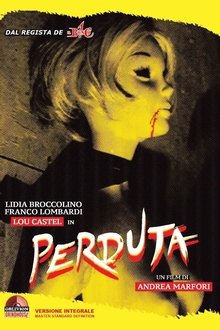

Einstein and the Bomb (2024)
What happened after Einstein fled Nazi Germany? Using archival footage and his own words, this docudrama dives into the mind of a tortured genius.
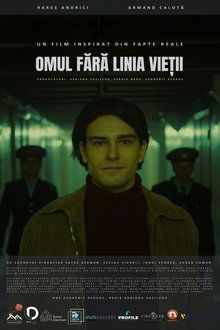
The Man Without a Lifeline (2023)
The invention of the first modern robot for table tennis training turns Ionel Sporea into a star in the world of Romanian sports. A trip to Moscow, however, ends with a harsh sentence: 12 years in prison for treason. Who is to blame: destiny, the Ceausescu regime, or himself?
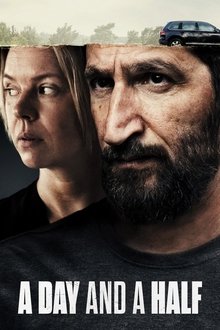
A Day and a Half (2023)
In a desperate bid to reunite with his daughter, an armed man bursts into the medical center where his estranged wife works and kidnaps her.

Still Hope (2026)
Beloved by her family and raised in a quiet community, 16-year-old Hope finds herself in danger when a new friend is not who he claims to be… Ripped from all she knows and forced into sex trafficking, Hope is stripped of her identity and threatened into submission, surviving years of abuse. Hope finally finds freedom and reunites with the family that never gave up looking for her. Though now safe, she struggles adjusting to her old life as she reconciles with all she’s endured. Hope’s journey is inspired by true stories and powerfully illustrates the courage it takes to find healing after life’s darkest moments.
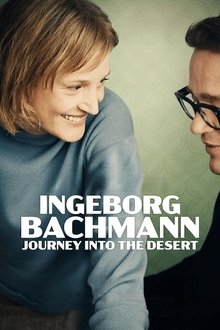
Ingeborg Bachmann – Journey into the Desert (2023)
When Ingeborg Bachmann and Max Frisch meet for the first time in Paris in the summer of 1958, they are already international celebrities of the literary world. In the four years that follow, they dabble in great love and an open relationship between his hometown of Zurich and her adopted Rome.
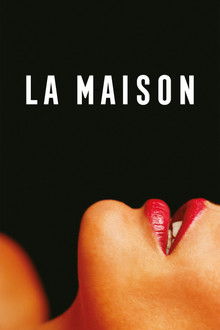
The House (2022)
Emma, a French novelist aged 27, decide to go to Berlin and join a brothel to uncover the prostitution world, the subject of her new book. Such as gonzo journalism, Emma become a prostitute and her experience, which was supposed to last a few weeks, will last two years. Was writing her book an excuse for Emma to live a shameful fantasy?
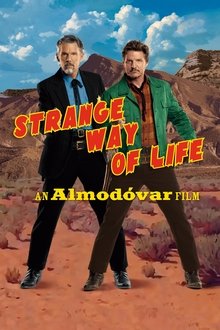
Strange Way of Life (2023)
After 25 years, a former hired gun visits his old colleague, now a small-town sheriff. Their past relationship is explored, as is how they reflect on it in the present.
Dirty Picture: Silk Sakkath Maga (2013)
The film portrays the story of an aspiring actress who is ready to go to any extent to make it big in the cinema industry. It was inspired by the life of Silk Smitha, a South Indian actress noted for her erotic roles.