A symmetrically divided building: on one side, an important public hospital, on the other, a bewildering ruin. On the horizon, Rio de Janeiro, public health, education and Brazil’s aged modern project. Shot entirely in the monumental and only partially occupied modernist edifice of the University Hospital of UFRJ. A material metaphor of the Brazilian public sphere and its political maze. A synthesis architecturally expressed of the modernist utopia/dystopia.
Related Movies
Grey Matter (2017)
We follow neurosurgeons Clemens Dirven and Arnoud Vincent of the Erasmus MC in Rotterdam in this documentary during the treatment of three patients with a brain tumor.
À votre santé (1974)
Focuses on the state of the Quebec health system in the early 1970s. This film reveals the harsh reality of emergency rooms. There, medical teams, facing a serious shortage of staff, are facing a real invasion of patients. The technical means, often insufficient, make the task even more difficult.
Sicko (2007)
A documentary about the corrupt health care system in The United States who's main goal is to make profit even if it means losing people’s lives. "The more people you deny health insurance the more money we make" is the business model for health care providers in America.

Correspondance privée sur un lieu public (1988)
I started from the assumption that the discourse about the hospital could be the objective pretext for communication between two people, the link that allows them to continue writing to each other, the intermediary between two desires.
Phases of Matter (2020)
Phases of Matter follows living and inanimate residents of a teaching hospital in Istanbul, moving from the operating room to the morgue, between life and other states, the real and the virtual.
Bliss (2019)
After a tragic series of events in his life, Rob discovers the over-the-counter drug known as codeine. The effects of the pill are so strong and addictive, that soon, Rob becomes dependant and consumes them daily. But the less he feels the more he misses, as his life degrades into a deep, dangerous, oblivion of bliss.
Preemie (NaN)
Born 3 months premature and weighing only 1 pound 12 ounces, Mollie was given a 1 percent chance of survival. Through months of struggle, which included nearly one year in the neonatal unit of Grand Rapids, Michigan's Helen Devos Children's Hospital, Mollie proves that miracles happen. "Preemie" highlights the struggles, the pain of having a preemie, and the stories of how strong the smallest of babies are.
The Waiting Room (2019)
In 2017 I was diagnosed with breast cancer, I decided to film my time in waiting rooms, surgery and chemotherapy. Shot exclusively on the iPhone X, The Waiting Room is an unflinching portrait of the blood, sweat and tears of cancer treatment. At home I filmed with my teenage son, as we came to terms with how family life was transformed by a year of living with cancer. The Waiting Room challenges the cultural myths that surround this disease, putting under the microscope the language of illness. The Waiting Room documents illness from a patient’s POV, exploring what we can and what we can’t control when our bodies fail us. The Waiting Room 30 minute smartphone short was broadcast on The Guardian website as part of their documentaries strand.
Look Away (2021)
Interviews from women involved in the 70's and 80's rock music industry. An examination of the people taking advantage of underage fans and calling for a "Me too" movement in the music world
Alternate Spaces (2022)
A short documentary on the River Ouse, following it downstream from Lewes to Newhaven, meditating on the surrounding area.
What Did You Take? (1971)
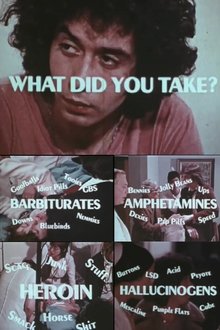
Stresses recognition and treatment of drug abuse emergencies, accurate identification of symptoms, and immediate clinical procedures. Presents scenes of actual cases in the emergency room and adjoining physician's offices of Beth Israel Medical Center in New York City. Viewers observe emergency treatment of patients in the major classes of drugs commonly abused, opiates, depressants, stimulants, and hallucinogens. The film demonstrates to health professionals that successful management of drug overdoses can save most lives and avert additional organic and psychiatric complications.
Bente gaar til Sygeplejen (1945)
A movie about the education for nurse told from Bente's perspective. She starts at the preschool at Rødkilde Højskole at Møn and comes from there to a hospital, where student time begins. After three years, Bente is trained and can get the nursing needle attached to the robe.
Helvetica (2007)
Helvetica is a feature-length independent film about typography, graphic design and global visual culture. It looks at the proliferation of one typeface (which will celebrate its 50th birthday in 2007) as part of a larger conversation about the way type affects our lives. The film is an exploration of urban spaces in major cities and the type that inhabits them, and a fluid discussion with renowned designers about their work, the creative process, and the choices and aesthetics behind their use of type.
Harrow Hospital Carnival (1933)
Harrow’s extraordinary and opulent pageant, and seaside holidays on the south coast.
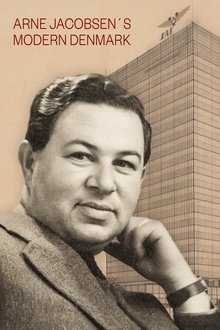
Arne Jacobsen’s Modern Denmark (2021)
Danish documentary about the disobedient schoolboy with a talent for painting, who became one of Denmark’s greatest architects. His ideas were ahead of their time and often received criticism, but today, 50 years after his death, Arne Jacobsen's schools, town halls and libraries are still with us, and they define modern Denmark.
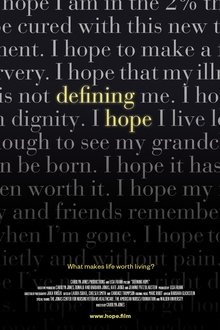
Defining Hope (2017)
We aren't dying the way we used to. We have ventilators, dialysis machines, ICUs-technologies that can "fix" us and keep our bodies alive-which have radically changed how we make medical decisions. In our death-denying culture, no matter how sick we get, there is always "hope." Defining Hope tells the story of patients dealing with life-threatening illness as they move between ICUs, operating rooms, hospice care and home. Diane is a nurse caring for end-stage cancer patients when she is diagnosed with ovarian cancer herself. 23-year-old Alena undergoes a risky brain surgery that destroys her short-term memory. 95-year-old Berthold lives with his elderly wife who struggles to honor his wish of dying peacefully at home. Defining Hope follows these patients and others- and the nurses that guide them along the way- as they face death, embrace hope, and ultimately redefine what makes life worth living.
Mark of the Hand (1987)
Guyanese painter Aubrey Williams (1926-1990) returns to his homeland on a “journey to the source of his inspiration” in this vivid Arts Council documentary, filmed towards the end of his life. The title comes from the indigenous Arawak word ‘timehri’ - the mark of the hand of man - which Williams equates to art itself. Timehri was also then the name of the international airport at Georgetown, Guyana's capital, where Williams stops off to restore an earlier mural. The film offers a rare insight into life beyond Georgetown, what Williams calls “the real Guyana.” Before moving to England in 1952 he had been sent to work on a sugar plantation in the jungle; this is his first chance to revisit the region and the Warao Indians - formative influences on his work - in four decades. Challenging the ill-treatment of indigenous Guyanese, Williams explored the potential of art to change attitudes. By venturing beyond his British studio, this film puts his work into vibrant context.

And Outside Life Goes On (2021)
The small regional hospitals of Vevey, Montreux, Aigle and Monthey are closing in favor of the new, larger, more adapted and more modern hospital in Rennaz. As the construction of the new hospital progresses, emergency physicians Eric and Frédérique tell us about their daily life in the face of illness and death.
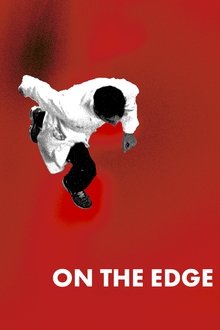
On the Edge (2023)
Things are busy at the Paris hospital where young psychiatrist Jamal and his colleagues work. The place is run down, the staff are exhausted, budgets are constantly being slashed. You know the story, but you’ve rarely seen it conveyed as engagingly as in ‘On the Edge’, which employs a handheld camera and meaningful, artistic interventions to observe the daily routine at the psychiatric ward. The deeply sympathetic Jamal is an everyday hero with an exemplary, humanistic disposition, for whom the most important prerequisites for mental health – and for a healthy society in general – are good relationships with other people. He puts his philosophy into practice by listening patiently, giving good advice and organising theatre exercises based on Molière. Realism and idealism, however, are in balance for the young doctor, at least as long as the institutional framework holds up.
Novanta Giorni (2024)
“Novanta Giorni” to make a life-changing choice. Two opposing worlds brought into dialogue in this documentary by Women from all walks of life turn to the “Cervello” Hospital in Palermo, Sicily, to terminate their pregnancies while the pro-life center ostracizes this practice and those who instead understand and help in this journey...