It all begins with a childhood memory: that day when the father of the future filmmaker Sebastiano d'Ayala Valva forces him to listen to certain music that initially terrifies him; a distant echo from the past that leads him to follow the trail of his mysterious ancestor, the Italian composer Giacinto Scelsi (1905-1988), who claimed that his music was directly inspired by the gods.
Related Movies
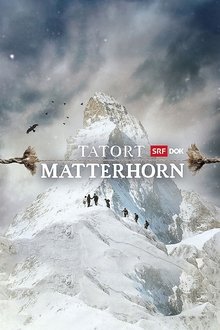
Cervin 1865, une première tragique (2015)
The first ascent of the Matterhorn was made on July 14, 1865 by Edward Whymper, Francis Douglas, Charles Hudson, Douglas Hadow, Michel Croz and two guides from Zermatt, Peter Taugwalder father and son. Douglas, Hudson, Hadow and Croz are killed on the descent after Hadow slips and drags the other three men down the north face. Whymper and the two Taugwalders, who survive, are later accused of having cut the rope that connected them to the rest of the group so as not to be dragged into the fall, but the ensuing investigation finds no evidence of their guilt and they are acquitted. The Matterhorn is the last great peak in the Alps to be conquered and its ascent marks the end of the golden age of mountaineering. One hundred and fifty years later, a team undertakes the same expedition in order to unravel the mystery.
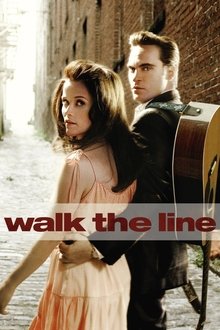
Walk the Line (2005)
A chronicle of country music legend Johnny Cash's life, from his early days on an Arkansas cotton farm to his rise to fame with Sun Records in Memphis, where he recorded alongside Elvis Presley, Jerry Lee Lewis and Carl Perkins.
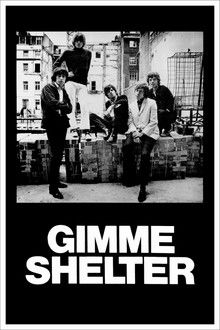
Gimme Shelter (1970)
A detailed chronicle of the famous 1969 tour of the United States by the British rock band The Rolling Stones, which culminated with the disastrous and tragic concert held on December 6 at the Altamont Speedway Free Festival, an event of historical significance, as it marked the end of an era: the generation of peace and love suddenly became the generation of disillusionment.
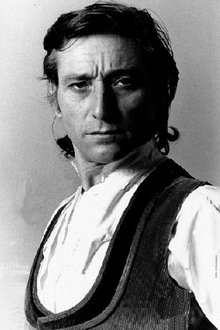
Antonio Gades, la ética de la danza (2007)
Documentary that reconstructs the professional life of the dancer through the thread of his own voice. A work that travels to the fundamental landscapes of the personal history of Gades with unpublished documents and the testimony of those who shared with him many pages of the book of his life and the history of Spanish dance in recent decades.

Leonardo da Vinci (1952)
This documentary tells the story of the brilliant Italian polymath, artist, sculptor, painter, poet, musician, writer, philosopher, scientist, botanist, geologist, cartographer, mathematician, anatomist, paleontologist, architect, urban planner, engineer, and inventor. The legacy of the brilliant Leonardo (1452-1519) to the world came in many forms: in the breathtaking beauty of The Last Supper and The Mona Lisa; in his rich collection of engravings; and in his notes on original thoughts on astronomy, biology, and physiology.
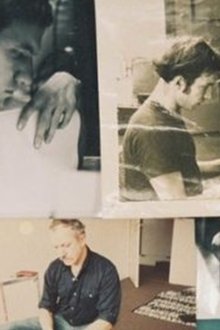
Electro-Pythagorus: A Portrait of Martin Bartlett (2017)
Electro-Pythagorus is an intimate and subjective portrait of the late Martin Bartlett, the Canadian electronic music pioneer who studied with Pauline Oliveros, David Tudor, John Cage, and Pandit Pran Nath. His contribution as an interdisciplinary composer, educator, and founding member of Western Front, though undoubtedly extensive, is in danger of being erased from cultural memory since his death from AIDS in 1993. Navigating an array of archival materials including letters, correspondences, notebooks, personal photos, and a huge body of unreleased music and field recordings held at the archives of Simon Fraser University, Electro-Pythagoras is a journey through the evolution of Bartlett’s musical time and space, softly guided by Luke Fowler’s insightful camera and montage—creating an experimental portrait that defies one-dimensionality.
About the Looking for and the Finding of Love (2005)
Director helmut Dietls and Patric Susskinds illustrate a legendary story of two lovers who cant keep themselves away from death.
Schindler's List (1993)
The true story of how businessman Oskar Schindler saved over a thousand Jewish lives from the Nazis while they worked as slaves in his factory during World War II.
Sissi: The Fateful Years of an Empress (1957)
After a wonderful time in Hungary Sissi falls extremely ill and must retreat to a Mediterranean climate to rest. The young empress’ mother takes her from Austria to recover in Madeira.
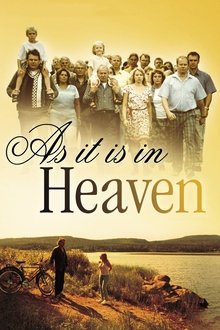
As It Is in Heaven (2004)
A musical romantic tragedy about a famous composer who moves back to his small hometown after having had heart troubles. His search for a simple everyday life leads him into teaching the local church choir, which is not easily accepted by the town yet the choir builds a great love for their teacher.
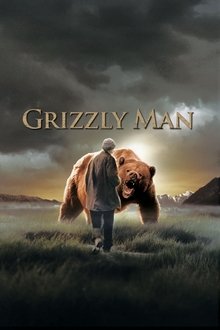
Grizzly Man (2005)
Werner Herzog's documentary film about the "Grizzly Man" Timothy Treadwell and what the thirteen summers in a National Park in Alaska were like in one man's attempt to protect the grizzly bears. The film is full of unique images and a look into the spirit of a man who sacrificed himself for nature.
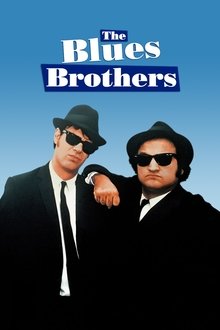
The Blues Brothers (1980)
Jake Blues, just released from prison, puts his old band back together to save the Catholic home where he and his brother Elwood were raised.
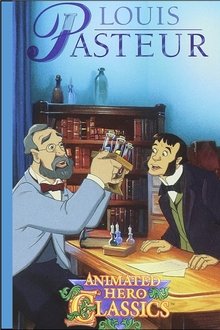
Animated Hero Classics: Louis Pasteur (1995)
The great French scientist, struggling with his own limitations from a stroke, is not deterred by scientific criticism nor failed experiments. Pasteur had the courage to look into the unseen world and his perfected vaccines are his gifts to mankind.

Spring Symphony (1983)
"Spring Symphony" is the story of Robert Schumann and Clara Wieck. Both were music entities. Robert Schumann turns out to have been a second tier composer, if that, never rising to the heights of a Beethoven or Mozart. In contrast, Clara Wieck was a master technician in the playing of the piano, a composer (probably not at Schumann's level), and was a child prodigy.
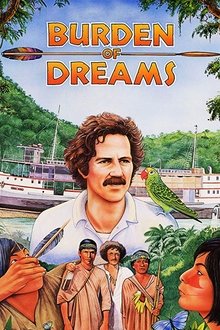
Burden of Dreams (1982)
The Amazon rain forest, 1979. The crew of Fitzcarraldo (1982), a film directed by German director Werner Herzog, soon finds itself with problems related to casting, tribal struggles and accidents, among many other setbacks; but nothing compared to dragging a huge steamboat up a mountain, while Herzog embraces the path of a certain madness to make his vision come true.
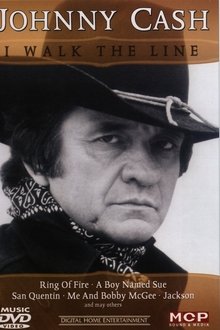
Johnny Cash - I Walk The Line (2004)
A collection of concert performances by Johnny Cash from the 60s to the 90s.

Napoleon (1927)
A biopic of Napoleon Bonaparte, tracing the Corsican's career from his schooldays (where a snowball fight is staged like a military campaign) to his flight from Corsica, through the French Revolution (where a real storm is intercut with a political storm) and the Terror, culminating in his triumphant invasion of Italy in 1797.
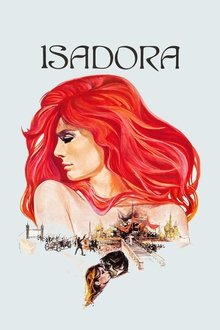
Isadora (1968)
A biography of the dancer Isadora Duncan, the 1920s dancer who forever changed people's ideas of ballet. Her nude, semi-nude, and pro-Soviet dance projects as well as her attitudes on free love, debt, dress, and lifestyle shocked the public of her time.
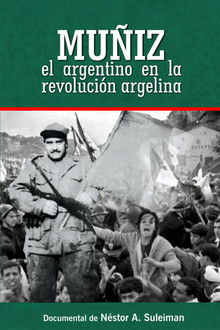
Muñiz, The Argentinian In The Algerian Revolution (2020)
Roberto Muniz, nicknamed "Mahmoud the Argentinian," was a revolutionary fighter who joined the National Liberation Army in 1959 to support the Algerian cause in the war of independence against France. He joined a clandestine group that manufactured weapons and ammunition to be transported to Algeria to support the revolution that began in 1954. After the war, the Algerian government invited the mujahid to stay, an offer he accepted to begin a new life as an employee of Sonnelgaz and a member of the General Union of Algerian Workers (UGTA), accompanied by his wife Alfonsa, a textile union activist who came from Argentina to join this North African adventure.