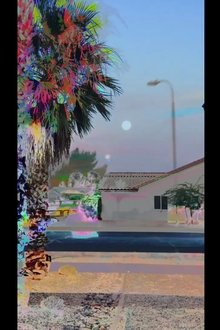
WHAT YOU MEAN WE is a surreal short film by experimental artist Laurie Anderson.

Cosmic Ray (1962)
Experimental short uses Ray Charles' “What'd I Say” as accompaniment to constantly shifting collage of female nude, cartoons, and newsreels of atomic bomb explosions.

Black Cat (1972)
Blending psychedelic animation with haunting music. Centred around a black cat, it explores themes of misfortune and the uncanny through dreamlike visuals and Maki Asakawa’s melancholic song, "Fushiawase to Iu Na no Neko".

Classic Albums: Frank Zappa - Apostrophe (') Over-Nite Sensation (2007)
This episode focuses on Zappa's early 70s albums, Overnight Sensation (1973) and Apostrophy (') (1974). Together they encapsulate Zappa's extraordinary musical diversity and were also the 2 most commercially successful albums that he released in his prolific career. Included are interviews, musical demonstrations, rare archive & home movie footage, plus live performances to tell the story behind the conception and recording of these groundbreaking albums. Extras include additional interviews and demonstrations not included in the broadcast version, 2 full performances from the Roxy in 1973 and Saturday Night Live in 1976, and new full live performance done specially for these Classic Albums.

The Maestro: King of the Cowboy Artists (1995)
What happens when a dedicated husband and father quits his job, adopts the persona of a Western-Movie Singing Cowboy, takes on the entire art establishment (including Christo and Andy Warhol), and refuses to accept money for his art ? Meet Gerry Gaxiola, AKA The Maestro, an ex-wage slave who gave up everything to make art for art's sake. The Maestro's story could inspire a whole new generation of Van Goghs.

Tell Me Iggy (2022)
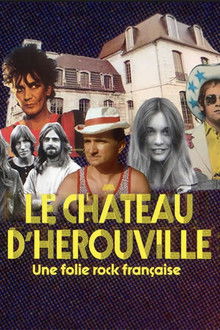
This new intimate documentary looks at the extraordinary journey of the 75-year-old American rocker, who has come back from everything, and especially from the worst, but with his capacity for wonder intact.

Moonlight People (2019)
Two young men and two girls on a moonlit night confess to each other in their strange fantasies and loves that go beyond the usual standards.. The impetus to making the film was the book of the same name by the Russian religious philosopher Vasily Rozanov, who died 100 years ago. His treatise was devoted to the study of sexuality and its denial in Christianity. The film was made in the style of experimental films of the 1920s with a non-linear narration full of strange surrealistic images. He is black and white and devoid of dialogue. Filmed on film 16 mm of firm "Svema", released in the USSR. This added to his exoticism. The image was put to the music of Alexander Scriabin “The Poem of Ecstasy” (1907).

A Study in Choreography for Camera (1945)
Maya Deren’s shortest, two-minute A Study in Choreography for Camera seems like an exercise piece to capture a dancer’s movement on celluloid, which later on developed into her masterpieces such as Ritual in Transfigured Time and Meditation on Violence.

The Very Eye of Night (1958)
Dancers, shown in photographic negative, perform a series of ballet moves, solos, pas de deux, larger groupings. The dancers glide and rotate untroubled by gravity against a slowly changing starfield background. Their movements are accompanied by music scored for a small ensemble of woodwind and percussion.

Autobahn (1979)
An animated visual interpretation of the song "Autobahn," by German electronic pioneers Kraftwerk. A fast-paced experimental film which proved to be a groundbreaking combination of electronic and manual animation. One of the first films produced specifically for video disk.

Húmus (2018)
A videodance short-film of the avant-garde / experimental dance group of the same name based on the book "Húmus" (released in 1917) by Raul Brandão.

My God, My God, Why Hast Thou Forsaken Me? (2005)
A.D. 2015: A virus has been spreading in many cities worldwide. It is a suicidal disease and the virus is infected by pictures. People, once infected, come down with the disease, which leads to death. They have no way of fighting against this infection filled with fear and despair. The media calls the disease the "Lemming Syndrome".

All My Life (1966)
The film is made up of one single take. The camera pans to the left, focusing on a dilapidated fence in a rural field, as Ella Fitzgerald's "All My Life" plays on the soundtrack. At the end of the 3 minute film, the camera tilts up to the blue sky just as the song ends.

Alone. Life Wastes Andy Hardy (1998)
In a deconstruction of classic Hollywood codes, using repetitive single frame images, the re-editing of teenager movies produces an intense Oedipal drama.

Love Beats Rhymes (2017)
A young woman dreams of making it big in the world of hip hop, but her parents demand that she finish her university degree. She dutifully agrees to complete her education, but her spoken word proves to have a powerful impact in the classroom.

Pensión de artistas (1956)
Between-engagements troupers at a theatrical boarding-house con a rich acquaintance into financing a show.

Lemonade (2016)
The second "visual album" (a collection of short films) by Beyoncé, this time around she takes a piercing look at racial issues and feminist concepts through a sexualized, satirical, and solemn tone.