“Clarity was one thing that made this performance a marvel. Another was the flexibility of Barenboim’s speeds…. The flexibility of Barenboim’s tempi meant that Bruckner’s charm – an often overlooked aspect of his genius – shone through, especially in the genial Trio.” (The Telegraph) Bruckner’s 8th is the last symphony completed by the Austrian composer. Many of his contemporaries regarded the symphony as “the pinnacle of 19th century music”. Even today, this monumental work fascinates listeners with its virtuoso orchestral technique, its immensity of sound, and its inexhaustible richness of detail. Symphony No. 8 in C minor (second version 1887-90, Robert Haas Edition) Daniel Barenboim, Conductor Staatskapelle Berlin Recorded live at the Philharmonie Berlin, 26 June 2010
Related Movies
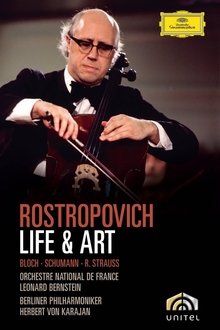
Rostropovich Life & Art (2007)
Released as a memorial for the great Russian cellist Mstislav Rostropovich, who passed away on 27 April 2007, this DVD contains one bonafide cello concerto, the Schumann Cello Concerto in A minor, and two tone poems with prominent cello parts, Ernest Bloch's Schelomo and Richard Strauss' Don Quixote. Rostropovich mastered the Schumann in several famous recordings. Here, conducted by Leonard Bernstein, he provides a splendid performance. Featuring his trademark powerful technique, smooth legato and crisp vibrato, the Romantic roots of the concerto are never hidden for long, despite the relatively cool playing of the Orchestre National de France.

Lohengrin (2024)
A short experimental film shot on Super 8, inspired by the music of Richard Wagner.

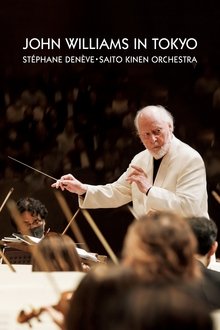
John Williams in Tokyo (2024)
30 years after his last visit to Japan, John Williams has returned for a special concert – making his debut with the world-famous Saito Kinen Orchestra in renditions of his beloved film scores and reuniting with his longtime friend, world-renowned conductor Seiji Ozawa (1935-2024). Captured live on record at Suntory Hall last year, John Williams In Tokyo is now being be released by Deutsche Grammophon and follows his acclaimed concert albums, The Berlin Concert and John Williams in Vienna, which topped charts around the globe.
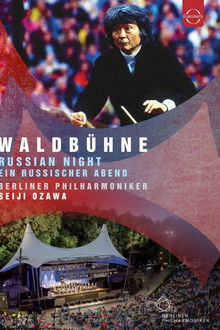
Waldbühne Berlin: Russian Night (1999)
Seiji Ozawa conducts the Berlin Philharmonic Orchestra in this 1993 performance at Berlin's Waldbuhne, an amphitheater tucked into a natural valley and modeled on a similar structure in the ancient Greek city of Epidaurus. From this lovely vantage point, viewers are treated to an evening of Russian favorites, including Igor Stravinsky's "Firebird," Pyotr Tchaikovsky's "Nutcracker" suite, Aram Khachaturian's "Sabre Dance" and more.
Wolfgang Amadeus Mozart 'Symphony No. 41 in C Major' (2021)
Packed with intricate melodies, harmonies, and instrumentation, Johannes Vogel conducts the Synchron Stage Orchestra to perform Mozart’s Symphony No. 41 in C Major K. 551 in this elegant live concert stream. Captured in Vienna’s state-of-the-art Synchron Stage recording facility, experience the thrills and swells of a 40-piece ensemble - 30 string, 5 woodwind, 4 brass, and 1 percussion - comprised of talented musicians from renowned Viennese orchestras. Mozart completed Symphony No. 41 in C Major on 10 August 1788 – the final of three masterpieces he wrote that summer. Labelled ‘Jupiter Symphony’ by music critics, Symphony No. 41 is an example of divine perfection, brimming with the beautiful complexity, emotion, and excitement that represents the possibilities of humankind.
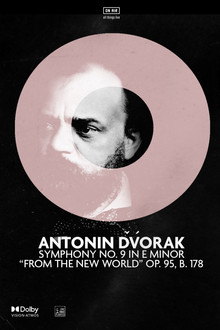
Antonin Dvořák's 'Symphony No. 9 in E Minor' (2021)
Packed with intricate melodies, harmonies, and instrumentation, Johannes Vogel conducts the Synchron Stage Orchestra to perform Antonin Dvořák's Symphony No. 9 in E Minor Op.95 (also known as ‘New World Symphony’) in this joyful live concert stream. Captured in Vienna’s state-of-the-art Synchron Stage recording facility, experience the thrills and swells of a 60-piece ensemble – 40 string, 9 woodwind, 9 brass, and 2 percussion – comprised of talented musicians from renowned Viennese orchestras. While serving as the director of the National Conservatory of Music of America, Antonín Dvořák composed New World Symphony (a title inspired by his travels in the United States) and debuted the masterpiece in New York City on 16 December 1893. The symphony has since become one of the most famous works in classical music, filled with hope and happiness as well as uplifting instrumentals that makes it a pleasure to listen to come rain or shine.
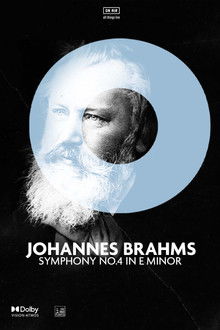
Johannes Brahms' 'Symphony No. 4 in E Minor' (2021)
Packed with intricate melodies, harmonies, and instrumentation, Johannes Vogel conducts the Synchron Stage Orchestra to perform Brahms’ Symphony No. 4 in E Minor Op.98 in this enthralling live concert stream. Captured in Vienna’s state-of-the-art Synchron Stage recording facility, experience the thrills and swells of a 60-piece ensemble – 40 string, 9 woodwind, 9 brass, and 2 percussion – comprised of talented musicians from renowned Viennese orchestras. With origins that date back to 1884 in Mürzzuschlag and the Austro-Hungarian Empire, Symphony No. 4 was introduced to the public on 25 October 1885 in Meiningen, Germany. In this modern-day performance, Brahms' fourth and final symphony continues to pulse with positive energy and swirls with trance-like melodies that’ll please classical fans far and wide.
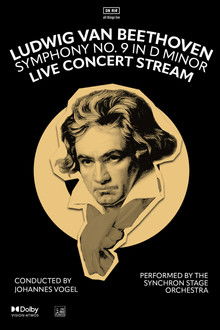
Ludwig van Beethoven's 'Symphony No. 9 in D Minor' (2020)
Originally aired as part of Beethoven’s 250th anniversary celebration, Johannes Vogel conducts the Synchron Stage Orchestra to perform Gustav Mahler's Orchestration of Symphony No. 9 in D Minor Op. 125 in this dramatic live concert stream. Recorded at the historical Synchron Stage in Vienna, experience the thrills and swells of the Synchron Stage Orchestra - 48 string, 17 woodwind, 14 brass, 4 percussion - comprised of Austria’s finest instrumentalists, alongside a choir of 39 sopranos, altos, tenors, and basses. Composed between 1822 and 1824 in Vienna, Symphony No. 9 in D Minor was Beethoven’s final completed symphony. The use of solo singers and a chorus in the final movement was revolutionary, and the emotional journey from the doubt and struggle to the glorious vision of a world of love and tolerance is regarded as one of the greatest and most heartfelt pieces in classical music.
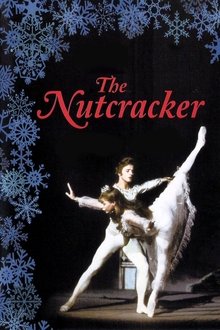
The Nutcracker (1977)
The Nutcracker is Mikhail Baryshnikov's breathtaking and critically acclaimed Emmy-nominated production. This spectacular performance is danced by the magnificent team of Baryshnikov, one of the greatest classical dancers of the century, and Gelsey Kirkland, both showcased at the peak of their careers, with members of the American Ballet Theatre.
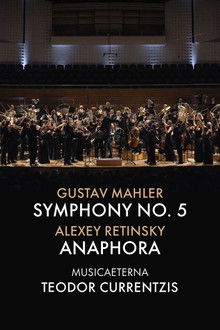
Mahler: Symphony No. 5 (2021)
For Mahler, symphonies always were a means of interpreting the most convoluted philosophical problems that couldn’t be resolved verbally. The ambitious structure of the five-part Fifth Symphony spans from the Funeral March to the roaring finale. It is a forthright attempt to resolve the tragic conflict with the surrounding world. The brilliant fourth part of the symphony, Adagietto, resembles a beautifully mysterious flower that every conductor reimagines in their own style. As one of the twentieth century’s most influential maestros, Mahler redefined the conductor’s role. For him, the conductor is just as integral to his own musical works as they are to the composer. When a maestro steps onto the podium and opens the score, he recreates musical universes from scratch. Teodor Currentzis and the musicAeterna orchestra have performed Mahler’s symphonies around the world for many years. The Fifth Symphony has earned its place as one of the highlights of the cycle.

John Cage: I Have Nothing to Say and I Am Saying It (1990)
This 56-minute documentary on America's most controversial and unique composer manages to cover a great many aspects of Cage's work and thought. His love for mushrooms, his Zen beliefs and use of the I Ching, and basic bio details are all explained intelligently and dynamically. Black Mountain, Buckminster Fuller, Rauschenberg, Duchamp are mentioned. Yoko Ono, John Rockwell, Laurie Anderson, Richard Kostelanetz make appearances. Fascinating performance sequences include Margaret Leng-Tan performing on prepared piano, Merce Cunningham and company, and performances of Credo In Us, Water Music, and Third Construction. Demystifies the man who made music from silence, from all sounds, from life.

Mahler - Symphonies Nos. 9 & 10 / Das Lied von der Erde (2005)
Filmed on tour at Berlin's Philharmonie, this account of the valedictory Ninth Symphony is an intense interpretation, expressing Bernstein's conviction that modern man had at last caught up with the message encoded in Mahler's last completed work. Having made his famous 1966 studio recording of "Das Lied von der Erde" in Vienna, Bernstein re-recorded this in Israel with the same searing subjectivity. René Kollo draws on the voice of a great Wagner tenor, while Christa Ludwig, the greatest exponent of the contralto songs at the time, is unbearably poignant in the final movement's fusion of elation and sadness.