For Mahler, symphonies always were a means of interpreting the most convoluted philosophical problems that couldn’t be resolved verbally. The ambitious structure of the five-part Fifth Symphony spans from the Funeral March to the roaring finale. It is a forthright attempt to resolve the tragic conflict with the surrounding world. The brilliant fourth part of the symphony, Adagietto, resembles a beautifully mysterious flower that every conductor reimagines in their own style. As one of the twentieth century’s most influential maestros, Mahler redefined the conductor’s role. For him, the conductor is just as integral to his own musical works as they are to the composer. When a maestro steps onto the podium and opens the score, he recreates musical universes from scratch. Teodor Currentzis and the musicAeterna orchestra have performed Mahler’s symphonies around the world for many years. The Fifth Symphony has earned its place as one of the highlights of the cycle.
Related Movies
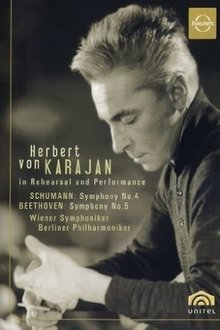
Karajan in Rehearsal (1965)
Karajan conducts rehearsal and performance of Schubert's Symphony No. 4 with the Vienna Symphony in Vienna, Nov. 1965, and Beethoven's Symphony No. 5 with the Berlin Philharmonic, January 1966. Henri-Georges Clouzot directs.
Bruckner: Symphony No. 7 (2014)
In Anton Bruckner’s 7th Symphony, the listener encounters a music characterized by great spaciousness and profound solemnity, a music which speaks of grief and lamentation, but also of their transcendence. With its monumental architecture and intensity of sound, the symphony has moved listeners ever since its triumphal premiere in 1884. The Guardian calls Daniel Barenboim’s London interpretation “Tremendous … Barenboim and the Staatskapelle seem to have this work in their systems, and the overall impression was of music unfolding organically at its own pace rather than of a work being self-consciously interpreted or led.” Anton Bruckner Symphony No. 7 in E major (original version) Daniel Barenboim, conductor Staatskapelle Berlin Recorded live at the Philharmonie Berlin, 25 June 2010
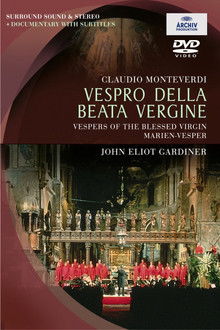
Vespro Della Beata Vergine (1989)
This large-scale live recording (Gardiner's second) was made in Venice's St Mark's Basilica. It captures the drama as well as the ceremonial aspect of the work, despite sometimes cloudy recorded sound.” Gramophone Classical Music Guide. “Gardiner's second [recording of the Vespers], spectacularly recorded live in St Mark's, has a punchy choral sound, near-operatic solo singing (Bryn Terfel and Alistair Miles are among the basses), emphatic enunciation, big contrasts and deliberate exploitation of the building's spaces. Its outright theatricality sets it apart from other performances.
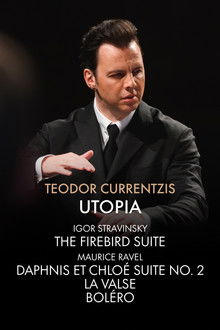
Teodor Currentzis: Utopia (2022)
Utopia, the new orchestra of conductor Teodor Currentzis, can be experienced for the first time in Vienna on its inaugural tour with the 1945 version of Igor Stravinsky’s ‘The Firebird’ and Maurice Ravel’s Suite No. 2 of ‘Daphnis et Chloé’, ‘La Valse’ and ‘Boléro’.
Bruckner: Symphony No. 4 (2010)
Daniel Barenboim is an expert in exploiting the impact of cyclical performances of composers works: This time he focuses his sharp intellect on all six of Anton Bruckners mature symphonies. Der Tagesspiegel described Barenboim's performance of the works with the Staatskapelle Berlin on six nearly consecutive evenings in June 2010 as a superhuman accomplishment and went on to praise how: His Bruckner is conceived and performed very theatrically, like an opera without words. Bruckners famous Romantic Symphony No. 4 forms the prelude to a spectacular DVD series from Accentus Music and Unitel Classica, exploring Bruckners symphonic cosmos.

Brahms The Piano Concertos (1984)
Between 1981 and 1984 Leonard Bernstein recorded nearly all of Brahmss orchestral works with the Wiener Philharmoniker to honor the 150th anniversary of the composer's birth in 1983. For the concertos, Bernstein enlisted the services of some of the finest Brahms interpreters of the time: the violoninst Gidon Kremer, the cellist Mischa Maisky and the pianist Krystian Zimerman. Leonard Bernstein, Krystian Zimerman, and the Wiener Philharmoniker, it's very hard to get a better group of musicians for these masterpieces. Mr. Zimerman and Mr. Wolfgang Herzer's piano cello duets in the third movement of Brahms' second is simply tearful.
Bruckner Symphony No. 9 (2010)
With nearly 450 years of tradition, the Staatskapelle Berlin is one of the oldest orchestras in the world. Daniel Barenboim has served as its music director since 1992, and in 2000 the orchestra appointed him Chief Conductor for Life. Having already performed important cycles such as Beethoven, Brahms and Schumann together, Daniel Barenboim and the Staatskapelle turned their focus toward Anton Bruckner's last six Symphonies, performed in the Philharmonie Berlin in the course of only one week in June 2010. This music is more serious and more significant than one had thought, the Berliner Zeitung summarized in its review of Daniel Barenboims celebrated Bruckner cycle with the Staatskapelle Berlin. Bruckners unfinished Symphony No. 9 brought to an end, in a poignant manner, the work of one of the greatest symphonic composers of the Classic-Romantic era.
András Schiff plays Bach (2011)
Surely Bach’s French Suites, which he composed during his years at Cöthen (1717–1723), are among the finest inducements to practise that any teacher has ever made to a pupil. In this case Bach wrote them for his young wife, Anna Magdalena. The over-riding impression left by these suites is one of endearing tunefulness. Clavier-Übung II is a later collection of didactic keyboard pieces. It comprises two greatly contrasted works: the Italian Concerto and the Overture in the French Style. These performances admirably demonstrate the thoughtful and persuasive approach that András Schiff adopts when performing Bach. Recorded live at the Bachfest 2010, Protestant Reformed Church of Leipzig, 11 June 2010 Repertoire J.S. Bach: French Suites Nos. 1–6, Overture in the French Style in B minor, Italian Concerto in F major, BWV 971
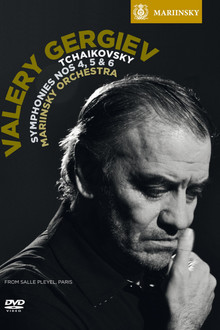
Tchaikovsky: Symphonies Nos. 4, 5 & 6 - Gergiev (2011)
Valery Gergiev is widely recognised as the greatest modern interpreter of Tchaikovsky’s music and the Mariinsky holds a peerless reputation in the repertoire. Together they deliver definitive interpretations of Tchaikovsky’s most popular symphonies. These acclaimed performances were filmed at Salle Pleyel in Paris during January 2010, directed by Andy Sommer. The themes of fate and death pervade Tchaikovsky’s final symphonies. The composition of the Fourth Symphony coincided with the breakdown of Tchaikovsky’s marriage and a failed suicide attempt, yet he considered it to be his greatest. In contrast he believed his Fifth to be flawed and uninviting, yet today this heartfelt work is widely regarded as one of his finest. The subject of fate is further instilled in the Sixth Symphony, premiered shortly before Tchaikovsky’s death. It was posthumously entitled ‘Pathétique’ by his brother and is a deeply melancholic work, full of dynamic extremes and an inherent sense of finality.
Igor Stravinsky's 'The Firebird' by The Royal Philharmonic Orchestra (2022)
On Air presents Igor Stravinsky's The Firebird, performed by the world-renowned Royal Philharmonic Orchestra, conducted by Peter Breiner, and recorded at BBC Television Centre. Expertly brought to life by some of the world's most sought-after classical musicians, The Firebird comprises 74 musicians: 51 string, 11 brass, 8 woodwind and 4 percussion. Available now to watch on demand in cinematic quality.
Igor Stravinsky's 'Petrushka' by The Royal Philharmonic Orchestra (2022)
On Air presents Igor Stravinsky's Petrushka, performed by the world-renowned Royal Philharmonic Orchestra, conducted by Peter Breiner, and recorded at BBC Television Centre. Expertly brought to life by some of the world's most sought-after classical musicians, the ensemble comprises 86 instruments: 51 string, 14 woodwind, 16 brass, 4 percussion and 1 piano. Available now to watch on demand in cinematic quality.
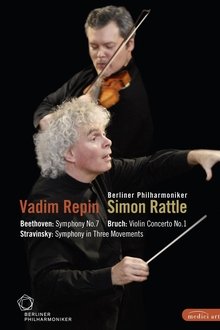
Europakonzert 2008 from Moscow (2008)
The Berliner Philharmoniker’s European Concert, held each year on 1 May, is invariably an international highlight. Performing in 2008 in Moscow's renowned Tchaikovsky Conservatory, the orchestra under Sir Simon Rattle presented outstanding performances of works by Beethoven, Stravinsky and Bruch, whose Violin Concerto featured one of today’s most fascinating artists, the Russian violinist Vadim Repin. Stravinsky: Symphony in Three Movements Bruch: Concerto for Violin No.1, op.26 Beethoven: Symphony No.7 in A major, op. 92
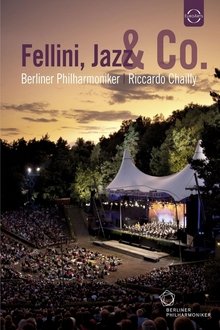
Waldbühne 2011: Fellini, Jazz & Co (2011)
The Waldbühne in Berlin, one of the most appealing outdoor amphitheatres on the European continent, is the home of the Berliner Philharmoniker’s summer concerts. With audiences of more than 20,000, these are some of the most popular classical music concerts in the world. Riccardo Chailly is famous for having one of the broadest and most eclectic repertoires. Here, under his baton, the orchestra presents perennial favourites by Shostakovich, Rota and Respighi. Live recording from the Waldbühne, Berlin, 23 August 2011, directed by Kasten Henning, produced by Jan Bremme. TV Producer: Dorothea Diekmann, RBB. Repertoire Dmitry Shostakovich: Suite No. 2 for Jazz Orchestra (Suite for Variety Orchestra), Lady Macbeth of Mtsensk Suite – Allegretto; Nino Rota: ‘La Strada’ Ballet Suite; Ottorino Respighi: Fountains of Rome • Pines of Rome • Danza gueresca ‘Belkis’; Paul Lincke: Berliner Luft
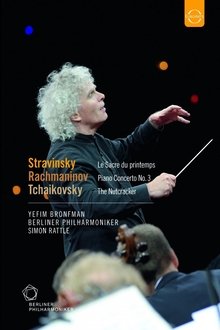
Waldbühne 2009 | Russian Rhythms (2009)
Every year, the Berliner Philharmoniker hold a kind of classical-music fête with a bright, cheerful concert to end the season. In 2009 about 22,000 people had come together at the Berlin Waldbühne to enjoy the traditional summer picnic concert. The theme of the evening was “Russian rhythms”, and star conductor Sir Simon Rattle, the Berliner Philharmoniker and Yefim Bronfman, one of the most famous pianists in the world today, presented a superb selection of Russian music. Repertoire Tchaikovsky: The Nutcracker, op. 71, Overture, The Christmas Tree, March, Pas de deux (Intrada) Rachmaninoff: Piano Concerto No.3 in D minor, op. 30 Stravinsky: Le Sacre du printemps Lincke: Berliner Luft
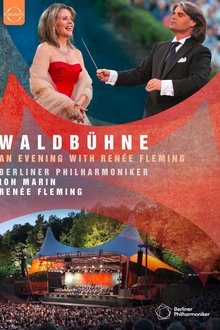
Waldbühne 2010 | An Evening with Renée Fleming (2010)
Repertoire Modest Mussorgsky: Night on Bald Mountain; Antonín Dvořák: Song to the Moon from “Rusalka”, Op. 114; Aram Chatschaturjan: Adagio from “Spartacus”; Richard Strauss: Final Scene from “Capriccio”, Op. 85; Richard Wagner: Overture to “Rienzi, der Letzte der Tribunen”; E. W. Korngold: Mariettas Lied from “Die tote Stadt”; Richard Strauss: Zueignung, Op. 10 No. 1; Sir Edward Elgar: Salut d’amour; Giacomo Puccini: Donde lieta uscì from “La bohème”; Tu che di gel sei cinta from “Turandot”; Ruggero Leoncavallo: Musette svaria sulla bocca viva from “La bohème”; Mimì Pinson, la biondinetta from “La bohème”; Piotr Tchaikovsky: “Romeo and Juliet” (Fantasy Overture)
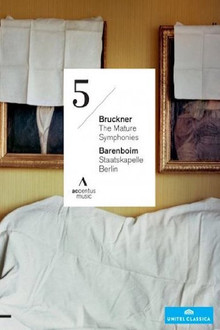
Bruckner: Symphony No. 5 (2010)
The Süddeutsche Zeitung summed up this highly acclaimed performance of Bruckner's monumental Fifth Symphony by saying: Both Bruckners belief in God, as it majestically wells up out of the chorale of the Fifth, and his deeply tragic world view, collide with one another in Barenboims interpretation. The operatic experience of the conductor was almost tangible, revealing the sheer dramatic instrumental battle between Bruckners God and the Devil between heaven and hell without betraying Bruckners unerring sense of striking proportions. The release of this contrapuntal masterpiece (as Bruckner, not without pride, referred to this work) is part of Daniel Barenboims Bruckner cycle with the renowned Staatskapelle Berlin.
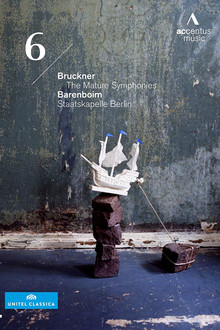
Bruckner: Symphony No. 6 (2014)
Anton Bruckner’s 6th Symphony was written between 1879 and 1881: a very happy time in his life. Unlike most of Bruckner’s symphonies, the 6th was not revised. Of all his works, this one seems to come from a single source of inspiration. Bruckner himself called it his “boldest” symphony – probably due to its extreme degree of motivic, rhythmic and harmonic originality. This live recording of the seldom-performed 6th Symphony is the next instalment of the acclaimed Bruckner cycle by the Staatskapelle Berlin and Daniel Barenboim. Anton Bruckner Symphony No. 6 in A major (original version) Daniel Barenboim, Conductor Staatskapelle Berlin Recorded live at the Philharmonie Berlin, 22 June 2010

Bruckner: Symphony No. 8 (2014)
“Clarity was one thing that made this performance a marvel. Another was the flexibility of Barenboim’s speeds…. The flexibility of Barenboim’s tempi meant that Bruckner’s charm – an often overlooked aspect of his genius – shone through, especially in the genial Trio.” (The Telegraph) Bruckner’s 8th is the last symphony completed by the Austrian composer. Many of his contemporaries regarded the symphony as “the pinnacle of 19th century music”. Even today, this monumental work fascinates listeners with its virtuoso orchestral technique, its immensity of sound, and its inexhaustible richness of detail. Symphony No. 8 in C minor (second version 1887-90, Robert Haas Edition) Daniel Barenboim, Conductor Staatskapelle Berlin Recorded live at the Philharmonie Berlin, 26 June 2010
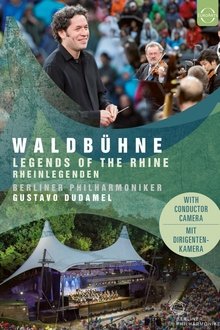
Waldbühne 2017 | Legends of the Rhine (2017)
For their annual season end concert, the Berliner Philharmoniker take the audience on a dreamy, magically journey through the river Rhine with Schumann’s beloved 3rd Symphony Rhenish. Pieces from Wagner’s Der Ring des Nibelungen under the baton of dynamic conductor Gustavo Dudamel complete this evening.