Welcome to a never-before-seen tour of the creations by resistance artists around the world. From the streets of Moscow to the shores of Los Angeles and featuring interviews with Tom Morello, Dave Navarro, Moby, Shepard Fairey, and more, this powerful film brings a message of hope and change through radical resistance and righteous social uprising.
Related Movies
George Carlin: Life Is Worth Losing (2005)
Carlin returns to the stage in his 13th live comedy stand-up special, performed at the Beacon Theatre in New York City for HBO®. His spot-on observations on the deterioration of human behavior include Americans’ obsession with their two favorite addictions - shopping and eating; his creative idea for The All-Suicide Channel, a new reality TV network; and the glorious rebirth of the planet to its original pristine condition - once the fires and floods destroy life as we know it.

The Fog of War (2003)
Using archival footage, cabinet conversation recordings, and an interview of the 85-year-old Robert McNamara, The Fog of War depicts his life, from working as a WWII whiz-kid military officer, to being the Ford Motor Company's president, to managing the Vietnam War as defense secretary for presidents Kennedy and Johnson.

White Walls Say Nothing (2017)
Buenos Aires is a complex, chaotic city. It has European style and a Latin American heart. It has oscillated between dictatorship and democracy for over a century, and its citizens have faced brutal oppression and economic disaster. Throughout all this, successive generations of activists and artists have taken to the streets of this city to express themselves through art. This has given the walls a powerful and symbolic role: they have become the city’s voice. This tradition of expression in public space, of art and activism interweaving, has made the streets of Buenos Aires into a riot of colour and communication, giving the world a lesson in how to make resistance beautiful.
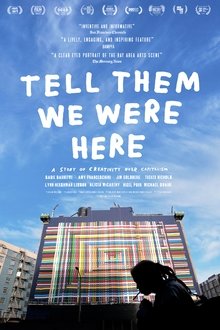
Tell Them We Were Here (2021)
Tell Them We Were Here is an inspirational feature-length documentary about eight artists who show us why art is vital to a healthy society and reminds us that we are stronger together.

Madame (2019)
The documentary tells the story of Camille Cabral, Northeastern woman, transsexual, first Brazilian elected in France.

Você Também Pode Dar um Presunto Legal (2006)
Amid the civil-military dictatorship implanted with the 1964 coup, Sergio Muniz had the idea of making a documentary about the action of the Death Squad. At the time, the press still had some freedom to disseminate the work of these death squads formed by police officers of various ranks, and that he acted on the outskirts of cities like Sao Paulo and Rio de Janeiro. The victims of police repression (as today) were men, poor and black, and this condition is supposed criminals.
Tinkebell - Who Killed the Blue Bird? (2024)
Artist Katinka Simonse, alias Tinkebell, is a controversial, very mediagenic phenomenon. In her universe there is no distinction between life, art and activism; Tinkebell is her own work of art. Everything she encounters on her life path can become part of her story. Filmmaker Judith de Leeuw was given access to all images about Tinkebell, including her entire private archive. She thus constructed an archive film about how as a human being, living on the ruins of the past, you can be a character in your own story. What is the price you can afford if you continue to believe at any cost?
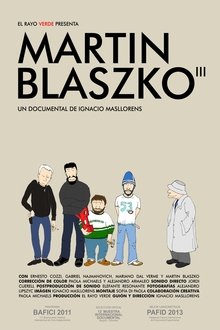
Martin Blaszko III (2011)
Martin Blaszko is considered one of the most important artists of geometric abstraction in Latin America. This documentary, which ends a trilogy, follows the setup of what ended up being his last art show, through only twenty sequences.
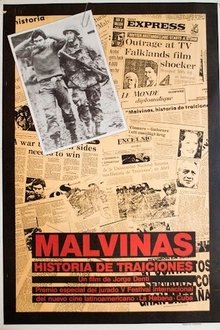
Malvinas: Stories of Betrayals (1984)
Malvinas, history of betrayals is an Argentine-Mexican co-production documentary film directed by Jorge Denti from a script by Irene Selzer and Alberto Adellach.

Schade, daß Beton nicht brennt (1981)
A documentary about the clashes between squatters and the police in Berlin in early 1981. Despite the absence of commentary, this is an openly partisan film that aims less for political analysis than for an up-close description of the situation and mood.
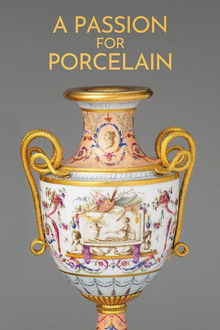
Beautiful Thing: A Passion for Porcelain (2013)
Documentary in which Ros Savill, former director and curator at the Wallace Collection, tells the story of some incredible and misunderstood objects - the opulent, intricate, gold-crested and often much-maligned Sevres porcelain of the 18th century. Ros brings us up close to a personal choice of Sevres masterpieces in the Wallace Collection, viewing them in intricate and intimate detail. She engages us with the beauty and brilliance in the designs, revelling in what is now often viewed as unfashionably pretty or ostentatious. These objects represent the unbelievable skills of 18th-century France, as well as the desires and demands of an autocratic regime that was heading for revolution.

What Price Art? By Tracey Emin (2006)
Why is it that art by male artists always sells for more than that of female artists? Is it subject matter? Is it machismo? Or is it plain old sexism? In this film, Tracey Emin crosses the country on a quest to find out. She meets artists such as Dame Maggi Hambling and Rachel Whiteread; curators such as Norman Rosenthal and gatekeepers such as Oliver Baker from Sotherby's? Have things changed? Or is it society that needs to change before the art market can follow?


But... Seriously (1994)
A documentary juxtaposing the events of the 20th century with the commentary of stand-up comedians.

The Term. Beginning of a Big Story (2014)
The documentary project The Term was conceived in May 2012. When the directing trio commenced mapping the Russian sociopolitical landscape, Vladimir Putin had just settled into the Kremlin for his third term. The original experimental format of “documentary bulletins,” which were published daily online, allowed for wide-ranging content; in the feature film version, however, the filmmakers focused solely on the members of various opposition groups. Nevertheless, the work’s neutral position remains and viewers have to interpret the objectively presented situations for themselves. The main characteristics of this strongly authentic movie include close contact with the protagonists, precise editing, and an effectively controlled release of information.
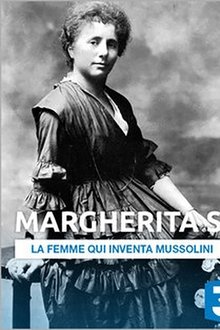
Margherita, The Woman Who Invented Mussolini (2014)
Margherita Sarfatti, Mussolini's lover and advisor, was a woman who exerted a great influence on the Duce and on Italian cultural life. Through archival documents, autobiographical texts and love letters, the documentary paints a portrait of the woman who helped create the myth of the Duce.