In unusual circumstances, scientists from different countries work together to achieve a common scientific goal. Locked in their spinning space lab, they are isolated from the world — family and friends - and can only watch from the outside as life on Earth continues without them. The space station is a monument not only to the weaknesses of humanity, but also to its ability to do the impossible for the sake of life in space.
Related Movies
Top Ten Mysteries of Outer Space (2022)
The wonders of the universe have long propelled our insatiable desire to learn more about who we are and where we came from. With the advancing age of science and technology, we're able to explore our world and the cosmos like never before. We are exploring the unknown at the farthest reaches in space unlocking new wonders and mysteries that are both shocking and amazing. From colling planets, to disappearing comets, to unexplained activity on the surface of planets in our solar system, the next evolution of mankind is well underway.
The Last Man on the Moon (2016)
The 1960s was an extraordinary time for the United States. Unburdened by post-war reparations, Americans were preoccupied with other developments like NASA, the game-changing space programme that put Neil Armstrong on the moon. Yet it was astronauts like Eugene Cernan who paved the uneven, perilous path to lunar exploration. A test pilot who lived to court danger, he was recruited along with 14 other men in a secretive process that saw them become the closest of friends and adversaries. In this intensely competitive environment, Cernan was one of only three men who was sent twice to the moon, with his second trip also being NASA’s final lunar mission. As he looks back at what he loved and lost during the eight years in Houston, an incomparably eventful life emerges into view. Director Mark Craig crafts a quietly epic biography that combines the rare insight of the surviving former astronauts with archival footage and otherworldly moonscapes.
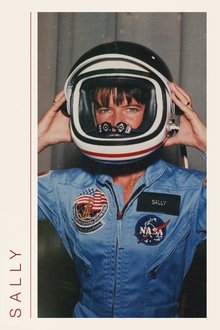
Sally (2025)
Sally Ride's groundbreaking journey as the first American woman in space concealed a deeply personal story. Her life partner, Tam O'Shaughnessy, unveils their covert 27-year romance and its accompanying sacrifices.
Asteroid Hunters (2020)
Venture into deep space for a fascinating look at asteroids, their cosmic origins and the potential threat they pose to our world. Written and produced by Phil Groves, produced by Jini Durr and directed by W.D. Hogan, Asteroid Hunters introduces asteroid scientists – the best line of defense between Earth and an asteroid’s destructive path – and reveals the cutting-edge tools and techniques they use to detect and track asteroids, and the technology that may one day protect our planet. The effects of an asteroid impact could be catastrophic and while the current probability of an event in our lifetime is low, the potential consequences make the study of asteroids an incredibly important area of scientific research. Witness the latest in planetary defense and how science, ingenuity and determination combine to explore the world’s most preventable natural disaster.
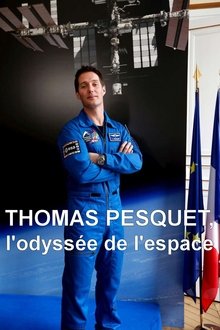
Thomas Pesquet : L'Odyssée de l'espace (2018)
For 192 days, Thomas Pesquet filmed his journey in space. He he lived in the ISS (International Space Station) with 5 other astronauts. From this extraterrestrial journey, the 39-year-old French astronaut brings back extraordinary images. Earth, seen from space The images of the earth scroll then, fascinating, despite this observation of the astronaut on pollution and deforestation. He had read the damage before, he now sees it from the ISS. He feels the fragility of the Earth. His weightless images on a soundtrack of quality provoke a surge of beauty, of strangeness, in this slowness propitious to poetry. And the reading of the texts of the two winners of "Le Petit Prince" writing contest, visiting an eighth planet, takes on a whole new dimension in this beautiful production by Julien Adam and Matthieu Besnard produced by Capa Presse TV.
National Geographic: Journey to the Edge of the Universe (2008)
In one single, epic camera move we journey from Earth's surface to the outermost reaches of the universe on a grand tour of the cosmos, to explore newborn stars, distant planets, black holes and beyond.
Edge of Darkness (2015)
The film features amazing scenes of places never before seen gathered by key space missions that culminated with groundbreaking discoveries in 2015. It features a spectacular flight though the great cliffs on comet 67P, a close look at the fascinating bright "lights" on Ceres, and the first ever close ups of dwarf binary planet Pluto/Charon and its moons.

Live from Space (2014)
National Geographic and NASA are sending you into space - live! For the first time ever, board the International Space Station and take a complete orbit of Earth in real time.
Destiny in Space (1994)
Travel alongside the astronauts as they deploy and repair the Hubble Space Telescope, soar above Venus and Mars, and find proof of new planets and the possibility of other life forming around distant stars.
Mission to Mir (1997)
This film shows how far we have come since the cold-war days of the 50s and 60s. Back then the Russians were our "enemies". And to them the Americans were their "enemies" who couldn't be trusted. Somewhere in all this a young girl in Oklahoma named Shannon set her sights on becoming one of those space explorers, even though she was told "girls can't do that." But she did.
Roving Mars (2006)
Join the Mars rovers Spirit and Opportunity for an awe-inspiring journey to the surface of the mysterious red planet.
Space Station 3D (2002)
Some 220 miles above Earth lies the International Space Station, a one-of-a-kind outer space laboratory that 16 nations came together to build. Get a behind-the-scenes look at the making of this extraordinary structure in this spectacular IMAX film. Viewers will blast off from Florida's Kennedy Space Center and the Baikonur Cosmodrome in Russia for this incredible journey -- IMAX's first-ever space film. Tom Cruise narrates.

Comet Collision (2006)
Comets pose one of the greatest threats to life on Earth - a threat that can only be countered if we find out more about them. In 2005, in an audacious bid to do just that, NASA scientists launched a space probe to collide with a comet in the emptiness of deep space. This film follows the amazing story of mission Deep Impact, from its inception through to the final nail-biting moments when the probe and comet Tempel 1 met head-on.
God, the Universe and Everything Else (1988)
In a studio setting, Stephen Hawking, Arthur C. Clarke and Carl Sagan (who joins them via satellite) discuss the Big Bang theory, God, our existence as well as the possibility of extraterrestrial life.

Red Glory (2018)
Documentary about humankind’s first walk on the moon with Apollo 11, NASA’s first test mission of Orion for beyond low-space orbit, and Mars 1, the upcoming first manned mission to the red planet.
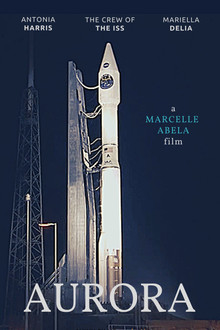
Aurora (2018)
Poetic documentary about the beauty of Earth and space as captured from the International Space Station.
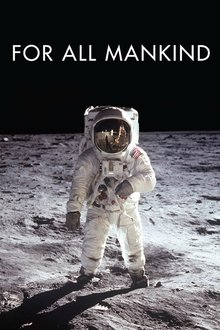
For All Mankind (1989)
A testament to NASA's Apollo program of the 1960s and '70s. Composed of actual NASA footage of the missions and astronaut interviews, the documentary offers the viewpoint of the individuals who braved the remarkable journey to the moon and back.
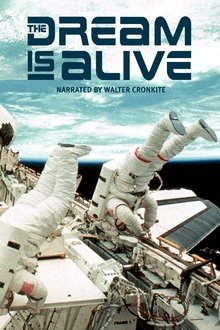
The Dream Is Alive (1985)
The Dream Is Alive takes you into space alongside the astronauts on the space shuttle. Share with them the delights of zero gravity while working, eating and sleeping in orbit around the Earth. Float as never before over the towering Andes, the boot of Italy, Egypt and the Nile. Witness firsthand a tension-filled satellite capture and repair and the historic first spacewalk by an American woman.
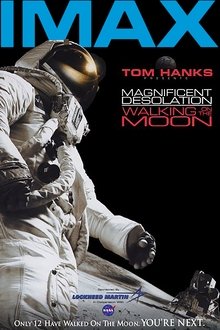
Magnificent Desolation: Walking on the Moon (2005)
Twelve men who belong to one of the world's most exclusive fraternities -- people who've walked on the surface of the moon -- are paid homage in this documentary. Using newsreel footage, rare NASA photographs, and digitally animated re-creations, Magnificent Desolation: Walking on the Moon examines the Apollo missions between 1969 and 1972 which put astronauts on the moon.
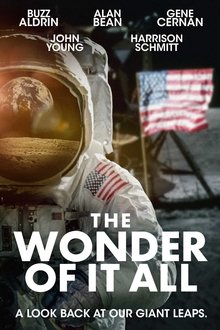
The Wonder of It All (2007)
The Wonder of it All focuses on the human side of the men behind the Apollo missions through candid interviews with seven of the Apollo astronauts: Buzz Aldrin, Alan Bean, Edgar Mitchell, John Young, Charles Duke, Eugene Cernan and Harrison Schmitt. They all reflect on the training, the tragedies, the camaraderie, and the effect that their space travel has had on their families.