Related Movies

Danger Close: The Battle of Long Tan (2019)
Vietnam War, 1966. Australia and New Zealand send troops to support the United States and South Vietnamese in their fight against the communist North. Soldiers are very young men, recruits and volunteers who have never been involved in a combat. On August 18th, members of Delta Company will face the true horror of a ruthless battle among the trees of a rubber plantation called Long Tân. They are barely a hundred. The enemy is a human wave ready to destroy them.

Pleasure Factory (2007)
A series of intertwining tales involve "pleasure seekers and pleasure providers" during the course of one night in Geylang, Singapore's red-light district. There are three distinct stories, united only by the presence of characters from all the stories in a streetside eatery:

Daisies (1966)
Two teenage girls embark on a series of destructive pranks in which they consume and destroy the world around them.
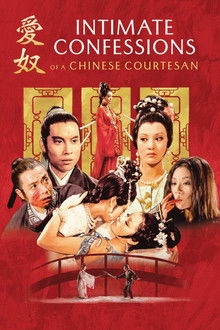
Intimate Confessions of a Chinese Courtesan (1972)
18-year-old Ainu is kidnapped and sold to a brothel. Her good looks and wild personality make her very popular with the lustful clients, but also draw the lesbian attentions of brothel madam Chun Yi. Chun Yi teaches Ainu the ways of lust and the ways of kung fu, and Ainu becomes more and more similar to her captor. But rage at her treatment is still burning inside her.

Gedo (2000)
East meets West as the Japanese Yakuza battle drug lords and the LAPD in the streets of Los Angeles...
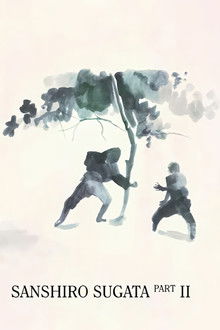
Sanshiro Sugata, Part Two (1945)
A few years after his breakthrough, Sanshiro resumes his path to judo mastery—testing his discipline against an American prizefighter and later facing vengeful karate brothers. As rival schools and public spectacle push him toward violence, he must reconcile strength with restraint and the true spirit of his art.

The Morning Sun Shines (1929)
The Morning Sun Shines is a fiction-documentary film by Kenji Mizoguchi and Seiichi Ina. The film is a combination of a drama about a reporter, and documentary footage about newspaper production. Only 25 minutes of footage has survived.
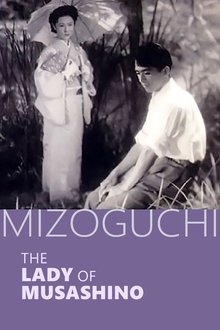
The Lady of Musashino (1951)
Set in post-war Japan, The Lady of Musashino tells the story of Michiko, a disillusioned young woman trapped in a loveless marriage. She confides in her younger cousin, Tsutomo, and the two become close, but decide not to consummate their affair. He instead becomes involved with the flirtatious Tomiko, who is also conducting an affair with Michiko's husband. When Michiko finds that her husband has abandoned her, she decides to take her fate into her own hands.
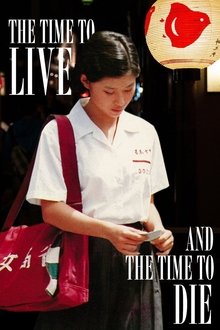
The Time to Live and the Time to Die (1985)
An autobiographical film based on Taiwanese director Hou Hsiao-hsien's memories of his youth growing up in Taiwan after emigrating from mainland China.

The Happy Housewife (2010)
Lea is an immaculate 30-something wife whose husband’s job in real estate allows her an enviably glossy lifestyle. The word ‘emancipation’ simply isn't in her vocabulary and as long as the money rolls in, all is rosy. So, when Harry Jr. arrives, she is a little traumatized at having to swap canapés for nappies.
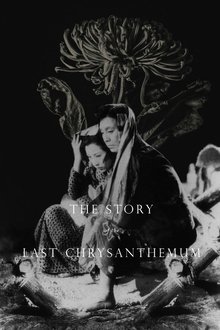
The Story of the Last Chrysanthemum (1939)
In late 19th century Tokyo, Kikunosuke Onoue, the adopted son of a legendary actor, himself an actor specializing in female roles, discovers that he is only praised for his acting due to his status as his father's heir. Devastated by this, he turns to Otoku, a servant of his family, for comfort, and they fall in love. Kikunosuke becomes determined to leave home and develop as an actor on his own merits, and Otoku faithfully follows him.

The Sisters (2005)
Based on Anton Chekov's "The Three Sisters" about siblings living in a college town who struggle with the death of their father and try to reconcile relationships in their own lives.
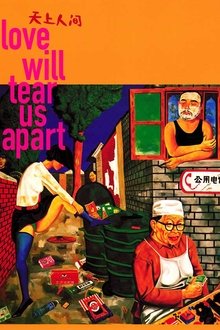
Love Will Tear Us Apart (1999)
The film gets under the skin of a very marginalized group: recent immigrants to Hong Kong from Mainland China. Belying the expectation that they will belong in a territory now returned to China's sovereignty, they find themselves lonely, frustrated, poor, and employable only in the most menial jobs, from elevator service staff to prostitution.

Sita Ramam (2022)
Afreen, a rebellious Pakistani student sets ablaze the car of an Indian in London. Angered Afreen returns to Pakistan to ask for money from her grandfather that she has to pay in a month's time as damages. However, she gets to know that he is no more and the only thing he has left for her is a letter-delivering task, written by Ram to Sita. As Afreen sets out to find Ram, there begins her journey of discovering the secret behind the 20-year-old letter.
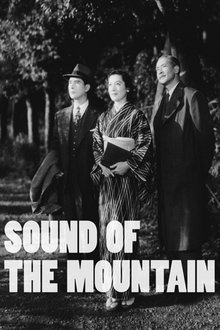
Sound of the Mountain (1954)
An ingratiating bride develops warm ties to her father-in-law while her cold husband blithely slights her for another woman.


881 (2007)
Two Singaporean girls join together to form the Papaya Sisters, a getai group that sings at performances during the seventh lunar month. Big Papaya is estranged from her mother, who disapproves of her performances, whilst Little Papaya is an orphan who suffers from terminal cancer. The two are assisted by Auntie Ling and her son, Guan Yin. The two soon rise to the top of the Singaporean getai scene singing traditional Hokkien songs, but their fame brings along with it the enmity of the Durian Sisters, a rival group of techno-singing Eurasian girls.

Mughal-e-Azam (1960)
In the 16th century, when Prince Salim falls in love with a beautiful courtesan named Anarkali, Emperor Akbar's disapproval leads to a battle between father and son.
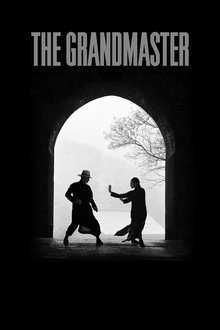
The Grandmaster (2013)
Ip Man's peaceful life in Foshan changes after Gong Yutian seeks an heir for his family in Southern China. Ip Man then meets Gong Er who challenges him for the sake of regaining her family's honor. After the Second Sino-Japanese War, Ip Man moves to Hong Kong and struggles to provide for his family. In the mean time, Gong Er chooses the path of vengeance after her father was killed by Ma San.