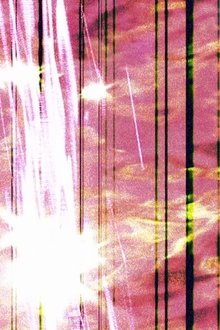
Hauntology of the Retrodromomania is an essayistic motion picture, a locomotory legwork, a deambulatory non-rural land survey, a casual journeying in a punctual dissertation around the phenomenon of the nostalgic feeling, discoursing on a late capitalistic landscape of social emotions, which are of yore, yet coloured of the postmodern tint of pixelated neo-noir, a socio-philosophical flâneur’s trip in critical theory escorted by the spirits of French post-structuralists. For a Sociology of Nostalgia revisited.
Related Movies
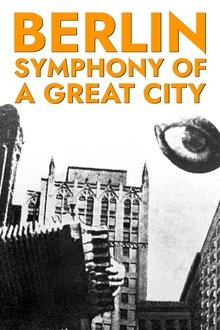
Berlin: Symphony of a Great City (1927)
A day in the city of Berlin, which experienced an industrial boom in the 1920s, and still provides an insight into the living and working conditions at that time. Germany had just recovered a little from the worst consequences of the First World War, the great economic crisis was still a few years away and Hitler was not yet an issue at the time.
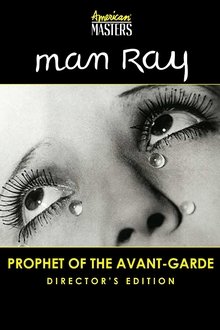
Man Ray: Prophet of the Avant-Garde (1997)
Man Ray, the master of experimental and fashion photography was also a painter, a filmmaker, a poet, an essayist, a philosopher, and a leader of American modernism. Known for documenting the cultural elite living in France, Man Ray spent much of his time fighting the formal constraints of the visual arts. Ray’s life and art were always provocative, engaging, and challenging.
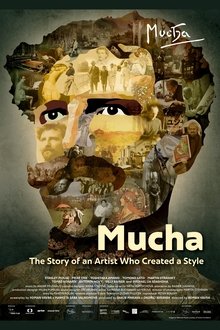
Mucha: The Story of an Artist Who Created a Style (2020)
Czech painter and illustrator Alphonse Mucha (1860-1939) ranks among the pioneers of the Art Nouveau movement at the end of the 19th century. Virtually overnight, he becomes famous in Paris thanks to the posters that he designs to announce actress Sarah Bernhardt’s plays. But at the height of his fame, Mucha decides to leave Paris to realize his lifetime project.
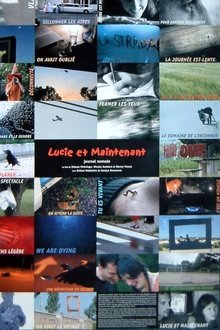
Lucie et Maintenant (2007)
In May of 1982 Julio Cortázar, the Argentinean writer and his companion in life, Carol Dunlop set out in their VW bus on a journey along the highway from Paris to Marseille that, for each of them, was to be their final one. Twenty-five years later, Océane Madelaine and Jocelyn Bonnerave set out to undertake the journey again.
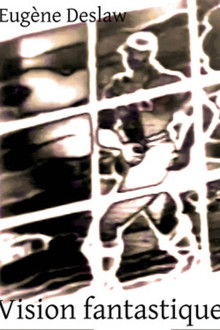
Fantastic Vision (1957)
Footage filmed in Spain, subjected a new visual effects process. Deslaw devoted himself to the discovery of a new machine that enabled film to be developed while using a new method called solarisation.
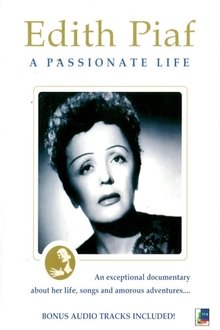
Edith Piaf: A Passionate Life (2004)
This documentary about legendary French chanteuse Edith Piaf begins at her birth (which was helped along by a cop), travels through her turbulent romantic history, follows her to the pinnacle of her success and reports on her death. Piaf was queen of the torch song, her plaintive wail speaking volumes of the tragedy and joy she'd faced. Hers wasn't exactly, in the words of one of her famous songs, "La Vie En Rose," but it was quite a life.

Diana: 7 Days That Shook the Windsors (2017)
This illuminating documentary examines the aftermath of Princess Diana's tragic death and the tense, dramatic week leading up to her funeral
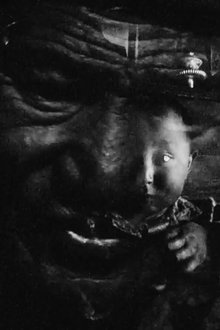
Path of Cessation (1974)
In PATH OF CESSATION the image that is communicated to us by Fulton is a highly mystifying one. Rather than analyze, or enter into a dialogue with the Tibetan culture that he photographs, Fulton has succumbed to it, and through the process has presented us a work of great surface, as well as formal, beauty.

Rene Magritte: Man in the Hat (2014)
In this film, Will Young travels to Magritte's native Belgium to find out more about the man whose trademark was a bowler hat and whose apparently conventional exterior concealed the mind of a subversive rebel. Will uncovers a childhood marked by tragedy, a marriage that lasted from Magritte's adolescence until his death in 1967, and a stunning artistic legacy which endures to this day.
Sunset Boulevards (1992)
In this documentary about the exile of two famous French actors in Argentina during and after World War II, the director Cozarinsky returns to Argentina after many years in France and recalls places and events from his childhood, particularly the celebration of the liberation of Paris on in August of 1944, in Buenos Aires's Plaza Francia. Featuring testimony from various authors and acquaintances of Maria (Renee) Falconetti and Robert Le Vigan, the film explores their lives and final years in Argentina.
Meeting the Man: James Baldwin in Paris (1971)
In 1970, a British film crew set out to make a straightforward literary portrait of James Baldwin set in Paris, insisting on setting aside his political activism. Baldwin bristled at their questions, and the result is a fascinating, confrontational, often uncomfortable butting of heads between the filmmakers and their subject, in which the author visits the Bastille and other Parisian landmarks and reflects on revolution, colonialism, and what it means to be a Black expatriate in Europe.

La Caissière fait son cinéma (1997)
Paris, Latin Quarter. A small cinema that is both famous and marginal, Action Christine. The cashier has taken her camcorder and takes us to this public place, her workplace. Place of life, of passage, of meeting, a window open on the street, behind the hygienic phone, it is the daily life of the cashiers and the openers punctuated by the alternation of surging entrances and idle intersession.
The First World War (1934)
Produced by the Fox Movietone News arm of Fox Film Corporation and based on the book by Lawrence Stallings, this expanded newsreel, using stock-and-archive footage, tells the story of World War I from inception to conclusion. Alternating with scenes of trench warfare and intimate glimpses of European royalty at home, and scenes of conflict at sea combined with sequences of films from the secret archives of many of the involved nations.