A camera crew follows Edward Earl Johnson, a man falsely convicted of rape and murder, during his last 14 days on death row. Everyone involved is interviewed, Johnson himself, his family, the warden, prison guards and other inmates. We also witness the futile attempts by his attorney to save his life.
Related Movies
Guilty (2017)
A film about convicted drug smuggler Myuran Sukumaran, who became an accomplished artist before he was executed by firing squad in Indonesia in April 2015.
After Innocence (2005)
A moving account of the experiences of men exonerated after years, and sometimes decades, in prison following newly found DNA evidence.
Mr. Death: The Rise and Fall of Fred A. Leuchter, Jr. (1999)
A portrait of the life and career of the infamous American execution device designer Fred A. Leuchter, Jr. Mr. Leuchter was an engineer who became an expert on execution devices and was later hired by holocaust revisionist historian Ernst Zundel to "prove" that there were no gas chambers at Auschwitz. Leuchter published a controversial report confirming Zundel's position, which ultimately ruined his own career. Most of the footage is of Leuchter, working in and around execution facilities or chipping away at the walls of Auschwitz, but Morris also interviews various historians, associates, and neighbors.
Freedom Downtime (2001)
A feature-length documentary about the Free Kevin movement and the hacker world.
The Thin Blue Line (1988)
This unique documentary dramatically re-enacts the crime scene and investigation of a police officer's murder in Dallas.

2 or 3 Things I Know About Him (2005)
What would your family reminiscences about dad sound like if he had been an early supporter of Hitler’s, a leader of the notorious SA and the Third Reich’s minister in charge of Slovakia, including its Final Solution? Executed as a war criminal in 1947, Hanns Ludin left behind a grieving widow and six young children, the youngest of whom became a filmmaker. It's a fascinating, maddening, sometimes even humorous look at what the director calls "a typical German story." (Film Forum)
Aileen: Life and Death of a Serial Killer (2003)
British documentarian Nick Broomfield creates a follow-up piece to his 1992 documentary of the serial killer Aileen Wuornos, a highway prostitute who was convicted of killing six men in Florida between 1989 and 1990. Interviewing an increasingly mentally unstable Wuornos, Broomfield captures the distorted mind of a murderer whom the state of Florida deems of sound mind -- and therefore fit to execute. Throughout the film, Broomfield includes footage of his testimony at Wuornos' trial.

Remember the Sultana (2018)
Over 2000 Union soldiers, passengers and crew were crammed aboard the steamboat Sultana, licensed to carry 376. Graft, greed, overcrowding, a poorly maintained boat, and the Mississippi River was swollen with spring snowmelt conspired together to create a disaster. On April 27, 1865, the boat’s boilers exploded, causing the worst maritime disaster in US history.
The Baudis affair, the murderous rumor (2021)
In 2002, serial killer Patrice Alègre was sentenced to life imprisonment for five murders. Gendarme Roussel, the main investigator of this case, believes that he will make him confess to other unsolved crimes in Toulouse. Two ex-prostitutes give a series of names of presumed accomplices of the killer, among them Dominique Baudis, then president of the CSA. He decides to face the case alone. Around him, it is silence: not an official support of his political family. Almost twenty years later, we return to the Baudis affair to try to understand it, with the testimonies of Pierre and Benjamin Baudis, his sons, François Hollande, Camille Pascal and the main protagonists.

The Penalty (2017)
Three extraordinary people embark on journeys of recovery, discovery and rebellion and find themselves centre stage in the biggest capital punishment crisis in modern memory. The Penalty unearths an America where grieving families, botched executions and wrongful convictions force us to question what we think we know about the death penalty.
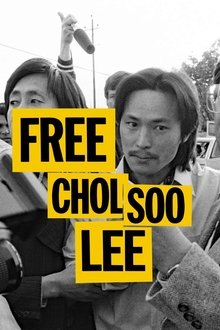
Free Chol Soo Lee (2022)
On June 3, 1973, a man was murdered in a busy intersection of San Francisco’s Chinatown as part of an ongoing gang war. Chol Soo Lee, a 20-year-old Korean immigrant who had previous run-ins with the law, was arrested and convicted based on flimsy evidence and the eyewitness accounts of white tourists who couldn’t distinguish between Asian features. Sentenced to life in prison, Chol Soo Lee would spend years fighting to survive behind bars before journalist K.W. Lee took an interest in his case. The intrepid reporter’s investigation would galvanize a first-of-its-kind pan-Asian American grassroots movement to fight for Chol Soo Lee’s freedom, ultimately inspiring a new generation of social justice activists.

The Servant (2023)
Domestic service worker Lera is accused of a crime. In a cell in the premises of a Civil Guard barracks, she meets Mihaela and Julia, two prostitutes with whom she shares the story of Santa Vicenta María, founder of the Religious of Mary Immaculate, which she says saved her life.
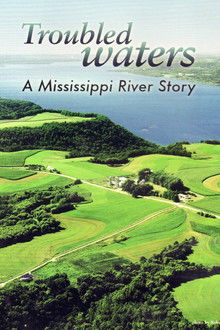
Troubled Waters: A Mississippi River Story (2010)
Farming practices in America's heartland, including excess fertilizers and poor soil conservation, have wrought unintended yet severe consequences on the Mississippi River. Fortunately, farmers, scientists, and citizens are pursuing more sustainable land-use practices that meet ambitious food production goals while ensuring the long-term health of precious natural resources.
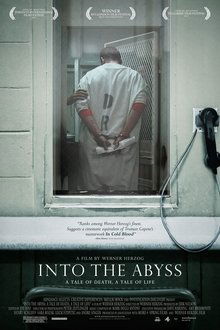
Into the Abyss (2011)
We do not know when and how we will die. Death Row inmates do. Werner Herzog embarks on a dialogue with Death Row inmates, asks questions about life and death and looks deep into these individuals, their stories, their crimes.

Alien Contact: The Pascagoula UFO Encounter (2020)
A seminal alien abduction case is re-opened as new eye witnesses confirm the horrifying UFO encounter. Hear the true story from the lone survivor, Calvin Parker, with shocking details that have never before been exposed.

The River (1938)
This short Depression-era documentary describes the importance of the Mississippi River to the United States and laments the environmental destruction committed in the name of progress, particularly farming and timber practices and their impact on impoverished farmers.
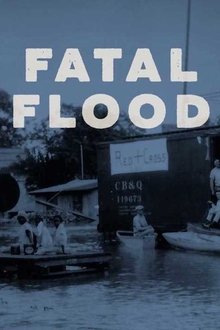
Fatal Flood (2001)
In the spring of 1927, after weeks of incessant rains, the Mississippi River went on a rampage from Cairo, Illinois to New Orleans, inundating hundreds of towns, killing as many as a thousand people and leaving a million homeless. In Greenville, Mississippi, efforts to contain the river pitted the majority black population against an aristocratic plantation family, the Percys, and the Percys against themselves. A dramatic story of greed, power and race during one of America's greatest natural disasters.
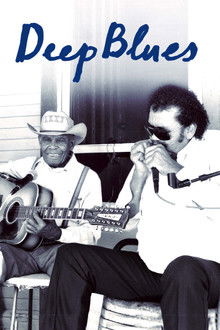
Deep Blues (1992)
This warm 90 minutes documentary shows us unknown blues musicians from Mississippi. They play everywhere : on the streets, in dirty little bars, in a barber shop, in big clubs. The film really captures the true faces of blues and shows us that this music had nothing to do with nostalgia or record company hypes. Documentary on the Delta blues.

Last Supper (2005)
Today, the ritual of giving the last supper to the condemned person has been detached from its origin, and can be perceived to be as absurd as the punishment it accompanies. Mats Bigert & Lars Bergström's film “The Last Supper” focuses on this discrepancy between historical “meaning” and contemporary use of a tradition that has lost its connection with the past. The main character is the former death row chef Brian Price, who reconstructs one of the 200 final meals that he prepared during his time as inmate in Huntsville State Prison, Texas.