Martha Gellhorn, Ruth Cowan, Dickey Chappelle: Three tenacious journalists who forged legendary reputations as war correspondents during a time when battlefields were considered no place for a woman. Their repeated delegation to the sidelines to cover the “woman’s angle” succeeded in expanding the focus of war coverage to bring home a new kind of story— a personal look at the human cost of war. Featuring an abundance of archival photos and interviews with modern female war correspondents, as well as actresses bringing to life the written words of these remarkable women.
Related Movies
The Nazi Jesus (2016)
While Nazi ideology dominated Europe, Adolf Hitler used all dogmas to his advantage and fed the cult of his personality. How did the Führer manage to transform the Bible, the Church and the symbols of Christianity into instruments of power, winning the support of the Germans? This documentary traces the rise of a little-known theological organization: the “German Christians”, which became the most powerful propaganda tool of the Third Reich.

Soldiers in Black (2011)
From 1940, around 25,000 Dutch people served in the Waffen-SS. In spite of their large number, they did not make much public disclosure after the war. Eight Dutch former SS men tell their story in this documentary. Never before have former SS men talked so openly about their motives, their (wrong) acts, their experiences on the (Eastern) front and their struggle with the memories of the past.
Eyewitness: D-Day (2019)
One famous day. Five heroes. Five key turning points that changed the course of World War Two during the D Day landings, told through the eyes of the people who made a difference. Using rarely seen archive, dramatic reconstruction and written accounts from eye witnesses and personal testimony from our five heroes, this is D Day as never seen before.
Still Working 9 to 5 (2022)
Examines the 40-year evolution of gender inequality and discrimination in the workplace since the 1980 release of the comedy film “9 to 5” starring Jane Fonda, Lily Tomlin, Dolly Parton, and Dabney Coleman.

Requiem for Auschwitz - the film (2022)
13 years ago, director Bob Entrop made the film A piece of blue in the sky, the first film in the Netherlands that depicted the murder of almost 1 million Sinti and Roma during the Second World War. There is a taboo on what happened during the war, you don't talk about it with anyone and certainly not in front of a camera. Requiem for Auschwitz is a sequel, with the most valuable moments from the first film, supplemented with the grandchildren and the creation and performance of the 'Requiem for Auschwitz' by Sinti composer Roger Moreno Rathgeb by the Sinti and Roma Philharmonic from Frankfurt and a Jewish choir in the Berliner Dom in Berlin, during Holocaust Memorial Day. During his visit to Auschwitz in 2020 with four musicians from the Dutch Accompaniment Orchestra, Roger shows them the places that inspired him.

Appointment in Tokyo (1945)
Produced by the Army Pictorial Service, Signal Corps, with the cooperation of the Army Air Forces and the United States Navy, and released by Warner Bros. for the War Activities Committee shortly after the surrender of Japan. Follow General Douglas MacArthur and his men from their exile from the Philippines in early 1942, through the signing of the instrument of surrender on the USS Missouri on September 1, 1945. Preserved by the Academy Film Archive in 2013.
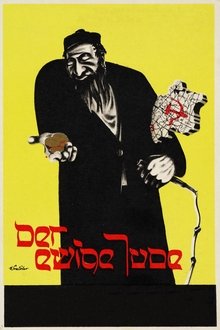
The Eternal Jew (1940)
A Nazi propaganda film made to promote anti-Semitism among the German people. Newly-shot footage of Jewish neighborhoods in recently-conquered Poland is combined with preexisting film clips and stills to defame the religion and advance Hitler's slurs that its adherents were plotting to undermine European civilization.

The Most Dangerous Man in Europe: Otto Skorzeny's After War (2020)
Waffen-SS officer Otto Skorzeny (1908-75) became famous for his participation in daring military actions during World War II. In 1947 he was judged and imprisoned, but he escaped less than a year later and found a safe haven in Spain, ruled with an iron hand by General Francisco Franco. What did he do during the many years he spent there?
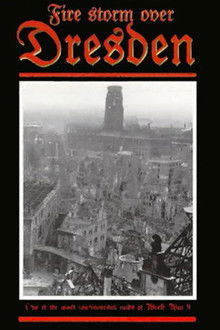
Firestorm Over Dresden Germany: A Real Holocaust (2015)
Taking into account the latest historical evidence, this documentary attempts to shed new light on the bombing of Dresden, one of the most controversial raids of World War 2. Contemporary witnesses, previously unheard, describe the events and the terror of what it was like to be in Dresden through the night of bombing.

Lise Meitner: The Mother of the Atom Bomb (2013)
To historians, physicist Lise Meitner deserves to be placed on a par with Einstein, Heisenberg and Otto Hahn. In the 1930s on the verge of World War II, she led a small group of scientists who discovered that splitting the atomic nucleus of uranium releases enormous energy. This extraordinary film tells the story of a woman who was far ahead of her time as a scientist and a pioneer of feminism.

Mário Eloy - A Runaway Painter (1998)
Documentary about the life and work of Mário Eloy, one of the greatest painters of the second generation of modernism in Portugal.
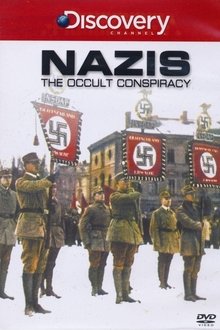
Nazis: The Occult Conspiracy (1998)
This documentary examines how Adolf Hitler and the Nazi regime made use of ancient mysticism, occultism, and mind-control techniques in their efforts to win the war.

Hitlers Angriff aus dem All - Das Geheimnis der V2 (2016)
The Nazis knew it was their last chance. The British knew it was the deadliest threat they'd ever face. And the Americans knew it could fall into the wrong hands. The V2 rocket quickly became Hitler's greatest deadly weapon and beacon of hope to turn the course of World War II in his favor. Watch Nazi Germany's desperate attempt at victory as the Allies race to stop them and see how the V2 miraculously went from deadly weapon to amazing feat of space technology.
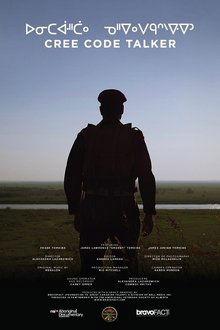
Cree Code Talker (2016)
CREE CODE TALKER reveals the role of Canadian Cree code talker Charles 'Checker' Tomkins during the Second World War. Digging deep into the US archives it depicts the true story of Charles' involvement with the US Air Force and the development of the code talkers communication system, which was used to transmit crucial military communications, using the Cree language as a vital secret weapon in combat.

Nightfighters: The True Story Of The 332nd Fighter Group--The Tuskegee Airmen (1994)
The story of the Tuskegee Airmen, a group of African American pilots who saw combat during the Second World War. The 332nd Fighter Group stands apart from any other air force fighter groups in the Second World War: all personnel, from pilots to ground crew to surgeons, were black. They confounded expectations and prejudices existing in America in the thirties and forties about the abilities of black Americans. They excelled as pilots and became a crack unit, showing great courage and skill and achieving where other fighter groups had failed. Despite this, they were segregated on the ground and in the air from the white flyers whose lives they protected. (Alexander Street)


Samuel Wilder King: Fighting for Statehood (2018)
Samuel Wilder King, a descendant of Scottish sailors and Hawaiian royalty, served as a distinguished Naval officer in both World Wars before becoming Governor of the Hawaii Territory. This short film delves into King’s fearless leadership—from navigating the high seas during WWI to fighting against the internment of Japanese Americans in Hawaii during WWII—ultimately championing Hawaii's path to statehood as the 50th star on the American flag.
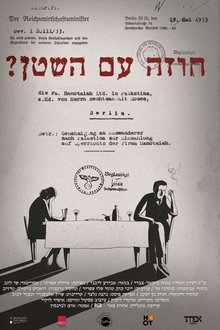
A Deal With The Devil (2024)
The story that was silenced for 91 years was revealed for the first time: in August 1933 the leaders of the Zionist Organization signed "transfer agreements" with Nazi Germany. As part of the agreement, about 60 thousand Jews with a lot of property will arrive in the Land of Israel. Is it permissible to make a "contract with the devil" to save people?