On the Clickity-clack Express it's clear I'm always under duress, unless I forget.
Related Movies

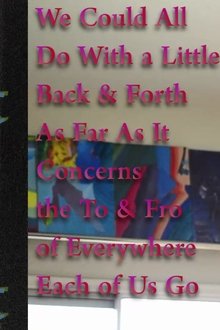
We Could All Do With a Little Back & Forth As Far As It Concerns the To & Fro of Everywhere Each of Us Go (2017)
(Some of us) Still run down the same [mental&emotional] streets we revered/reproached/replaced as children.
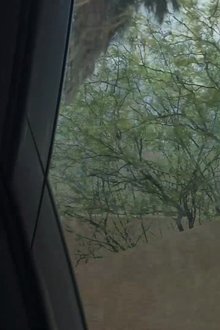
Aridity Enclosure 1 (2017)
Locked away but not away; somewhere nearby but unreachable, a periphery so notfaroff it's always in sight.
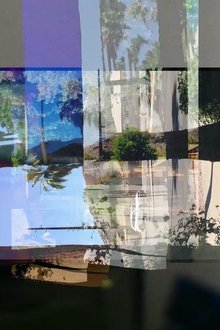
Hiding Under a Copy of the Strokes' Single 'Under Cover of Darkness' (2017)
Hiding inside&out, writhing about, taken out&in.

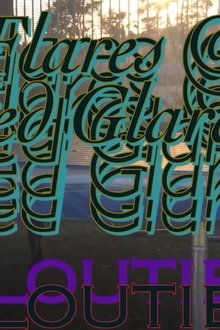
Firing Flares @ Unnoticed Glares (2017)
Shadows frighten what one oughtn't be gripping (that thing before/hind you).
Hope This Goes Over Well/Living in an Empty World (2017)
I really hope this is well-received. I really hope there's some sort of reprieve.

Grand Entrance to the World of the Dead (2017)
Radical recurrences & rancorous requests raze my daze.
What Was It Supposed to Be Like? (2017)
Rather pointless, rather stilted, fetid; not what we want us going after.

Devil Come to Hell and Stay Where You Belong (2008)
From a small cabin in the mountains of New York, Nina Breeder and Massimilian Breeder begin a journey across the United States. California is just the initial destination, but just as the edge of the surrounding landscape expands, so does their ultimate destination. A contemplation of nature and time along a raw journey in the American landscape.

The Two (2002)
Two men. Friends? Enemies? Lovers? Brothers? One is nothing, success or failure depends on two.


Redland (2009)
As a family struggles to survive in rural isolation during the Great Depression, their daughter's secret affair begins a journey into the unknown.
The Twenty-One Lives of Billy The Kid (2005)
Shot in the abandoned buildings of Gary, Indiana and the cornfields of Western Illinois, The Twenty-One Lives of Billy the Kid presents a fractured historical narrative without any real protagonist, one in which the titular character goes mostly unseen - Billy the Kid as the always-off-screen assailant, as a ghost’s laugh, as a shadow on the road.

Age 12: Love with a Little L (1991)
This film is depicts early lesbian sexuality, using reenacted scenes from the experience of a 12-year old girl as the platform for a meditation on forbidden desire, transgression, and Lacanian psychoanalytic concepts of identity formation. Raw adolescent memories counterpoint staged scenes, exploring mechanisms of power and submission.